Los Angeles’ Dream of Personal Rapid Transit
Fifty years ago, Los Angeles was abuzz with excitement over a concept that many believed was the perfect solution for the city’s car-dependent nature: personal rapid transit (PRT). The idea was to blend the convenience and privacy of car travel with the efficiency of a mass transit system. Enthusiasts argued it was necessary because residents were unlikely to give up their daily commute in favor of buses or trains.
Despite concerns about car exhaust contributing heavily to the region’s smog issues, as well as the memories of long lines at gas stations due to the Arab oil embargo, the idea of PRT sparked significant interest. The proposal came shortly after the bicentennial celebrations in 1976 when C.G. Burke, a USC instructor, penned an article in the L.A. Times advocating for the PRT system.
Details of the PRT System
Burke envisioned elevated guideways along major roads in Los Angeles, with electric-powered personal pods allowing travelers to input their destinations. These pods accommodated multiple passengers but were primarily designed for solo use, mimicking car travel. The proposed network included 232 miles of track and 89 stations. Pods would make frequent stops and offer express lanes for longer commutes, reaching speeds of up to 60 mph.
Supporters claimed that PRT offered a desirable alternative to traditional mass transit. As Burke noted, public transportation should not be a “form of punishment” being used by unhappy commuters. Skeptical politicians and academics launched campaigns to promote PRT, complete with models depicting pods moving like scenes from “The Jetsons.”
Prominent voices like L.A. Councilman Joel Wachs praised the system for being private, nonstop, and safe—elements considered critical for L.A. commuters.
Dwindling Enthusiasm and Shift to Rail
Despite initial enthusiasm, doubts about technology, cost, and feasibility arose. Imagining elevated guideways above city streets seemed far-fetched. Support for rail, led by Mayor Tom Bradley, was strong, motivated by hopes of completing a subway down Wilshire Boulevard during his tenure.
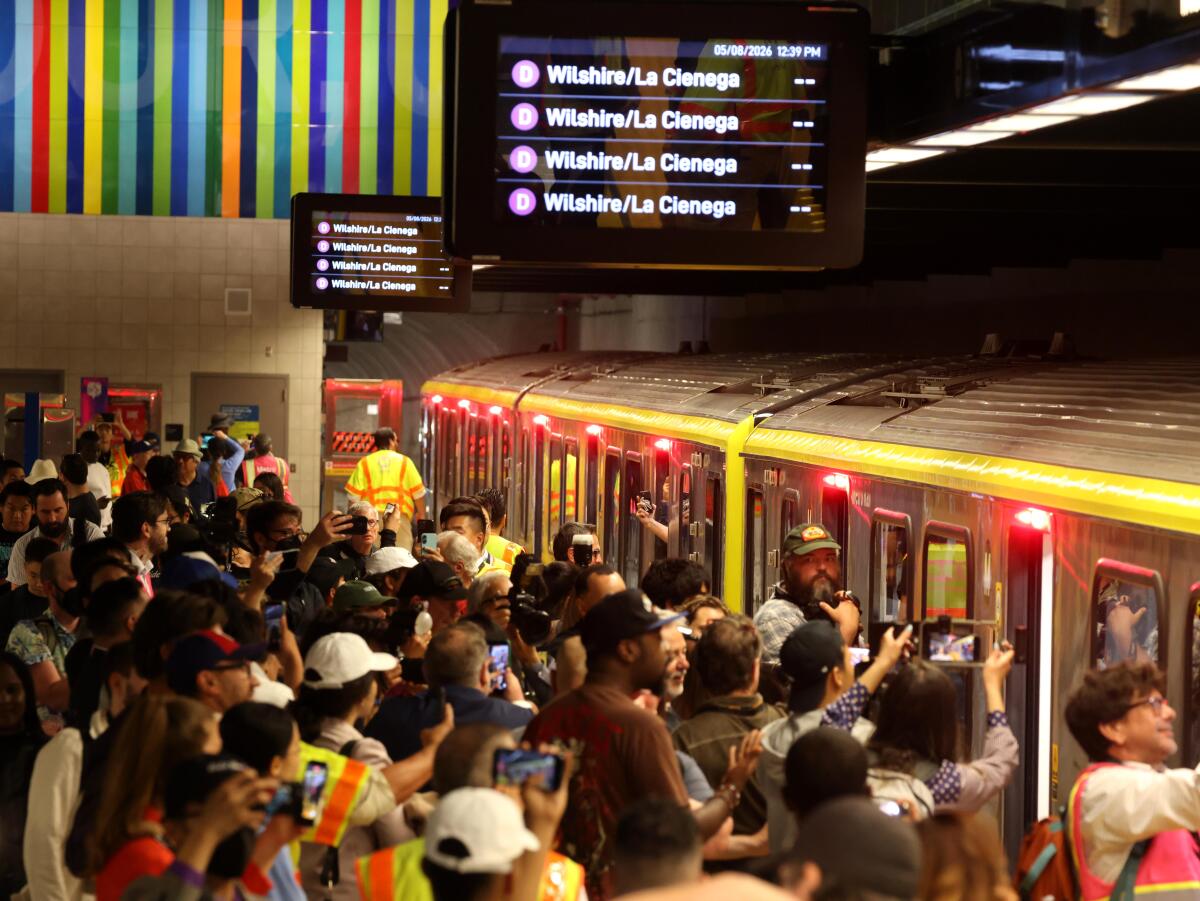
The skeptics delayed L.A.’s progress toward modern mass transit, although the Wilshire subway project eventually succeeded. It took until 2026, a far cry from the initial plans discussed in 1976.
As time passed, excitement around mass transit evolved. Residents authorized taxes, leading to expanded rail networks across the county. Although car commuting remains widespread, recognition has grown that a car-only lifestyle is unsustainable.
Current State and Technology’s Role
Today, the debate centers on the delays affecting new transit lines, such as the LAX people mover system. Frustrations have mounted due to construction setbacks, but support for these projects remains. L.A. continues striving to improve airport mass transit.
The concept of PRT survives albeit in a different form. Electric self-driving cars, including those by Waymo, offer privacy for solo travelers with destination input and automated delivery. Discussions on the impact of self-driving taxis on urban life remain limited. They could revolutionize travel with safer, cheaper options and reduced parking needs. Alternatively, self-driving vehicles could worsen congestion, transportation inequality, and diminish mass transit viability.
Reflecting on past ambitions raises questions about how self-driving advancements can best serve cities.
Leave a Reply