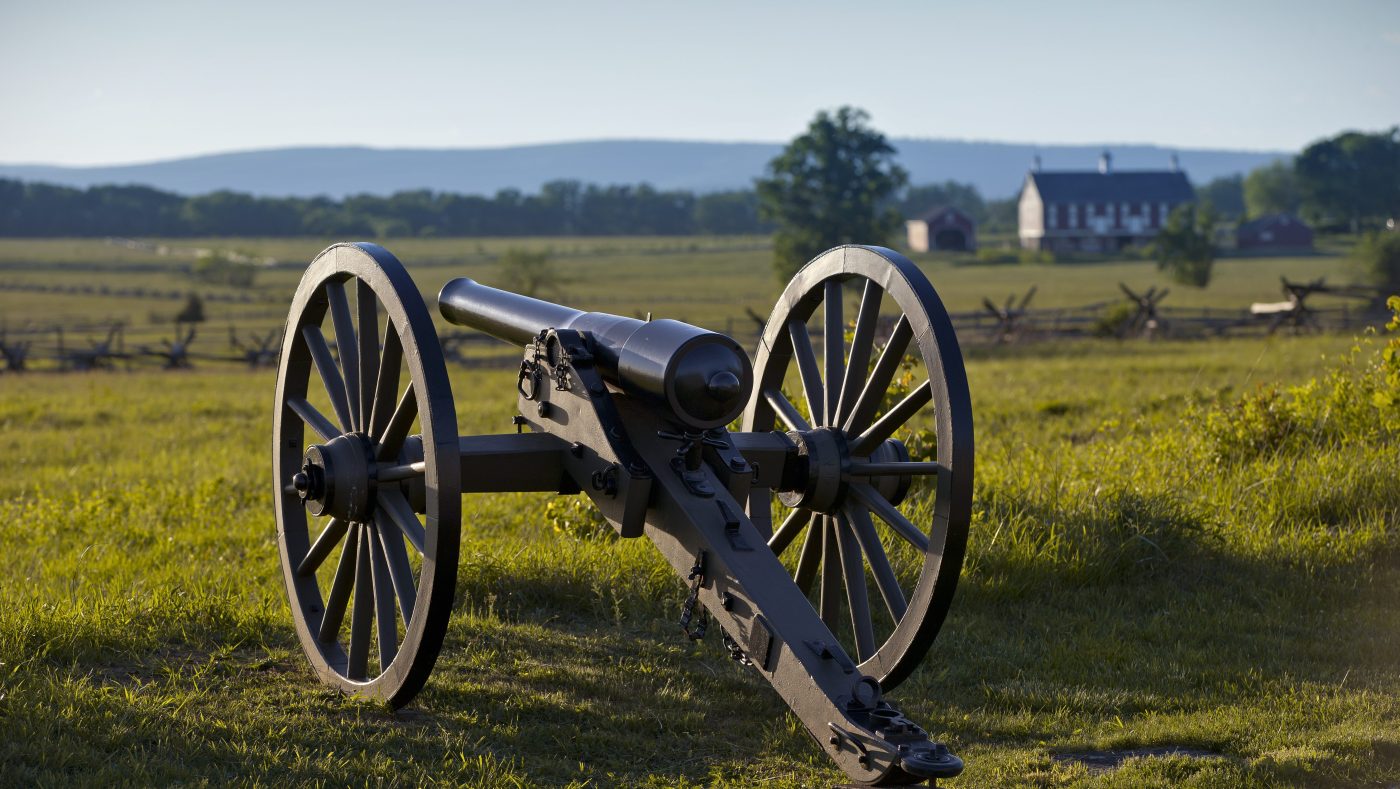
At sunset, a Union cannon on the Gettysburg Battlefield aims toward the field where Confederate troops launched Pickett’s Charge in July 1863. Gettysburg, Pennsylvania was the site of the Civil War’s bloodiest battle and marked a turning point in the conflict between the North and South.
Greetings, readers. This week, there will be no Whole Hog Politics newsletter. Although there is much to discuss, especially with the ongoing turmoil in both political parties, I am currently on vacation. However, Bill Sammon will host a livestream today at 9 a.m. EDT for Hill Insider subscribers. Feel free to ask him about Calvin Coolidge’s pet raccoon, Rebecca, the XYZ affair, and the later career of Fanne Foxe.
After spending some days consuming news at a more relaxed pace, I find our political scene seems even more chaotic than when I am closely observing it. It serves as a reminder that to most Americans, the behavior of our political leaders often appears more like mental illness than governance.
The first stop on our summer trip was Gettysburg, Pennsylvania, where I took my willing teenage son on a tour of the battlefield and the local museum exhibits. In the evening, we enjoyed a visit to Yankee Stadium, where we watched the St. Louis Cardinals and the New York Yankees compete.
During our morning walk in Gettysburg, we traced the steep path of the 4th Texas Infantry up Little Round Top. We observed from where Joshua Lawrence Chamberlain and the 20th Maine Infantry famously defended against the 15th Alabama, contributing significantly to saving the Union. It struck me that the individuals on both sides of the battle genuinely believed in the causes they fought for. Though the motives for secession and the suppression of the rebellion were varied, the convictions were genuine.
Today, we understand that slavery was central to the war, as Chamberlain and others recognized at that time. Nonetheless, those who clashed with them on July 2, 1863, might have cited other reasons for their fight. This reflection leads to considering the sincerity problem in our current political environment. Many staunch supporters doubt that their opponents genuinely believe their stated positions. This skepticism hinders productive disagreement and governance.
On critical issues, failing to acknowledge the genuine beliefs of our opponents poses greater risks. Dismissing opposing voices as insincere prevents us from comprehending the significant commitment among minority groups that influence historical developments. Without recognizing each other across political divides, we risk future conflicts.
As for my journey, the next chapter of our American vacation awaits. The newsletter will return next week, and I’ll be back on the livestream to discuss the results of Bill’s handling of presidential raccoon trivia. Best wishes, c.
Leave a Reply