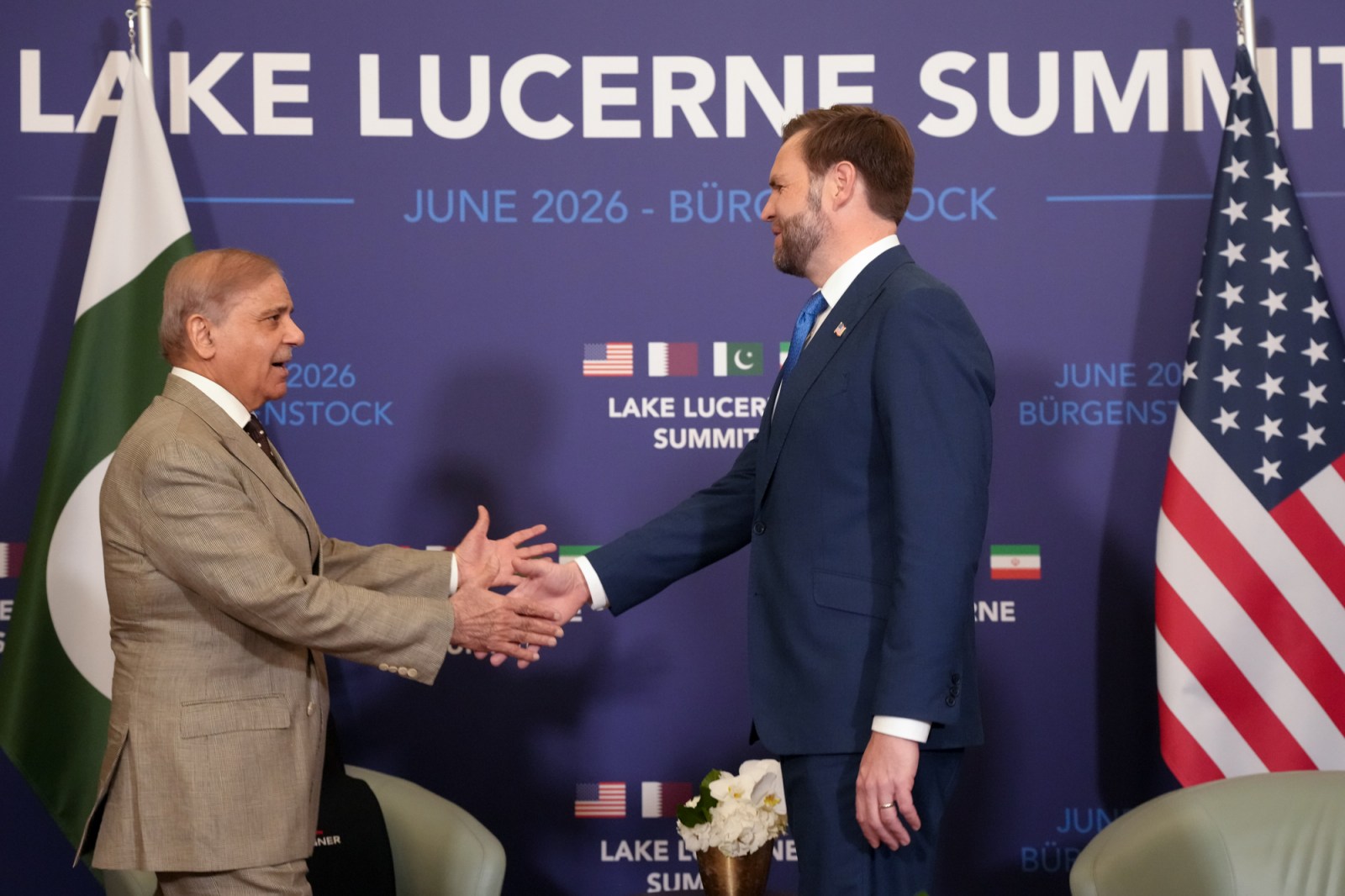
For years, Republicans criticized former President Barack Obama’s 2015 Iran nuclear deal, branding it a risky trade of sanctions relief for limitations they viewed as inadequate, short-lived, and easily reversible by Tehran. Now, as President Donald Trump seeks a new agreement with Iran, similar criticisms resurface, directed at a Republican president’s own approach.
Trump’s Negotiation Talks
Details of Trump’s memorandum of understanding (MOU) are still under negotiation, with expected clarifications over the next 60 days. This means the final format—and how it compares to Obama’s Joint Comprehensive Plan of Action (JCPOA)—remains uncertain.
On Monday, Trump announced that the ultimate deal to conclude the Iran-related conflict, initiating in late February, would include stringent inspection measures. He noted on Truth Social, “Everybody is fully aware that Iran will agree to have Major Weapons Inspections in order to ensure ‘Nuclear Honesty’ long into the future.” The Trump administration underscores that negotiations are active. A senior U.S. diplomat informed Newsweek that officials engage in “robust discussions” on all components of a broader arrangement, including nuclear matters, the Strait of Hormuz, and deconfliction mechanisms in southern Lebanon regarding Israel and Iran-backed militia Hezbollah. This framework is regarded as a starting point for additional technical discussions rather than a conclusive settlement.
Republican Concerns
Despite ongoing negotiations, early political reactions are apparent. On issues such as sanctions relief, inspections, uranium enrichment, and congressional approval, Republicans express concerns similar to those raised about Obama’s deal. White House spokeswoman Olivia Wales countered the criticism, mentioning to Newsweek, “President Trump and his negotiating team have brokered an excellent, performance-based MOU that advances the interests of the United States by ending the fighting, reopening the Strait of Hormuz to significantly lower energy prices, and forcing Iran to commit to abandon its nuclear ambitions.”
Repeating Patterns
When Obama presented the JCPOA in 2015, he described it as a comprehensive agreement that obstructed Iran’s paths to a nuclear weapon while imposing strict verification protocols. Republicans immediately rejected this notion, focusing their opposition on several themes:
- Iran received excessive sanctions relief prematurely
- Nuclear restrictions were temporary, lacking permanence
- The deal didn’t entirely dismantle Iran’s nuclear agenda
- The agreement lacked binding congressional approval
These concerns resurface in reactions to Trump’s interim framework. The 2015 discourse by Republicans also critiqued the JCPOA for narrowly concentrating on nuclear concerns while ignoring Iran’s missile program and regional activities. This critique is again prominent in current debates.
Opinions from Key Senate Members
Senator Tom Cotton of Arkansas previously stood out as a prominent critic of the JCPOA, cautioning in 2015 that any agreement not approved by Congress might be overturned by future administrations. He labeled the deal a substantial strategic misstep. Post-election in 2016, Trump withdrew from the accord.
Currently, Cotton’s stance on Trump’s framework is more moderate, but recognizable concerns persist. Last week, he shared on Fox News that “certain aspects of this deal are a step in the wrong direction” and emphasized the necessity of maintaining U.S. influence over Iran.
Senator Ted Cruz from Texas had vigorously critiqued Obama’s deal in 2015, describing it as a “catastrophic mistake” that would empower Iran and hasten its path to a nuclear armament. His response to Trump’s framework utilizes varied language but maintains the core argument, concentrating again on the risks of financially aiding Iran without reinforced assurances.
“History teaches that giving billions of dollars to theocratic lunatics who want to murder us is not a good idea,” he shared with The Hill last week. “I think the president is receiving some very poor advice on this deal.”
Senator Lindsey Graham of South Carolina was notably vocal against the JCPOA, claiming in 2015 that the “terrible” deal would empower Iran while failing to dismantle its nuclear capabilities. After the Trump administration revealed its framework last week, he expressed a more temperate view—acknowledging the agreement’s potential while warning a definitive nuclear deal is uncertain and could falter.
“Let’s try a diplomatic solution. I think it’s going to fail. What happens next?”
Graham, a strong supporter of Trump, articulated his thoughts during an interview on CBS News’ Face the Nation.
Other Republican Voices
Other Republican lawmakers amplify comparable themes. Senator Roger Wicker from Mississippi alerted on Thursday that Trump’s framework “negotiates away the victories of Operation Epic Fury in ways that are completely out of step with the president’s goals.”
Senator James Lankford from Oklahoma underscores that a lasting agreement should pass through Congress. “It is best if it is ratified by Congress; it has a more lasting effect on it,” Lankford indicated to NBC News’ Meet the Press last week. He further remarked that the JCPOA “opened a pathway towards a nuclear weapon and just delayed it outside of the Obama presidency. That doesn’t help the American people long term.”
Across the GOP, a familiar checklist emerges:
- No premature sanctions relief
- Strong, verifiable inspections
- Limits on enrichment
- A durable agreement with congressional backing
Trump vs. Obama
Trump has consistently condemned the JCPOA, asserting on NBC News earlier this month that the “deal was tantamount to giving them [Iran] a nuclear weapon” and considered it a “horrible deal given by Barack Obama.” He highlighted in April on Truth Social, “If I did not terminate that ‘Deal,’ Nuclear Weapons would have been used on Israel, and all over the Middle East, including our cherished U.S. Military Bases.”
Conversely, Obama offers an alternative perspective. He suggests any new accord may not significantly deviate from the original deal and argues that the United States could incur more expenses to attain similar objectives after exiting the JCPOA.
“It is doubtful that any agreement that arises is going to be significantly different or a significant improvement from the deal that we had in the first place and had worked for, for a long stretch of time before we, the United States, pulled out of it,” Obama communicated to ABC News earlier in the month.
Leave a Reply