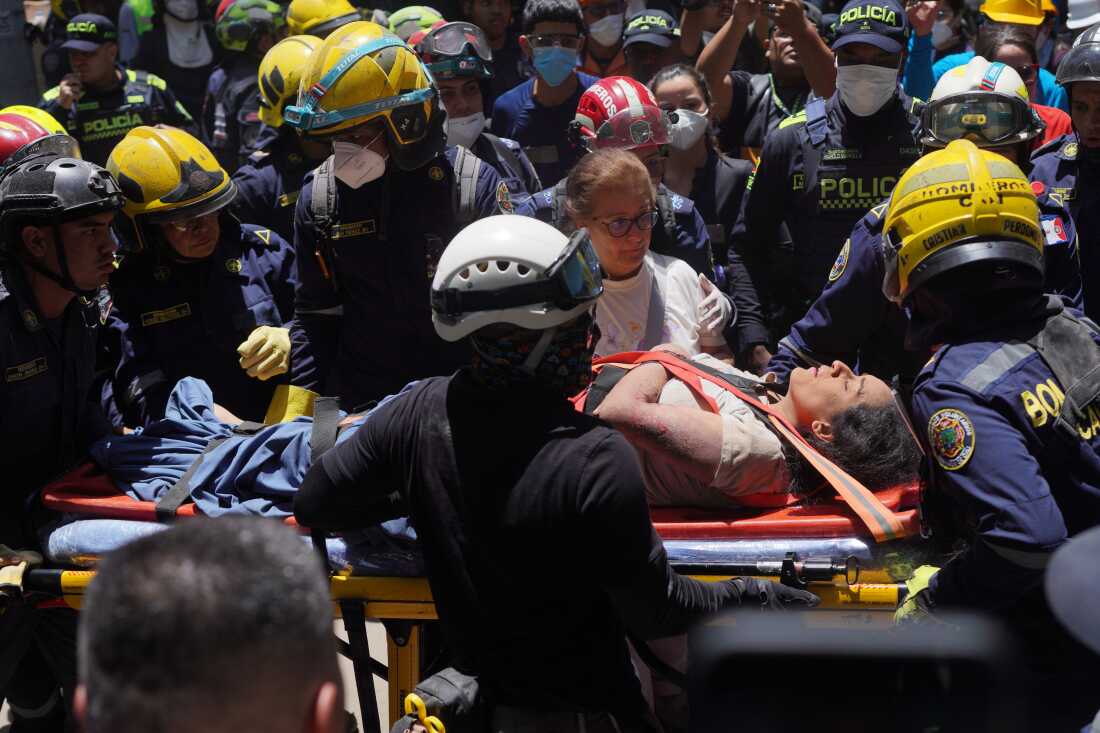
Rescue workers continued to search for survivors as they pulled Diana Troncoso from the rubble in Cali, Colombia, following a major earthquake that struck on Tuesday, August 11, 2026. The search for life was urgent as rescue teams raced against time to find survivors. The disaster has posed a significant challenge for Colombia’s new President, Abelardo de la Espriella, and his administration, as they struggle to manage the crisis and provide aid to those most affected.
President de la Espriella reported that the 7.4 magnitude earthquake claimed at least 181 lives, with 2,595 more injured in the country’s western regions. Additionally, 195 people were reported missing, though civilian sources estimated the number closer to 4,000. Rescue teams worked tirelessly through the night in heavily impacted cities such as Cali, Pereira, Manizales, and Quibdo, hoping to locate survivors as the critical hours ticked away.
The initial 48 to 72 hours are deemed vital for rescuing survivors, although this timeframe can extend if individuals have access to food and water. Despite the devastation, there were small victories: a dust-covered baby was rescued through a crack in a concrete wall, and onlookers celebrated as a woman was lifted onto a stretcher.
Some areas faced challenges in responding to the earthquake due to longstanding issues of poverty and ongoing civil conflicts that have caused displacement over the years. “This earthquake compounds an already severe humanitarian situation, and there is a need for increased support for the humanitarian response,” stated Giovanni Rizzo, Colombia director for the Norwegian Refugee Council.
Despite the ongoing conflict and peace process initiated in 2016, aid organizations are positioned in critical regions to expedite relief efforts. Maria Jose Torres, the U.N. resident coordinator in Colombia, noted that the presence of aid organizations on the ground has improved their ability to respond swiftly. Torres stated, “We have a presence on the ground. Therefore, our ability to be there, present with the people, I think, has increased exponentially.”
International aid poured in, with the United States offering over $15 million in assistance. Mexico’s president announced the readiness to send hundreds of search and health workers, along with health supplies and equipment. Additionally, Salvadoran President Nayib Bukele pledged to send two planes with 100 tons of aid to Colombia in the coming days. “Our prayers are with the families of the victims, the wounded, and all the Colombian people,” Bukele expressed on social media.
Leave a Reply