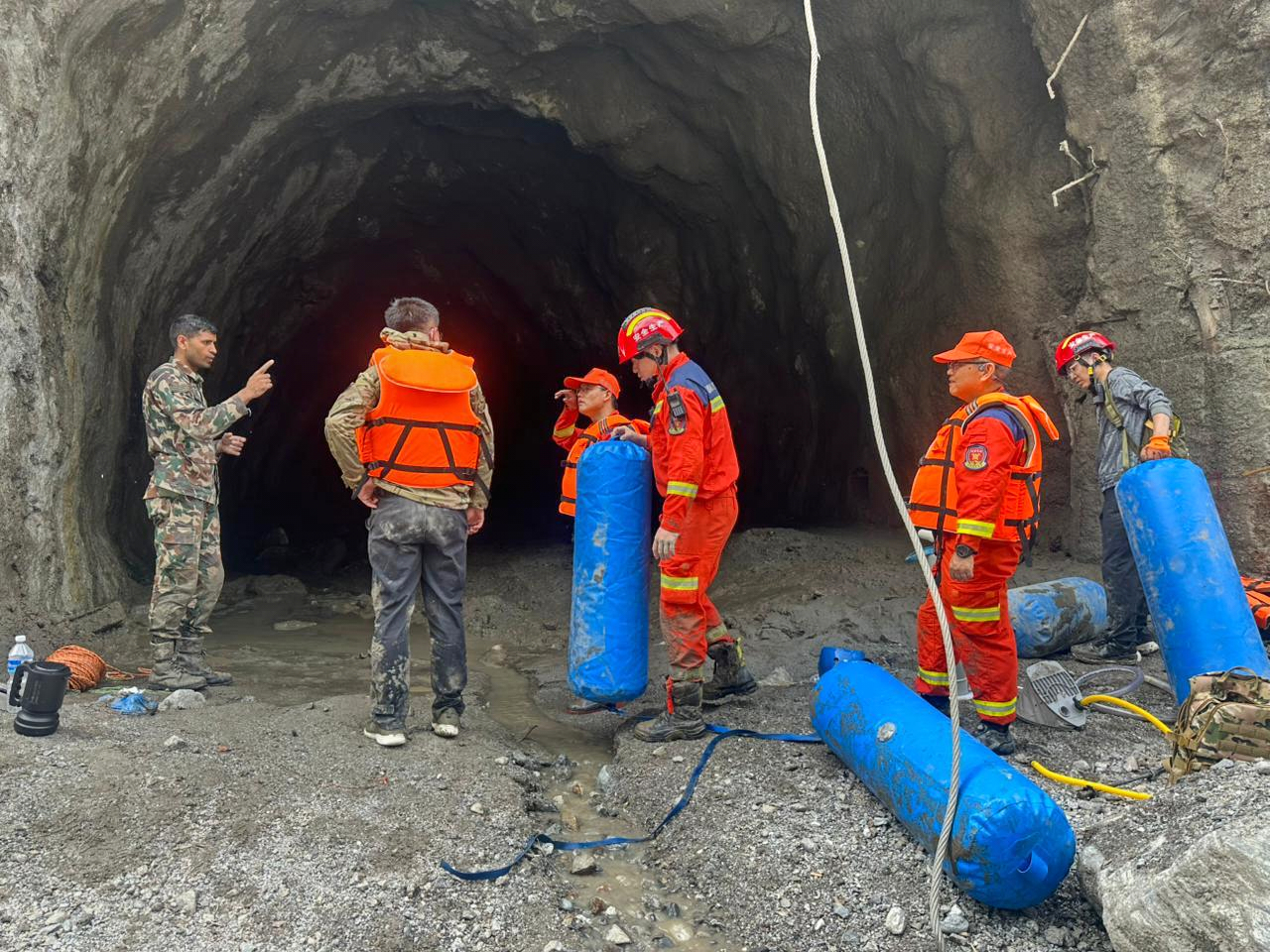
KATHMANDU, Nepal (AP) — The Nepal Army undertook significant rescue operations at the hydropower project site in Upper Trishuli following the catastrophic flooding that started last week. Filmmaker and drone pilot Manish Maharjan was heavily involved in the efforts after crossing into Nepal from Tibet before the disaster struck.
Maharjan, familiar with the areas from previous travels, leveraged his professional skills to aid Nepal’s rescue teams. After flash floods claimed over 1,000 lives and left thousands missing, Maharjan utilized thermal drones to locate missing workers across 12 hydropower projects affected by debris. The drones were vital for finding stranded individuals on hillsides and isolated places, including caves.
We used microphone speakers to call out to them. In some places, we even played songs and then waited for a response. That worked in a few cases and helped us locate people, Maharjan explained.
The tunnels, however, presented unique challenges. Filled with mud and debris, they lacked empty spaces necessary for drone navigation. Maharjan found them resembling toothpaste-filled tubes, hindering search efforts. He managed to send a drone deep into Rasuwagadhi hydropower project tunnel, but no signs of life appeared.
The flash floods began with a glacial collapse in the Himalayan region, which scientists mapped using satellite imagery. The collapse registered as a seismic event with a magnitude of 5.2, triggering a cascade of destruction in Tibet and Nepal. Critical infrastructure, including hydropower plants, roads, and bridges, sustained extensive damage.
Although some workers managed to call for help, Maharjan highlighted the growing difficulty in locating those still trapped as time progresses. Officials stress the crucial importance of the first 72 hours in rescue efforts, where the absence of clean water and air reduces survival odds.
Rescue teams continue searching each tunnel, adapting their techniques based on the terrain’s challenges.
Leave a Reply