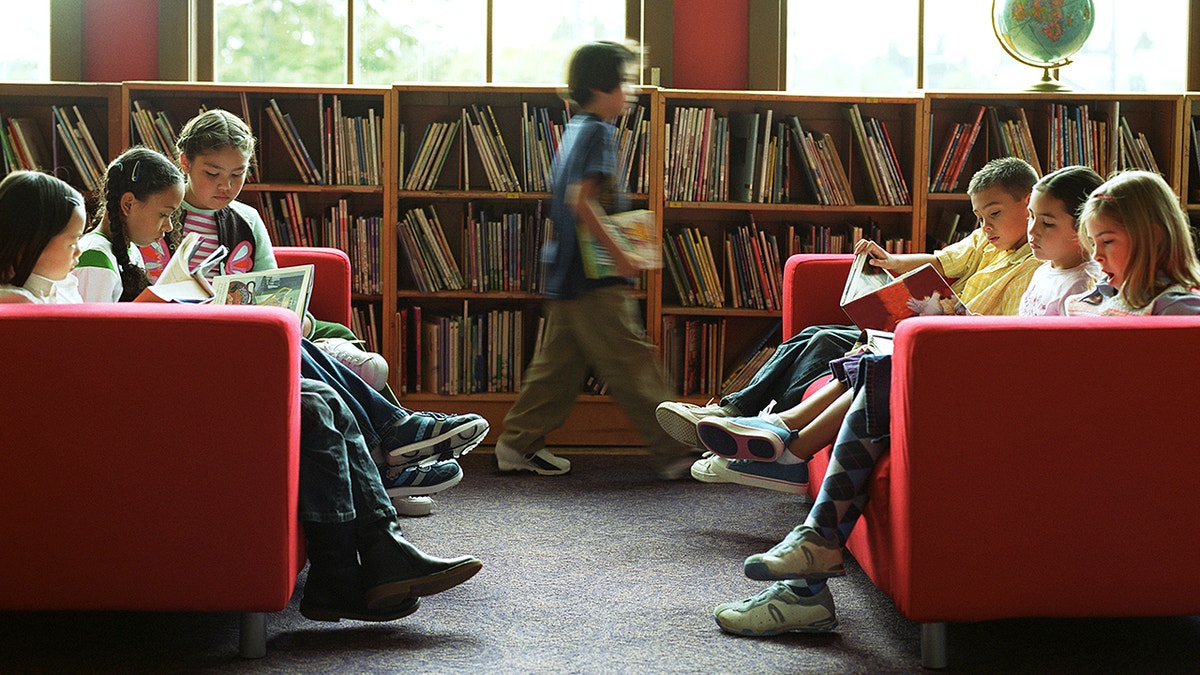
In late September, children are back in school, routine is established, and reading lists are determined. What do these lists include? Often, traditional textbooks dominate, especially in public schools, where they are usually prepared by committees. These textbooks range from uninspiring to sometimes promoting particular agendas. Alternatively, some curricula are delivered through monotonous computer screens.
However, there is an alternative rooted in history. Charlotte Mason, a 19th-century British reformer, offers an approach that transformed education over a century ago. Though largely unknown to public school parents, Mason is a revered figure in modern homeschooling. Her ideas extend beyond homeschooling; they are valuable for all parents and educators.
“For the best thought the world possesses is stored in books,” Mason wrote in “Parents and Children.” “Children must have books, living books … the best is not too good for them.”
Mason strived to instill a love for learning in children from an early age. She believed children needed a rich diet of ideas, not just the nutrition for their physical bodies. Instead of typical textbooks, Mason advocated for exposure to great art, music, and books of literary quality.
Today, many textbooks in public schools aim to avoid controversy and are often perceived as bland. Conversely, some push specific ideologies. Mason’s perspective remains resonant: children benefit from engaging with rich ideas and content through living books.
Living books, as Mason describes, are those authored by individuals, not committees. They engage the mind, imagination, and spirit, going beyond mere factual presentation. For instance, early learners might enjoy titles like “The Trumpet of the Swan,” “Black Beauty,” and “A Little Princess.” Middle school students may connect with “My Side of the Mountain,” “Around the World in 80 Days,” and the “Narnia” series. High schoolers can delve into “Pride and Prejudice,” “David Copperfield,” and the “Lord of the Rings” trilogy.
Such books ignite curiosity and interest due to the authors’ passion for their subjects. Unlike standard textbooks, they use narrative styles that engage students’ imaginations and emotions. They include complex concepts and subjects, presented in an accessible manner, helping children relate to the material and retain themes and details over time.
Living books also introduce challenging vocabulary, expanding young readers’ language skills. Authors like E. B. White in “Charlotte’s Web” believed in challenging children with tough words, trusting in their capability and eagerness to learn. “Anyone who writes down to children is simply wasting his time,” White stated, emphasizing the need to meet children’s inherent curiosity and attentiveness.
These books transition learners from passive memorization to active engagement. Students are encouraged to retell stories in their own words, building communication and analytical skills.
Charlotte Mason famously said, “Education is an atmosphere, a discipline, a life.” Modern educators can rekindle this vision using living books. Books like Louisa May Alcott’s “Little Women” and Mark Twain’s “The Adventures of Huckleberry Finn” teach enduring themes such as family, loyalty, and moral courage.
Leave a Reply