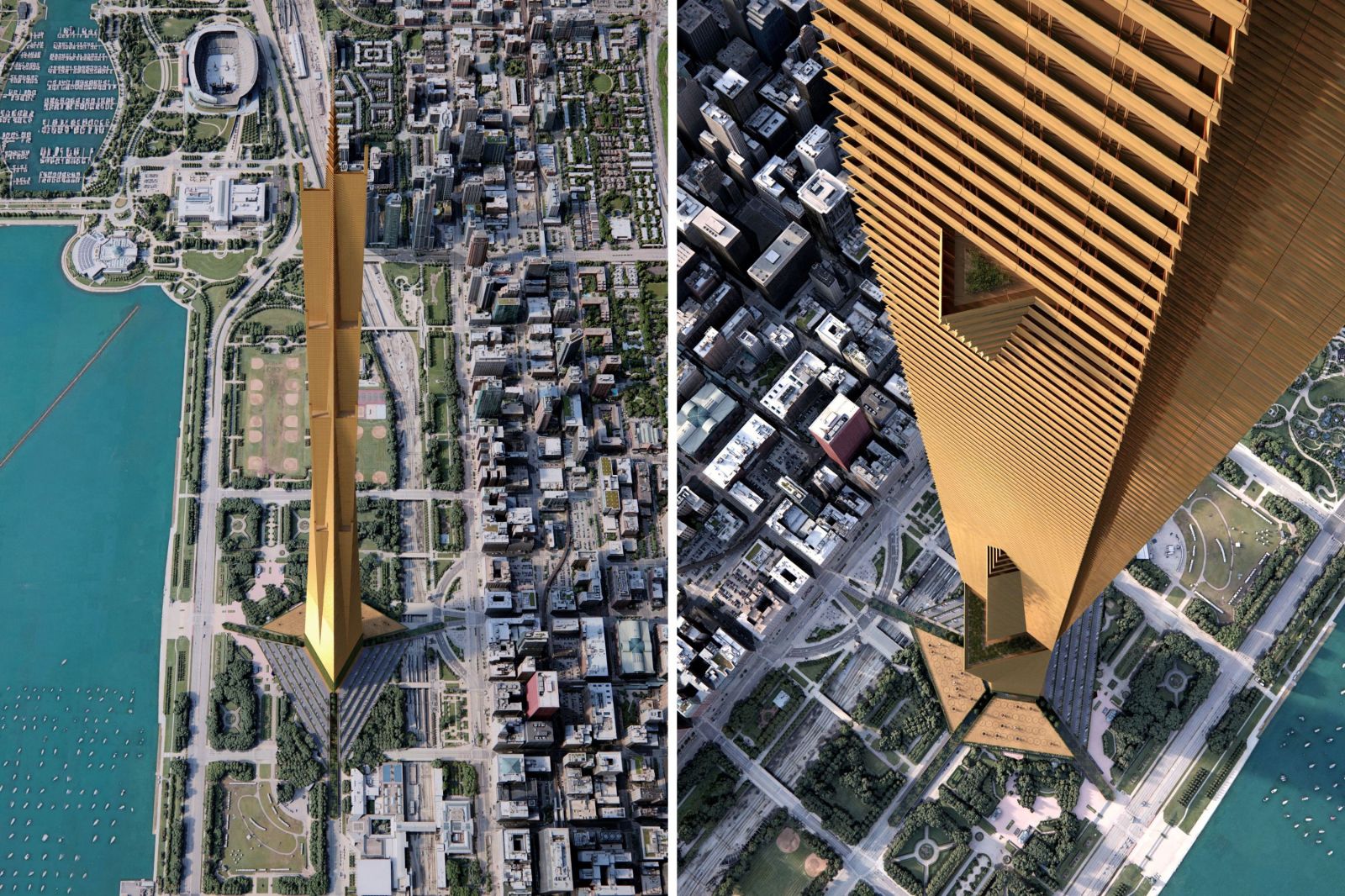
Nearly 70 years since Frank Lloyd Wright introduced plans for a mile-high skyscraper, a Spanish architect has breathed new life into the concept. Known as The Illinois, this unbuilt tower was among Wright’s boldest ideas. It envisioned a 528-story ‘city in the sky’ that aimed to reshape urban living and advance architectural design. David Romero, the architect, crafted detailed 3D renderings of The Illinois for an issue of the Frank Lloyd Wright Quarterly magazine.
Romero’s photorealistic images offer insight into what The Illinois might have looked like towering over Chicago. The renewed interest in this ambitious project occurs amid discussions on whether architectural progress should focus on building taller or improving existing structures. Recently, Gordon Gill, designer of Saudi Arabia’s soon-to-be tallest building, stated that architecture’s future involves refreshing existing buildings for longevity. The American Institute of Architects echoes this, noting that renovating buildings avoids significant carbon emissions linked to new construction.
Romero’s Renderings Bring Wright’s Vision to Life
Romero, known for his ‘Hooked on the Past’ project, wanted to recreate The Illinois due to its significance as Wright’s most famous unbuilt design. Before starting, Romero studied Wright’s completed towers like the S.C. Johnson Research Tower and Price Tower. These buildings provided crucial references to fill gaps left by Wright’s original drawings. Once Romero began, creating the renderings took several months of spare time, mainly due to placing the tower convincingly in the real Chicago skyline.
Surprising Features of Wright’s Tower
In creating the renderings, Romero appreciated the building’s internal logic. He noted that, compared to landmarks like the Eiffel Tower, Wright’s design was not simply about height. The tower’s tapered form was a structural response to wind forces, showing Wright’s engineering principles at work. This view frames The Illinois not as fantasy but as a stretch of Wright’s existing structural ideas.
Could The Illinois Be Built Today?
Romero believes some of Wright’s structural ideas remain relevant. Modern supertall buildings use similar principles in their foundation and geometry. However, building a mile-high tower as Wright intended is impractical today. Wright envisioned atomic-powered elevators and mechanical systems that would not meet current standards. Romero sees The Illinois as a conceptual achievement showcasing Wright’s architectural innovation rather than a practical blueprint.
Ahead of Its Time: A Vertical City
Wright’s vision still offers lessons for urban planning. The Illinois combined residential, commercial, and transport functions in a single vertical development. This approach aligns with contemporary advocacy for mixed-use, transit-oriented urban density instead of suburban sprawl. According to Romero, Wright’s design would have transformed Chicago’s skyline, illustrating why it continues to captivate architects and challenge ideas on urban height and density.
Leave a Reply