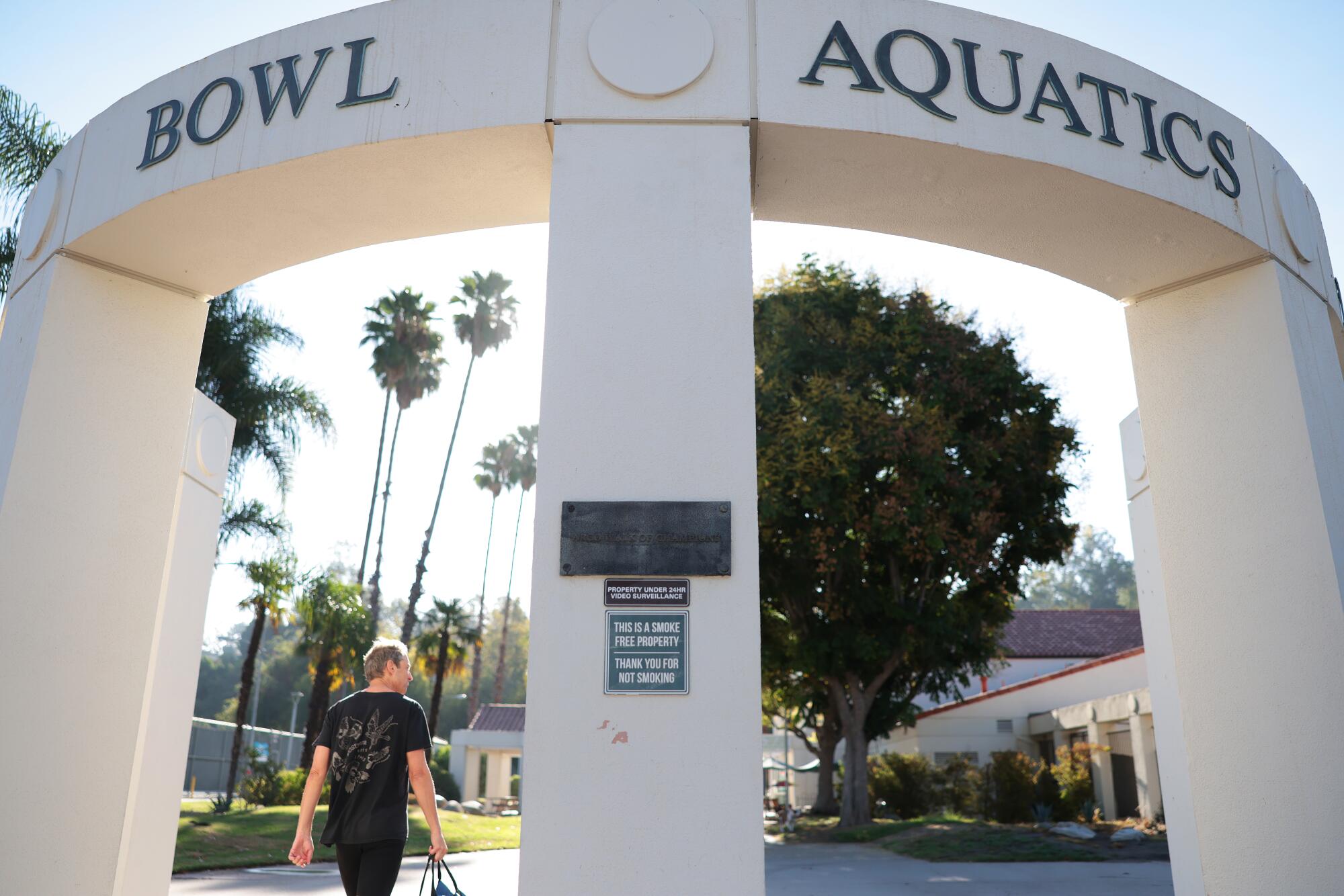
When the Rose Bowl Aquatics Center in Pasadena was announced as the diving venue for the 2028 Summer Olympics, it was celebrated as a major achievement. However, pre-Olympic construction will close the facility for over a year, displacing numerous swimmers and other regular users.
The planned closure of the Aquatics Center will begin in April and last until after the Olympics conclude in 2028. It is expected to affect more than 400,000 annual visitors who use the three main swimming pools and other amenities. These include two 50-meter pools, a therapeutic pool, and two large hot tubs.
Center operators are not yet releasing specific details about the shutdown, as negotiations are ongoing. Officials from LA28, the Olympics organizing group, confirmed plans for facility improvements, though specifics are still in discussion.
Originally opened in 1990, partly with profits from the 1984 Los Angeles Olympics, the Aquatics Center once epitomized modernity. Time has since worn it down, necessitating upgrades. Discussions have centered on who will cover the costs of these updates, including pool decks, locker rooms, pumps, and filters.
For those who regularly use the facility, its temporary closure will be disruptive. Elizabeth Ramirez, a social worker from Alhambra, relies on pool activities for maintaining her health. Lynne Roberts values the pool as a space where her physical limitations due to childhood polio don’t impede her activities.
The Aquatics Center also functions as a community hub. Regular users, like Bonnie Stern, form connections through shared activities, enhancing their social lives. Concerns arise about where such a community will relocate.
The complex is home to a café and a swim equipment shop named Swim Guy. The owners express concern over maintaining business during the closure, as swimming teams and the public might disperse to alternative sites.
Melanie Sauer, executive director of the Aquatics Center, is working to secure alternate pool locations for user groups. Rose Bowl Masters Swimming has begun utilizing Occidental College in Eagle Rock.
The financial impact is significant, with the center reporting $8.6 million in revenue in 2024. Staff plan to create a program encouraging continued payments from user groups during the transition.
Construction at the Pasadena site is seen as more cost-effective than updates to alternatives. The modifications will likely allow for temporary structures to replace older locker rooms and could significantly benefit the facility long-term.
The 2028 Olympics and future international events are expected to boost Pasadena’s economy by drawing in visitors, filling hotels, and increasing revenue for local businesses.
The Rose Bowl Aquatics Center views the opportunity to host an Olympic event as a monumental occasion, anticipating long-term benefits and increased global attention.
Leave a Reply