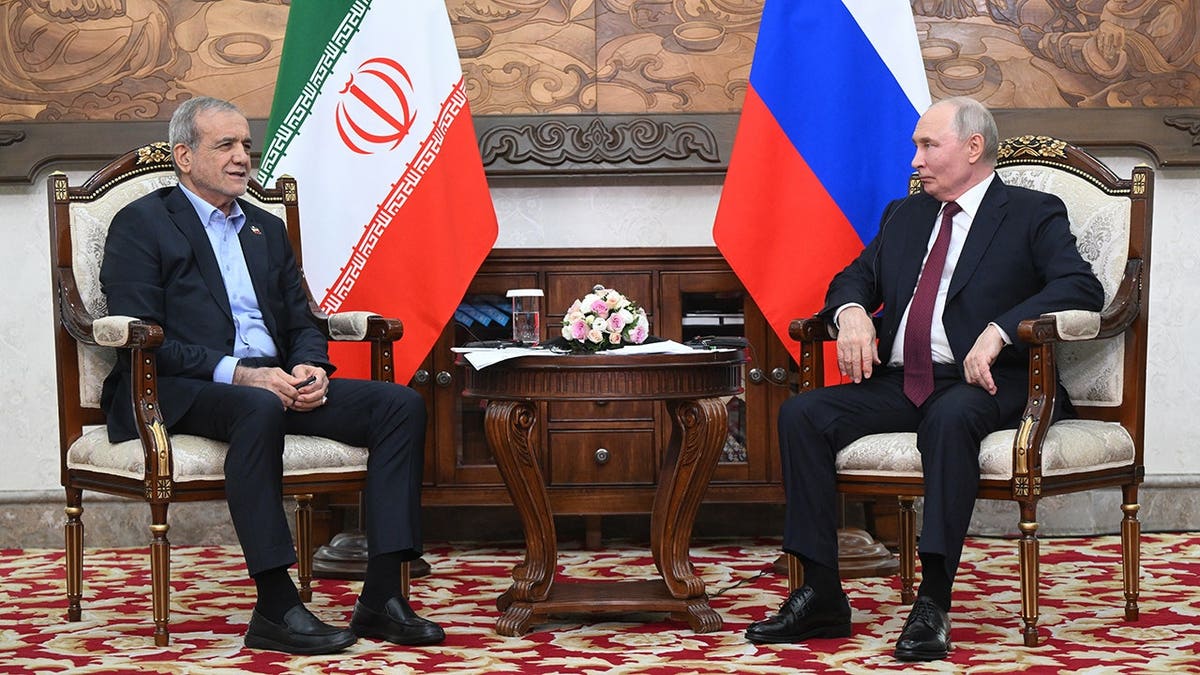
An exclusive Russian government document reveals Moscow’s plans to enhance its relationship with Iran beyond traditional trade. The 44-page document outlines alternative financial channels, nuclear cooperation, Iranian production of Russian aircraft parts, energy projects, and transportation routes extending towards the Persian Gulf.
Financial Channels and Sanctions
The document, marked for official use and approved on September 2, 2024, assigns responsibilities to ministries, agencies, and state companies for projects through 2026. Russia and Iran aim to increase bilateral trade in national currencies from 68% in 2024 to 71% by 2026, develop central bank digital currencies for cross-border settlements, and use independent systems for financial message transmission.
In February 2025, Russian Deputy Prime Minister Alexei Overchuk stated that Russia and Iran had shifted bilateral settlements into national currencies using independent systems. Iran’s ambassador to Russia confirmed that Tehran and Moscow had bypassed SWIFT for banking relations.
“Individually, none of these initiatives is transformative,” said Keti Korkiya, a research analyst with the Foundation for Defense of Democracies’ Russia Program. “Collectively, however, they attempt to remove points of vulnerability and build redundancy into the Russia-Iran economic relationship.”
Nuclear and Energy Cooperation
The roadmap assigns Russia’s state nuclear corporation Rosatom continued responsibility at Iran’s Bushehr nuclear power plant, including fuel and maintenance support for Unit 1, as well as ongoing construction for Units 2 and 3. Rosatom announced in September 2026 that Russian specialists had returned to Bushehr for scheduled maintenance and fuel replacement.
The roadmap names Iranian oil and gas fields where Russia sought involvement, including Shadegan, Kish, and North Pars. Russian state-owned ZN-Vostok started developing the Shadegan oil field by February 2026. Milestones for Shadegan extend through the end of 2025, with work involving Kish and North Pars running into 2026.
Transportation Networks
The document details plans to strengthen transportation links between Russia and Iran, including a proposed railway from Iran’s border with Azerbaijan to the Persian Gulf ports, built to Russia’s 1,520-millimeter track gauge. Additionally, the Rasht-Astara railway project, part of the International North-South Transport Corridor, advanced with engineering surveys launched by May 2025.
Iranian investment in port infrastructure in Astrakhan, Russia, is also part of the roadmap. An Iranian-owned company operated a terminal there, building storage facilities closely matching the roadmap’s description.
Technological and Media Collaboration
Beyond finance and industry, the roadmap outlines content exchange, journalist training, joint media production, and contracts for Russian technology firms in Iran involving information security and telecommunications.
Family Connections and Strategic Importance
Russian Energy Minister Sergei Tsivilev, who chairs the Russian side of the Permanent Russian-Iranian Commission on Trade and Economic Cooperation, is married to Anna Tsivileva—a deputy defense minister and the daughter of President Vladimir Putin’s late cousin.
“This indicates that the Iranian matter holds significant value for Putin’s regime,” a European intelligence source stated. “It suggests that Moscow is aiming to turn a politically convenient partnership into something durable and bureaucratically embedded.”
Neither Russian nor Iranian officials responded to requests for comment on the document.
Leave a Reply