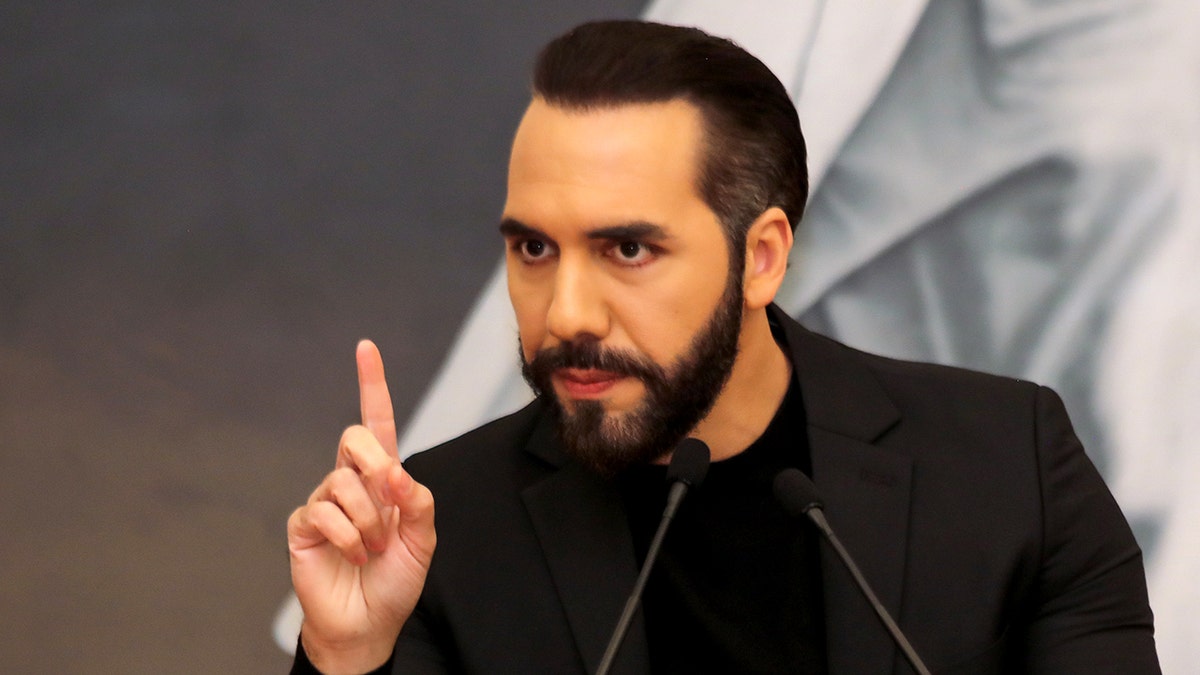
Salvadoran President Nayib Bukele has announced a plan that may facilitate the conditional early release of up to half of those detained under a state of emergency. This move aims to address the excessive prison population resulting from efforts to reduce violent gang activity, which have led to the detention of more than 90,000 people over four and a half years.
Bukele’s plan, revealed on Tuesday night, targets prisoners labeled as gang collaborators. This broad category includes individuals such as gang lookouts and those who make extortion payments. Bukele stated, “There are many people who have indeed committed crimes, but their crime was collaborating with gangs. They deserve to be in jail, but we come from a country where collaborating with gangs wasn’t so unusual, and if we were to arrest everyone who collaborated with gangs, we would have to arrest 20% of the population.”
The president mentioned that authorities would evaluate cases to identify candidates for early release, which could impact up to half of those detained during the emergency period.
The state of emergency was declared in March 2022 after a day of violence resulted in more than 60 deaths. Initially set for 30 days, the measure has been extended several times. It coincided with a significant drop in El Salvador’s homicide rate, making the country more attractive to tourists. However, it also suspended certain constitutional rights, including the right to be informed of detention reasons, access to legal counsel, and visitation rights.
Bukele has defended the measure as necessary to control gangs like MS-13 and Barrio 18. Nevertheless, human rights groups have criticized it, citing over 6,000 complaints of arbitrary arrests and at least 575 deaths in government custody during the state of emergency. They urge for its termination and argue the need for compensations for detainees’ hardships, including physical and mental harm, family distress, and reputational damage.
Despite criticism, Bukele insists on supporting gang violence victims and maintains the necessity of the emergency declaration, although with an eventual intention to end it.
El Salvador’s homicide rate has significantly declined over the past decade, including during Bukele’s leadership. Government figures show a reduction from over 100 murders per 100,000 in 2015 to 1.3 per 100,000 in 2025. However, the government has narrowed homicide definitions by excluding killings by police, murders in prisons, and bodies found in unmarked graves.
Leave a Reply