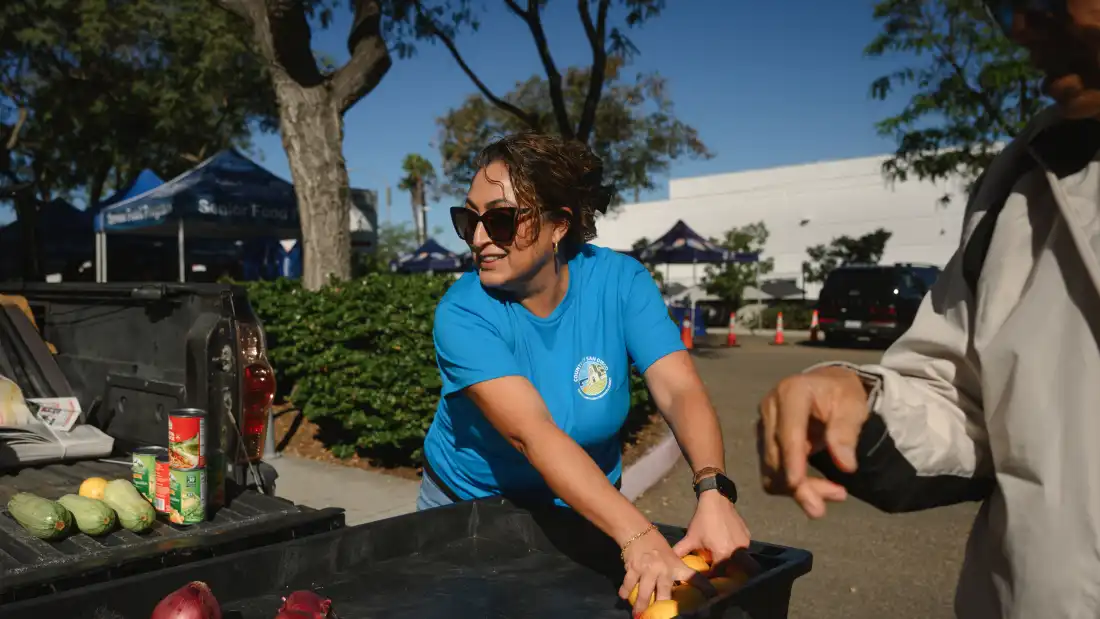
San Diego, Calif. — On what was supposed to be her day off, Rosa Rodarte, a human services specialist, found herself at the social service office on a Saturday morning. She wasn’t there for her usual role of assisting with applications for food aid but instead loading groceries into cars at a food distribution event. “We want to make sure everybody is being helped and not judged,” Rodarte stated, reflecting on her goal of aiding those in need.
The Impact of Policy Changes on SNAP
The Supplemental Nutrition Assistance Program (SNAP) has seen a significant drop in participation over the past year. This change followed the passage of legislation that cut SNAP funding and restricted eligibility. As a result, nearly five million people across the nation lost food benefits, far surpassing federal estimates.
This decline has added strain on government workers who administer SNAP. Offices have struggled with new rules, increased workloads, and financial pressures while witnessing mass reductions in assistance. Nina Olivas, who oversees a customer service call center in San Diego, shared her colleagues’ struggles: “The emotionally draining part is when someone needs help immediately, and you can’t do something.” She reported that San Diego County’s SNAP participation decreased by 36,000 people since the policy changes took effect.
Coping With New Challenges
To respond to the SNAP reductions, San Diego County has collaborated with local food banks to distribute groceries. While not a long-term solution, officials stress the importance of these efforts as a response to hunger. Olivas emphasized her team’s dedication: “We are not ending the call with nothing.” She noted the heavy workload caused by new requirements and the necessity to process a surge of paperwork for continued assistance.
One challenge involves documenting work requirements for certain SNAP recipients, adding to the already substantial paperwork. Olivas pointed out, “Many SNAP recipients already work. It’s just an extra burden.” The county reported processing an additional 830,000 documents from January to October alone.
Responses in Other States
Other states have taken measures to offset the policy changes. Illinois issued a one-time $400 benefit for those who lost SNAP assistance, while Phoenix provided a $600 payment to cover utility bills. Maine funded a state program for noncitizens. In contrast, Texas faced a massive backlog of SNAP applications, with significant reductions also reported in Arizona and Louisiana due to staffing shortages and strict procedures.
Food Distribution Events as a Temporary Solution
The idea for food distribution events came from Monica Montgomery Steppe of the County Board of Supervisors. Having experienced financial struggles herself, she felt compelled to act. Since August, more than 5,200 people have received food through partnerships with local organizations, distributing nearly 70,000 pounds of food.
At a recent event, families and veterans lined up early. Social service workers not only distributed food but also addressed questions about the federal changes, ensuring assistance needs were met. Ambar Santiago, affected by a paperwork issue with her SNAP benefits, found relief at the event. After receiving groceries, she discussed her situation with a worker eager to help.
“We have to do something,”concluded Montgomery Steppe, reinforcing the community’s commitment to preventing anyone from going hungry.
Back home, Santiago used the received ingredients to prepare dinner, grateful for the support she found, which differed from previous experiences in other parts of the country. “It’s just a blessing,” she reflected.
Leave a Reply