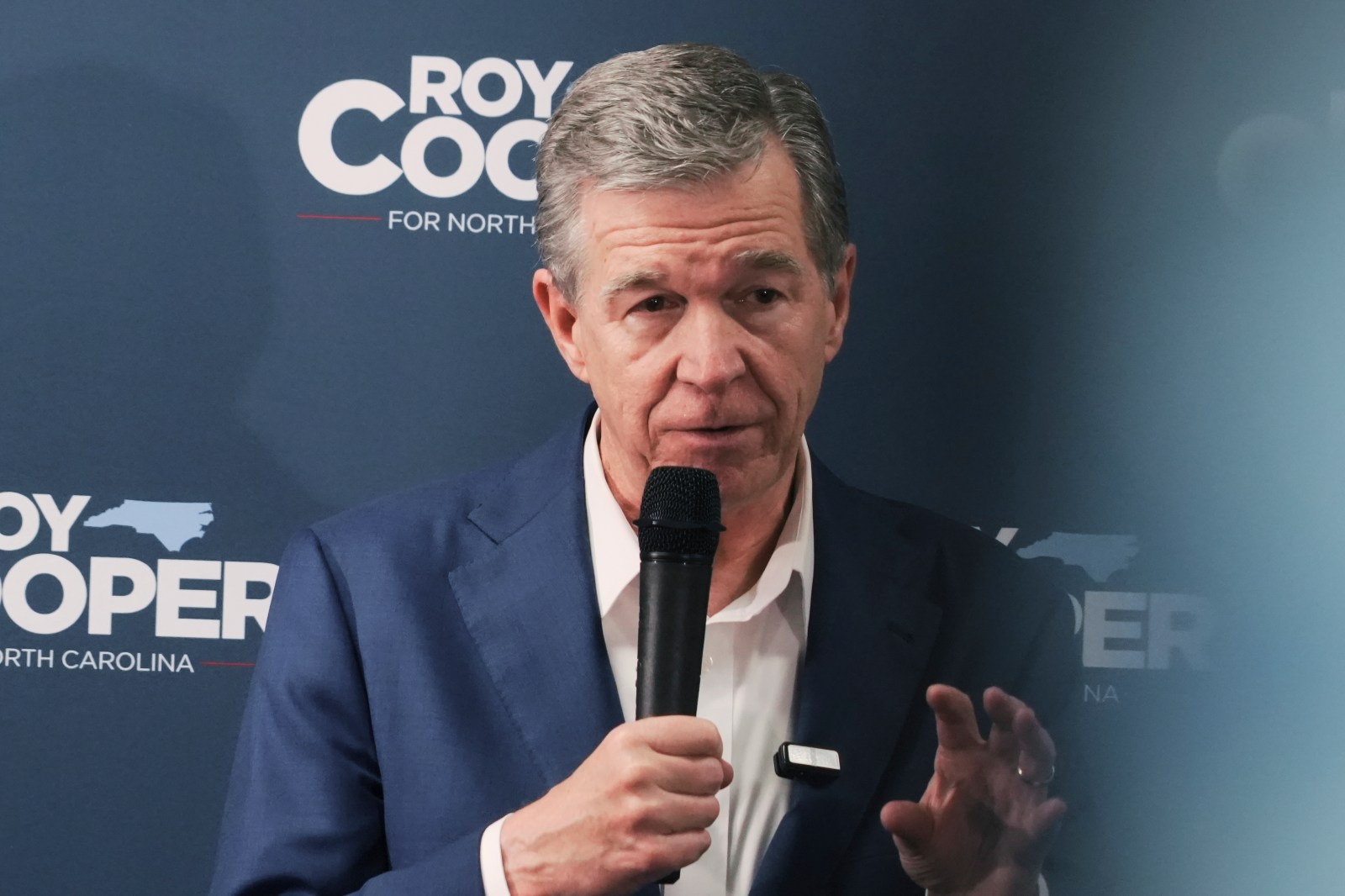
Three Senate races have recently favored Democrats, just four weeks before the midterm elections. The Cook Political Report has adjusted its predictions, moving Kansas’ race from Lean Republican to a Toss-Up, New Hampshire from a Toss-Up to Lean Democrat, and North Carolina from Lean Democrat to Likely Democrat.
Midterm elections often serve as a test for the political environment affecting the ruling party. Historically, the president’s party tends to lose seats during these periods. Currently, Republicans have a narrow majority in both the House and the Senate.
President Donald Trump won Kansas by a significant margin over then-Vice President Kamala Harris in the 2024 election, reflecting the state’s Republican preference. However, Democrats have retained influence, with Laura Kelly as governor, even though Republicans hold both Senate seats. Trump also won North Carolina, while Harris took New Hampshire in the same election.
The latest shifts in these states add to Republican concerns, as Democrats aim to leverage Trump’s declining approval ratings and rising affordability issues affecting American households. According to a forecaster, the primary uncertainty is not if Democrats will gain seats but how many. Cook estimates that Democrats might gain two to six Senate seats. The party needs four to gain control.
Republicans still remain hopeful in Michigan and Maine, but momentum appears to be favoring Democrats as Election Day approaches. In Kansas, Republicans risk losing a Senate seat held by them since 1919, as noted by High Plains Public Radio. The current incumbent, Republican Senator Roger Marshall, a doctor, faces Democrat Adam Hamilton.
Recent polling indicates that Hamilton has a slight lead or that the race is statistically tied. Agricultural and economic issues, such as rising fertilizer and gas prices, are significant factors making Kansas more competitive. Cook describes the race as the ‘Democrats’ Cinderella story of the cycle.’
Prediction markets, including Kalshi and Polymarket, currently show Marshall leading as of Tuesday afternoon.
In New Hampshire, Democrat Chris Pappas is ahead of Republican John E. Sununu for the Senate seat. Cook attributes this shift to recent polling but cautions that the race could be closer than expected. New Hampshire hasn’t elected a Republican senator in over 15 years. Kalshi and Polymarket also show Pappas leading as of Tuesday afternoon.
In North Carolina, Republican nominee Michael Whatley trails former Governor Roy Cooper in several polls. Recently, the Senate Leadership Fund stopped campaign advertising for Whatley, opting to allocate resources elsewhere. Trump held a rally in North Carolina, showing his support for Whatley, as he continues to campaign nationwide for Republicans.
Democrats haven’t won a Senate race in North Carolina in approximately 18 years. Kalshi and Polymarket currently show Cooper ahead of Whatley as of Tuesday afternoon. Democrats hope to exploit Trump’s decreasing approval ratings, both at state and national levels, as midterms approach.
Robert Y. Shapiro, a political science professor at Columbia’s School of International and Public Affairs, noted that the election seems to be moving towards Democrats gaining the House and possibly the Senate. He emphasized the importance of Democrats holding onto seats in Minnesota, Michigan, and New Hampshire, where Republicans are still competitive.
Current polling indicates Democrats have an 8-point or stronger lead in overall congressional voting. A significant trend showing potential rejection of Trump and Republican leadership is the noticeable decline in Trump’s approval among Republicans and Independents.
Leave a Reply