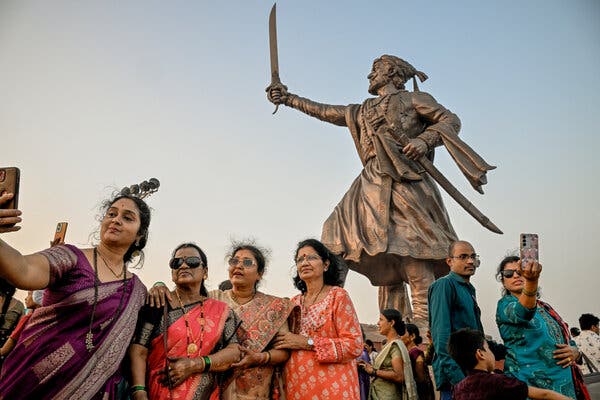
Statues of Shivaji, the founder of the Maratha empire and a prominent figure in Indian history, are appearing across India. Shivaji fought against the Mughal dynasty, and today he symbolizes a new wave of nationalism in the country. This shift is evident in the increased interest seen in places like Malvan, Maharashtra, where visitors frequently gather at his statue.
The story of how these statues have become focal points for nationalist sentiments gained attention when a significant incident occurred on March 20, 2022. In Bodhan, a town in South India, an unauthorized statue of Shivaji appeared overnight. This nearly 10-foot statue sparked immediate tension. By morning, a confrontation had erupted between Hindu and Muslim locals, prompting authorities to ban public gatherings to prevent further escalation.
The sudden appearance of the statue was orchestrated by Gopi Kishan, a member of a radical Hindu right-wing group. His planning involved considerable effort, including a motorcycle convoy. Kishan acted out of frustration with local authorities who had delayed formal permission, citing possible tensions in the Muslim-majority area. He maintained that his intent was not to provoke violence but to honor Shivaji, whom he viewed as crucial to Hindu identity.
“Had he not fought against the Mughals then, the word Hindu would not have existed today,” Kishan explained. Despite the controversy and his run-in with authorities, the statue remains at the site, towering at 18 feet when including its base.
These developments reflect a broader trend in India, where historical figures like Shivaji are being revisited and celebrated as part of a nationalist narrative. The growing number of statues and the stories behind their erection offer insights into the cultural shifts occurring in the country today.
Leave a Reply