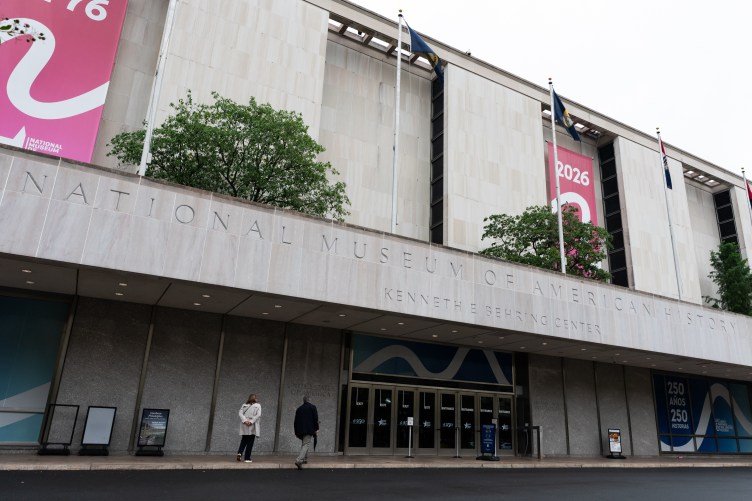
Recent controversies surround the Smithsonian Institution, particularly its National Museum of American History, as political tensions rise. In March 2025, President Donald Trump signed an executive order accusing the Smithsonian of embracing a divisive ideology. He mandated anti-woke signs outside the museum, warning visitors of an alleged ideological capture.
An Exhibit Under Scrutiny
An exhibit titled “The Electric Dr. Franklin” came under scrutiny. It explored Benjamin Franklin’s contributions to electrical science and speculated his use of enslaved people in experiments. The exhibit, which ended in 2025, highlighted Franklin’s initial involvement in slavery before turning to abolitionism.
“Benjamin Franklin’s remarkable scientific accomplishments were, in part, enabled by slavery.”
This conjecture and other controversial items drew criticism in a 162-page White House report. It accused the museum of shifting from historical education to extreme activism.
Smithsonian’s Political Position
The Smithsonian has maintained bipartisan support, remaining mostly outside political disputes. However, Trump’s actions signal a shift in this dynamic. The institution relies on the federal government for 62% of its funding, equating to over $1 billion annually. Threats of budget cuts loom, impacting its future operations.
Lonnie Bunch, the Smithsonian’s secretary, recently announced his resignation, citing stress. As the institution faces scrutiny from Trump and allies, its independence and direction are in question.
Historical Debate on Museum Direction
Since its inception in 1964, the museum has faced challenges with its narrative direction. In 1999, David Brooks criticized its focus on oppression over American history’s defining moments. A 2002 report recommended a more cohesive approach to exhibits, balancing achievements and failures.
Throughout the years, curators resisted a “great-man-of-history” narrative. Instead, the museum explored episodic and thematic storytelling. Despite efforts, debates about the museum’s narrative approach persisted.
Recent Shifts and Strategic Priorities
The museum underwent changes during the COVID-19 pandemic and the racial justice movements of 2020. It aimed to incorporate diversity, equity, access, and inclusion principles into its exhibits and operations. Critics argued this shift catered to one ideological perspective.
Conservative supporters expressed concerns that exhibits seemed ideologically driven. They noted a disconnect between liberal Smithsonian staff and the diverse visitor demographics.
Trump’s Renewed Involvement
Returning to office, Trump prioritized addressing what he deemed ideological excesses at the Smithsonian. A White House report criticized exhibits for lack of historical unity.
Two contentious congressional hearings in July amplified the debate. Republicans challenged museum leadership about exhibits they deemed inappropriate, while Democrats defended the institution’s independence.
Future Challenges and Decisions
The Smithsonian’s search for identity makes it a target as Trump administration pressures mount. Future board appointments will influence the institution’s direction. Reassessment may benefit the Smithsonian, but supporters are wary of political influences.
The Smithsonian faces a pivotal moment. Its future, including the American history museum’s, relies on leadership navigating these tensions and evolving priorities. Whether this process respects historical complexities or succumbs to political pressure remains uncertain.
Leave a Reply