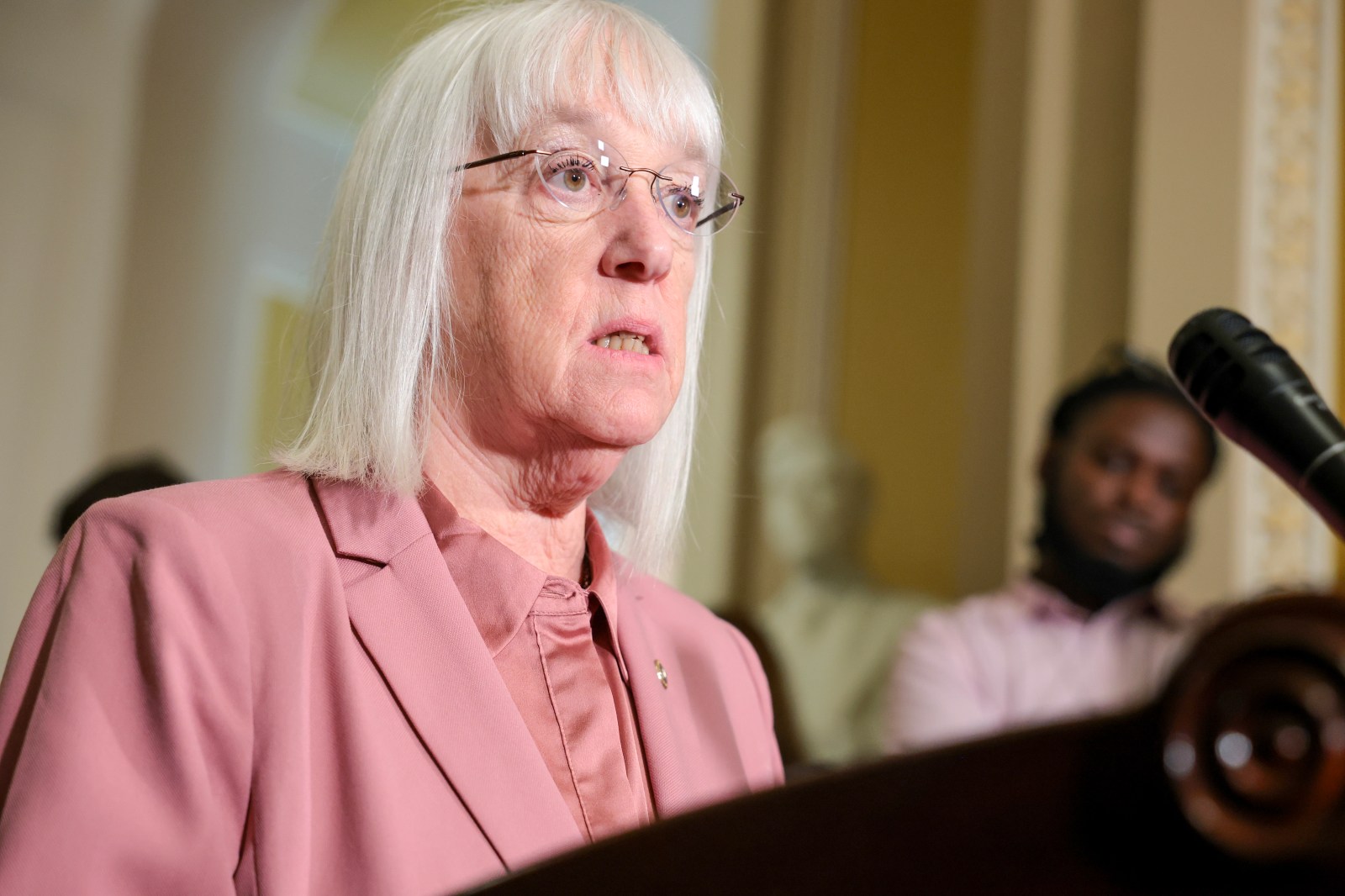
Senator Patty Murray has highlighted the critical nature of Social Security’s future, emphasizing the impact of political control after the midterm elections. The Democrat from Washington expressed concerns that without action, Social Security benefits could face severe reductions.
Murray criticized Republicans, suggesting they intend to reduce benefits, while Democrats want wealthier individuals to contribute more. As Murray stated, “Republicans want to cut your benefits. Democrats want billionaires to pay their fair share. THIS is the Social Security election.” She asserts that the goal is to fortify the program to honor commitments to those who have contributed over their lifetimes.
Why It Matters
The urgency of addressing Social Security’s financial challenges is growing, irrespective of congressional control. According to the 2026 Social Security Trustees Report, the Old-Age and Survivors Insurance (OASI) Trust Fund will sustain its reserves for full benefit payment only until 2032. Post-2032, if unaddressed, incoming revenue will cover approximately 78% of scheduled benefits, resulting in an automatic reduction of 22% for beneficiaries.
What to Know
Murray’s alert arrives as Democrats endeavor to make Social Security a pivotal topic in the midterm elections. Her argument centers on closing the financing gap by increasing revenue, particularly from the wealthiest, rather than cutting benefits.
Murray argued in a Senate Budget Committee hearing that the wealthiest Americans should bear a larger tax burden for Social Security. She stressed, “When the richest people in the country have the smallest effective tax rate—that does not seem fair, especially with retirees facing a 24% benefit cut in six years.” However, the issue extends beyond a simple choice between maintaining or eliminating Social Security. Various strategies are open to lawmakers, including raising payroll taxes, increasing taxable wages, adjusting benefits, or combining revenue increases with benefit changes.
Kevin Thompson of 9i Capital Group noted the complications in the debate. He remarked, “Trump has stated we cannot afford Medicare and Social Security, emphasizing military funding instead.” Although Republicans publicly affirm their intent to protect benefits, Democrats focus on GOP leaders’ references to reforming mandatory programs like Social Security.
Experts warn that without bipartisan cooperation post-midterms, the 22% cut will activate. “Each year without reform exacerbates the urgency,” said Alex Beene, financial literacy instructor at the University of Tennessee at Martin. The OASI trust fund’s depletion will compromise retirement and survivor benefits significantly, with an estimated 22% reduction in benefits translating to roughly $459 less per month for retirees.
Thompson contrasted Republican and Democratic views, stating, “Republicans emphasize eliminating waste, while Democrats lean towards increased taxation for maintaining benefits.” Social Security will continue receiving payroll taxes even after reserve depletion, but this will not suffice for full benefits payment, significantly affecting retirees relying heavily on the program.
What Happens Next
Regardless of the midterms’ outcome, addressing the financing gap remains pressing for future Congress sessions to prevent the trust fund’s depletion by 2032. Beene reassured that it is unlikely lawmakers will allow fund depletion or enacted benefit cuts.
“Beneficiaries seeing cuts to monthly payments seem improbable,” he noted, citing beneficiaries’ strong voter base. Any politician would risk electoral backlash by endorsing cuts.
Leave a Reply