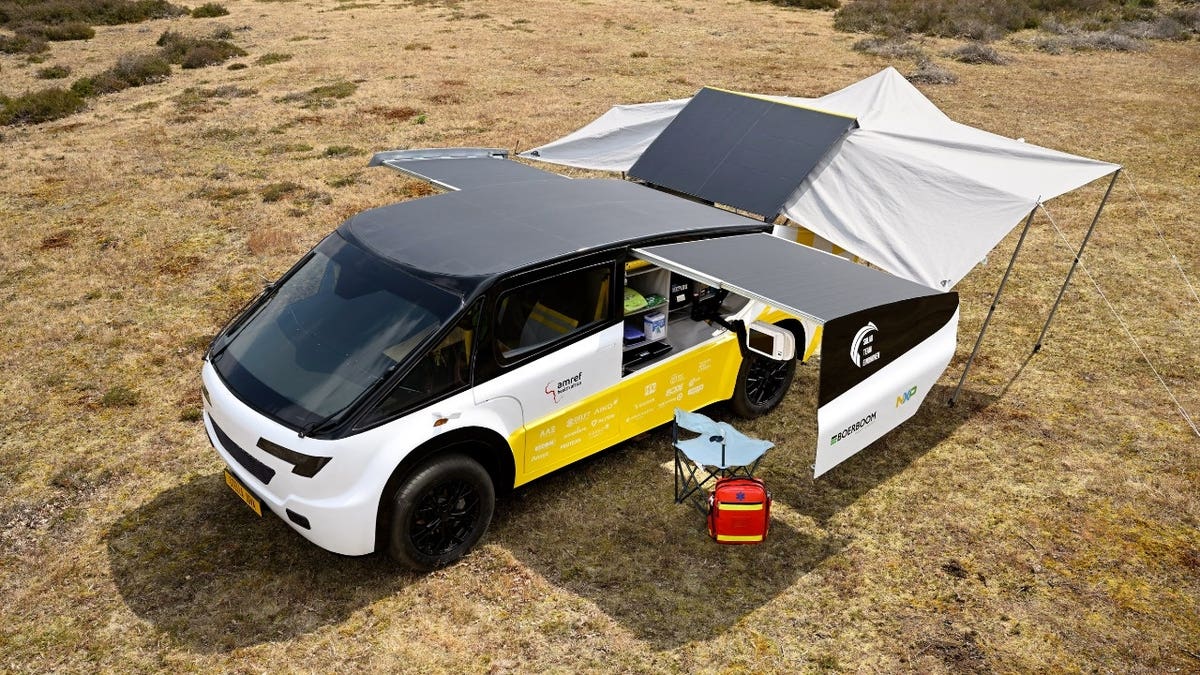
Imagine facing an emergency where the closest hospital is hours away, and there is no reliable electricity once you get there. A team of university students in the Netherlands is working to change this. They have developed a unique vehicle designed to transform access to medical care in remote locations.
Introducing Stella Juva: The Solar-Powered Ambulance
Solar Team Eindhoven has unveiled what they describe as the world’s first solar-powered ambulance, named Stella Juva. The vehicle is engineered to deliver healthcare directly to individuals living far from hospitals, rather than transporting patients to medical facilities.
Stella Juva harnesses solar energy to generate the electricity needed for both its mobility and medical equipment. This innovation is a significant development for remote communities, where fuel is scarce and reliable electricity is a luxury.
Design and Purpose of Stella Juva
Developed by 23 students from Eindhoven University of Technology, Stella Juva is built for regions with challenging road conditions and limited fuel supplies. The vehicle addresses the critical issue of unreliable electricity, which affects healthcare access worldwide.
The World Health Organization estimates that approximately 1 billion people globally receive care from healthcare facilities with unstable power or no electricity at all.
Stella Juva brings its own electricity source, functioning more like a mobile clinic than a typical ambulance. Healthcare workers can visit underserved areas to provide care without relying on nearby charging stations.
How Stella Juva Utilizes Solar Power
The vehicle’s roof is equipped with high-efficiency solar cells. These cells use a design called All Back Contact technology, allowing more sunlight exposure by relocating electrical contacts to the back of each cell.
Stella Juva must generate sufficient solar power to traverse difficult terrains while energizing its onboard medical equipment. A 50-kWh lithium-based battery stores the energy, ensuring operation even with limited sunlight or at night. Under optimal conditions, the vehicle can travel up to 715 kilometers (about 444 miles) in a day at speeds reaching approximately 75 mph.
Powering Medical Equipment
An innovative feature of Stella Juva is the separation of the electrical systems powering the vehicle from those supporting the medical cabin. This ensures that if battery levels drop significantly, remaining electricity is prioritized for crucial medical equipment.
The vehicle uses pure sine wave inverters to provide stable electricity, minimizing voltage fluctuations that could affect sensitive medical tools. Such considerations ensure the vehicle is not just about traveling distance but also about maintaining medical support after arrival.
Challenges of Building Stella Juva
Constructing a lightweight vehicle capable of carrying medical apparatus required the use of carbon-fiber composite materials for the chassis and body. Stella Juva weighs about 1,350 kilograms (approximately 3,000 pounds), quite light compared to conventional ambulances.
Its aerodynamic design reduces wind resistance, allowing it to effectively use its energy for reaching those in need. This represents a major step forward in solar engineering, where efficiency meets a human-centric mission.
The Equipped Mobile Medical Clinic
Inside, Stella Juva houses a climate-controlled medical cabin, carrying essential equipment for health services such as tuberculosis screening. It can also facilitate ultrasounds, disease testing, and vaccinations, all powered by its solar-based energy system.
Reliable electricity is vital for the refrigeration of vaccines and medications, ensuring their efficacy despite external temperatures.
Durability and Future Testing
Off-road conditions impose demand on the solar panels, requiring durability against vibration and weather changes. Special copper interconnections help improve their strength, reducing the risk of damage.
The real test begins with field trials in Kenya with Amref Health Africa, where the vehicle will demonstrate its capacity to deliver healthcare under realistic conditions.
Potential Impact and Future Prospects
While Stella Juva won’t appear in hospitals soon, this prototype demonstrates the potential for wider applications. Mobile units capable of self-generating energy can be invaluable during natural disasters or in rural settings.
Technology continues to evolve, with solar cells and batteries improving in efficiency. This progress could expand the utility of such vehicles, offering scalable solutions for healthcare delivery across the globe.
Leave a Reply