The Kospi index in South Korea experienced a severe drop of more than 11% on Tuesday. This was largely due to heavy selling of chipmaking stocks. The downturn in these stocks has been fueled by fears of a potential bubble in artificial intelligence. Like most Asian markets, U.S. futures also saw a downturn and oil prices decreased.
Trading on the Kospi was temporarily halted as it reached its lowest point since April. Chipmakers such as Samsung Electronics and SK Hynix, which significantly influence the index, saw sharp declines in their stock values. Samsung Electronics fell 13.1%, and SK Hynix decreased by 13.5%. On Monday, SK Hynix’s shares traded in the U.S. dropped below their initial IPO price, closing at $143 a share.
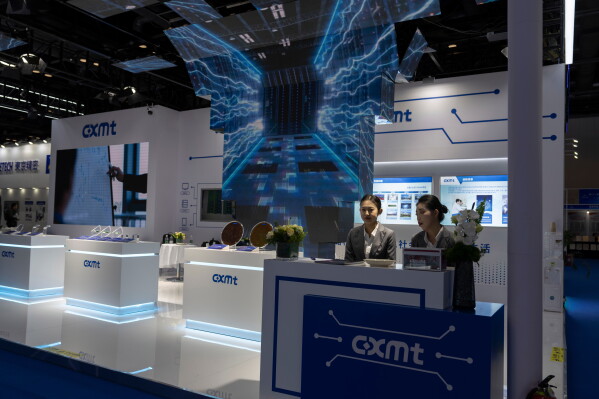
Analysts attribute the sell-off of AI-related shares to expectations that competition from Chinese AI startups and chipmakers could threaten global leaders’ gains. In one striking example, Chinese memory chipmaker CXMT saw a 466% price increase during its Shanghai debut, raising at least $8.6 billion.
A report by The Information noted that China has started mass-producing deep ultraviolet (DUV) chipmaking tools. Jing Jie Yu, an equity analyst at Morningstar, suggested that these developments spurred fears about the competitive position of current global chipmaking leaders, though he believes the reaction was overstated.
Beyond South Korea, other Asian markets also faced declines. Tokyo’s Nikkei 225 fell 4.3%, Taiwan’s Taiex decreased by 4.7%, and the Shanghai Composite index slid 1.4%. To the contrary, Australia’s S&P/ASX 200 increased by 0.4%, while India’s Sensex dipped by 0.1%.
Oil prices have continued their downward trend as the U.S. and Iran refrained from military actions. Regional officials indicated progress in resuming U.S.-Iran negotiations. Brent crude dropped 0.5% to $85.48 a barrel, significantly lower than approximately $72 per barrel prior to the Iran conflict in late February. U.S. benchmark crude decreased by 0.4% to $82.25 a barrel.
Regarding U.S. markets, the main S&P 500 index gained marginally by less than 0.1%. The Dow Jones increased by 0.5%, whereas the Nasdaq composite decreased by 0.2%. Major chipmakers like AMD, Nvidia, and Micron Technology experienced notable declines, pushing indices down.
In currency markets, the U.S. dollar decreased slightly to 163.71 yen from 163.75 yen. The euro remained stable at $1.1369.
Kurtenbach provided additional reporting from Bangkok.
Leave a Reply