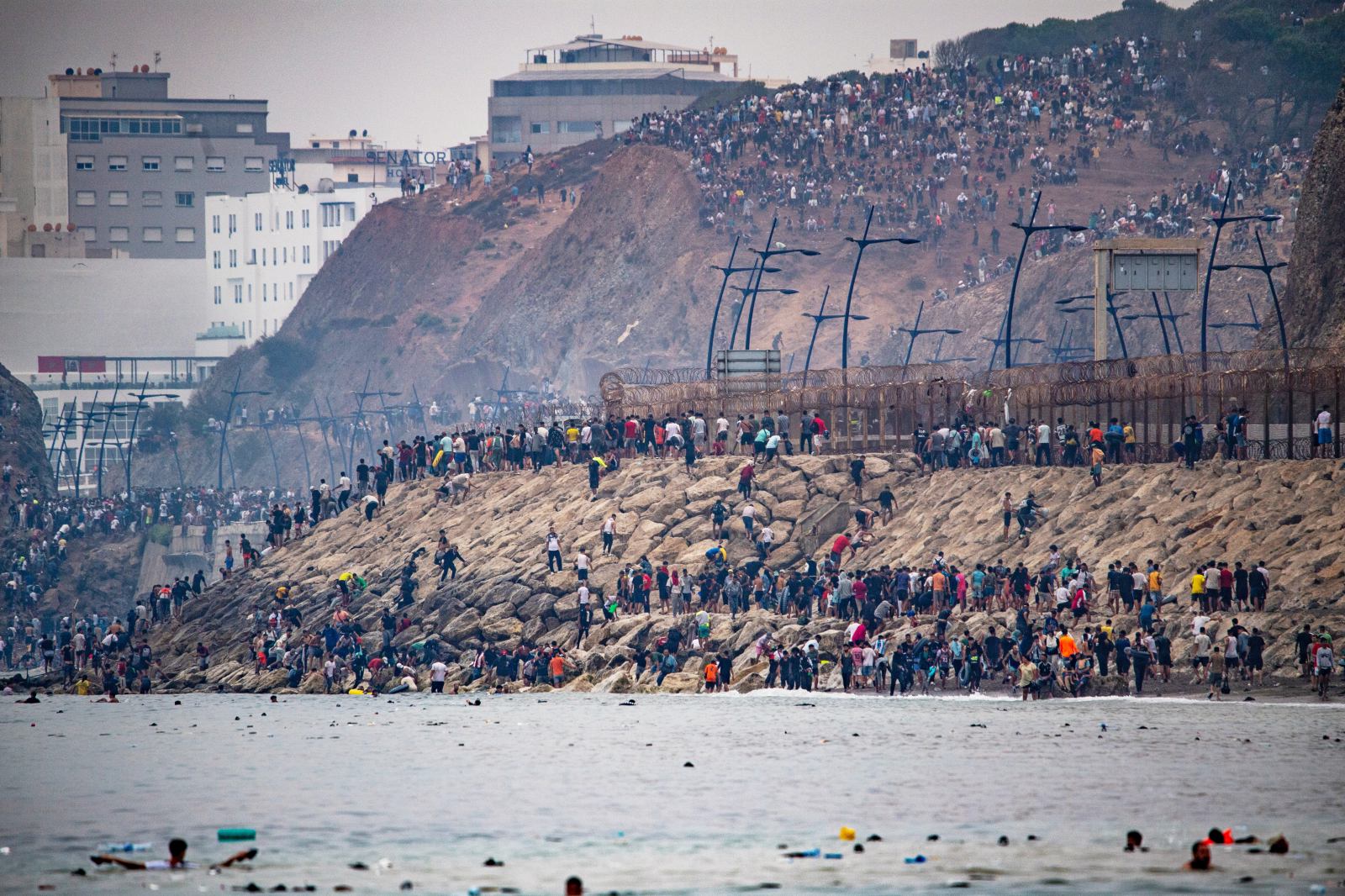
Spanish Prime Minister Pedro Sánchez has criticized certain European allies for their response to the migration crisis in Ceuta, Spain’s African enclave. He described some reactions as ‘selfish, polarizing and unlawful,’ and accused them of being driven by ‘prejudice, fake news, ignorance or political interest.’
Over recent days, 50,000 to 60,000 migrants entered Ceuta from neighboring Morocco, but most have now returned, according to Spain’s interior ministry. The Spanish government reported a death toll of 67, with deaths occurring from drownings and a stampede near a breakwater.
In a letter to European Commission President Ursula von der Leyen, Sánchez defended Spain’s handling of the situation, noting that border control was restored within 48 hours. His government provided humanitarian support and returned ‘virtually all’ those who crossed irregularly. Spain has actively worked to prevent unauthorized movement towards mainland Europe, collaborating closely with Moroccan authorities while receiving limited assistance from other European nations.
The European Union cannot afford this kind of selfish, polarising and unlawful reaction.
Sánchez’s comments follow actions by Italy, which temporarily reinstated border checks on arrivals from Spain. Officials in Finland and Denmark supported proposals to suspend Spain from the Schengen area due to its management of the crisis. These reactions occurred despite Ceuta being surrounded by Moroccan territory and separated from Spain by sea, with no evidence of migrants reaching the mainland.
Sánchez’s Letter
In his letter, Sánchez defended Spain’s overall migration approach, stating that policies had reduced irregular arrivals. Spain is considered ‘the second most secure external border in the EU,’ due to having halved irregular entries compared to Italy between 2021 and 2026.
Spain has offered support to nations facing migration challenges, previously accepting migrants from Eastern Europe via Belarus and the Italian island of Lampedusa. Sánchez urged an urgent videoconference of the EU’s interior ministers to establish a coordinated crisis response. He emphasized shared responsibility for securing external borders among all EU Member States.
European Reactions
The crisis has revealed division within Europe regarding border enforcement and the need for solidarity with front-line states. Italian Prime Minister Giorgia Meloni, joined by leaders from 22 other countries, called for coordinated emergency measures to strengthen borders, combat smuggling, and expedite migrant returns. Italy’s foreign minister attributed the crisis partly to Spain’s recently closed regularization program for undocumented migrants; Spain rejected these claims.
European Commission President Ursula von der Leyen offered assistance to Spain, commending efforts to contain the crisis. ‘This shows why the control of our European borders matters,’ she stated, advocating for further strengthening of the border system and solidarity among EU nations.
France dismissed calls to suspend Spain from Schengen, asserting the importance of maintaining cooperation in security matters.
Events in Ceuta
The surge of arrivals occurred as many crossed Ceuta’s frontier with Morocco by scaling fences, moving around breakwaters, and swimming from nearby coastal towns. Ceuta, alongside Melilla, forms the EU’s only land border with Africa. Enhanced identity checks prevent automatic access to the Schengen area from Ceuta.
The sudden influx overwhelmed local facilities, prompting Madrid to deploy soldiers and police as the regional government struggled to manage. While the exact trigger remains uncertain, Spain cited trafficking networks, and disentangled the crisis from the regularization program designed for migrants already in Spain.
Spain responded by installing a 500-meter containment barrier along Ceuta’s maritime border to deter swimming attempts around land fortifications. Soldiers monitored the shoreline, helping exhausted swimmers retreat back along the border.
Leave a Reply