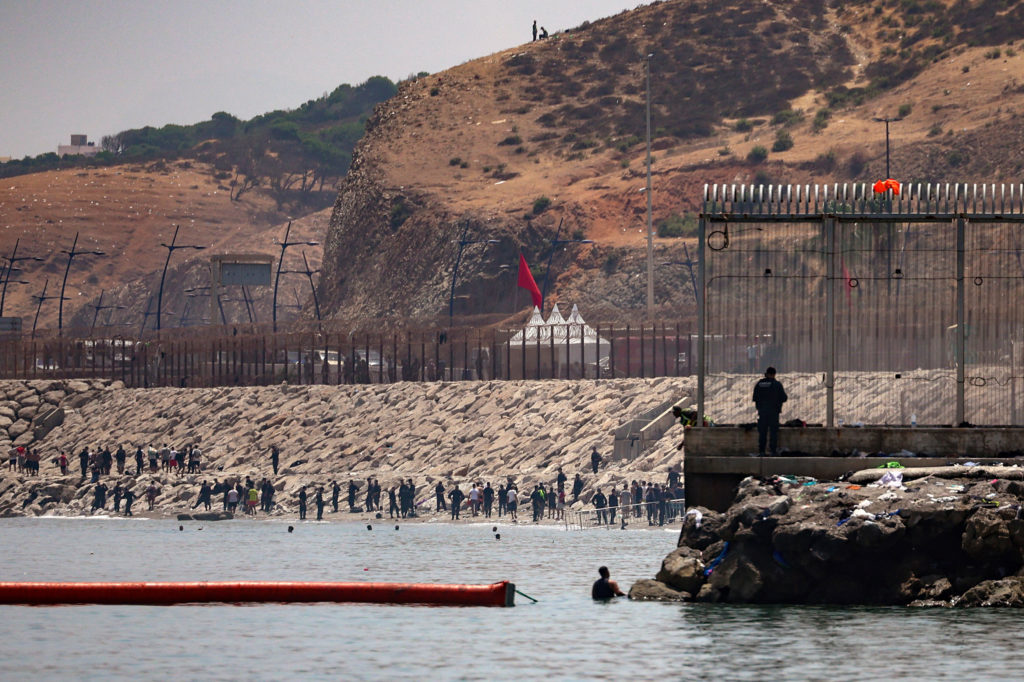
Spain has erected a 500-meter barrier along the sea border between Ceuta and Morocco. This action follows a massive influx of migrants into Ceuta, a Spanish territory in North Africa. Approximately 50,000 to 60,000 migrants crossed the border over a span of two days. Tragically, 67 individuals perished during this incident, some by drowning and others in a stampede.
This sudden event has reignited discussions on immigration policy across Europe. Criticism of Spain’s socialist government by right-wing politicians emerged, especially as images of crowds entering Ceuta circulated.
Migrant Policy and European Reactions
Spain’s approach to migration focuses on legalizing workers without proper authorization to boost its economy. This contrasts with the more restrictive policies in other European countries and the U.S. Spanish Prime Minister Pedro Sánchez criticized EU leaders for their reactions, condemning calls to suspend Spain from the Schengen zone as prejudiced.
Despite the crisis in Ceuta, Spain has reported fewer illegal migrants compared to Italy and Greece in recent years. While many migrants returned to Morocco voluntarily, a few remained in Ceuta under the supervision of Spanish soldiers.
European Union Response
Several EU countries, including Italy and Denmark, have pushed for a coordinated response to the Ceuta situation. They advocate for policies preventing mass crossings and migration being used as a political tool.
The Danish prime minister’s office released a letter, co-signed by leaders from 20 countries, calling for an urgent meeting of EU interior ministers. Italian Premier Giorgia Meloni threatened to suspend open-border agreements with Spain, reinstituting controls for travelers from Spain.
Migrants’ Experience
As hundreds of migrants made their way back to Morocco, many expressed dissatisfaction with their treatment in Ceuta. Migrants recounted being left without food or shelter, leading them to camp in nearby forests.
Ouail Lamzeiz, who spent over a week in Ceuta, described the difficult conditions, emphasizing the lack of assistance from fellow Moroccans.
Impact on Ceuta
Locals in Ceuta noticed disruptions caused by the border crisis. The once peaceful city experienced significant changes, as shared by resident Mohamed Abdelatif.
Spanish and Moroccan forces faced off with migrants attempting to enter Ceuta, with security measures heightened on both sides. This included the use of tear gas and water cannons to manage the crowds.
Future Outlook
While many migrants returned to Morocco, a few, like Mohamed Hatri, expressed determination to stay in Ceuta, despite challenges. They faced restrictions intended to compel them to return.
The situation in Ceuta highlights ongoing migration challenges and the need for comprehensive policy solutions within the EU.
This report includes contributions from Renata Brito in Barcelona and Elena Becatoros in Athens.
Leave a Reply