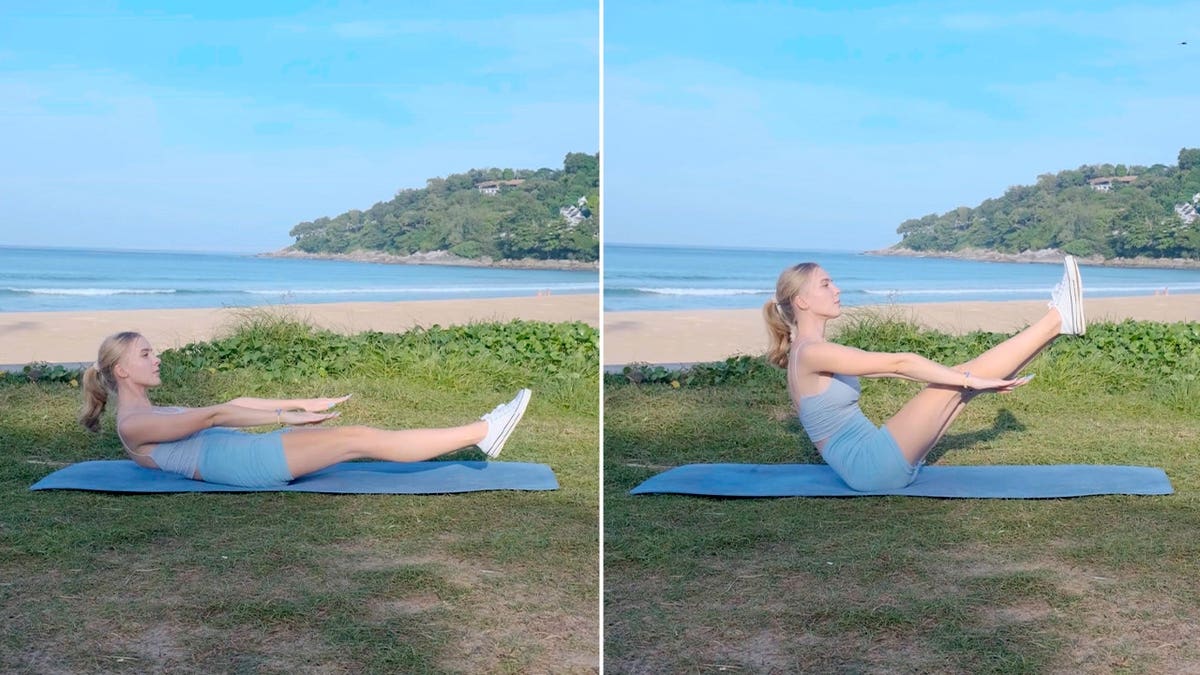
Strengthening the core enhances balance and stability, supporting both movement and physical performance. While traditional abdominal exercises prove effective, the boat pose in yoga offers additional benefits. This pose, known as Navasana, shapes the body into a “V” and engages various muscles crucial for core stability.
The Importance of a Strong Core
Melissa Leach, a Philadelphia-based certified yoga instructor and strength coach, emphasizes the value of having a strong core. “A strong core provides a foundation for both exercise and everyday movement,” she explains. Exercises like these strengthen key muscles such as the obliques, the lower back, and deep stabilizers like the transverse abdominis.
“Together, these muscles work to stabilize your spine,” Leach notes, “creating a strong foundation for movement and allowing you to transfer force more efficiently between your upper and lower body.”
Routine tasks, from carrying groceries to rising from a chair, engage core muscles. This helps stabilize the trunk, maintain balance, and ensures controlled movement.
Core Benefits of the Boat Pose
According to Leach, the boat pose not only challenges the abdominal muscles but also activates the hip flexors, glutes, and back. This approach builds functional core strength, engaging multiple muscle groups. Unlike the traditional situp, limited to one motion plane, the boat pose demands coordination and balance from the entire core.
“Whether you’re holding the pose or moving dynamically, you’re training the muscles that stabilize your spine and pelvis,” Leach continues, “rather than primarily strengthening the muscles required for trunk flexion, as a situp does.”
The boat pose contributes to developing stability and muscular endurance. Leach mentions, “The position requires your deep core muscles, the ones that support your spine and pelvis, to stay engaged throughout.” Over time, this can lead to improved posture and a stronger lower back.
How to Perform the Boat Pose
Here are Leach’s steps to execute the boat pose safely and correctly:
- Sit on a mat or floor with bent knees and feet flat.
- Lean back slightly, maintaining a straight lower back.
- Lift feet off the ground, keeping shins parallel to the floor. Extend legs upward if possible.
- Reach arms forward, parallel to the ground and engage core muscles.
To add dynamics, transition in and out of the pose instead of merely holding it:
- Lie flat on your back.
- Use core muscles to lift legs and upper body into the “V” shape.
- Lower back down and repeat.
Modifications for Beginners
For beginners, Leach suggests making modifications:
- Keep legs bent in a half boat pose to reduce strain.
- Lightly hold the backs of thighs for support and balance.
- Sit on a folded blanket or cushion to tilt pelvis forward if struggling with balance.
- Position back a few inches from a wall for additional support.
Chair-Supported Version for Seniors
For seniors or those with limited core strength, Leach recommends a chair-supported version. Sit at the front edge of a sturdy chair, holding the sides for support. Lean back slightly and lift one or both feet off the floor.
“This builds the same engagement without the demand of balancing unsupported,” Leach advises, “and you can progress to the floor version once you feel steadier.”
By incorporating boat pose into your routine, you can develop core strength, enhance balance, and reduce the risk of back pain, all important for maintaining functional movement in daily activities.
Leave a Reply