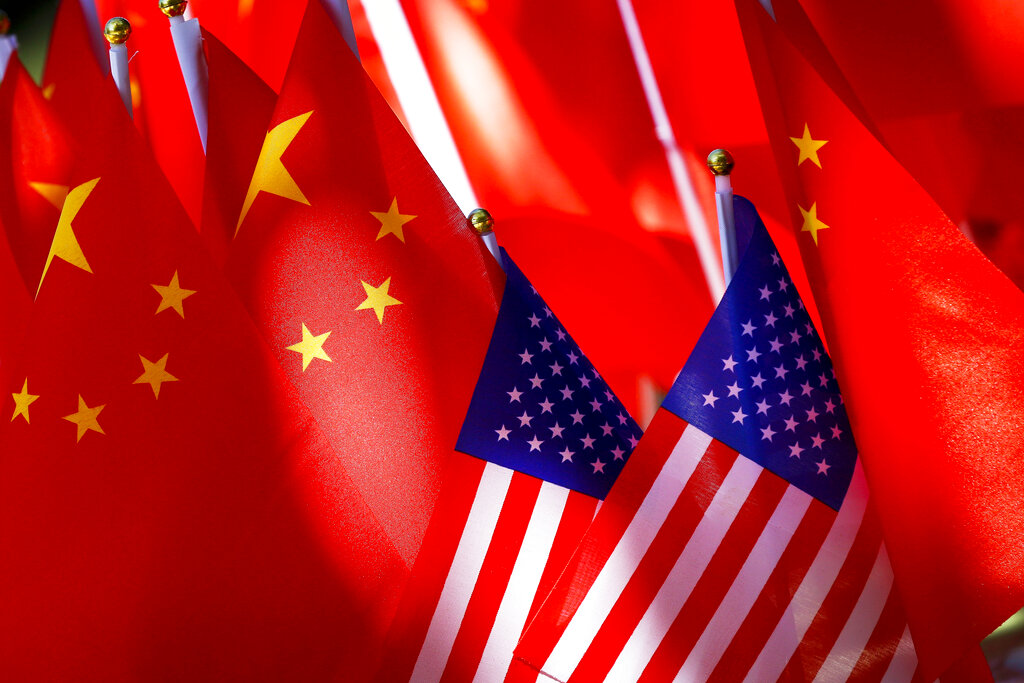
The National Defense Authorization Act is crucial in countering China’s military and technological ambitions. This year’s defense bill should also address foreign financial influence in American universities and the associated risks.
U.S. higher education supports national security by educating scientists, conducting research, and generating strategic discoveries. Foreign governments, especially China, seek to influence and access these sensitive research networks. Recent congressional investigations reveal that U.S. taxpayer-funded research has aided China’s military and technological growth through joint research and university partnerships. Committees highlighted collaborations in sensitive fields such as artificial intelligence, quantum technology, hypersonics, and nuclear physics. Concerns were also raised about joint institutes connected to Chinese entities with defense ties.
Foreign funding transparency is crucial. Gifts, contracts, and partnerships might create dependencies and conflicts of interest, providing foreign governments a foothold in universities. While individual relationships seem manageable, looking across systems reveals significant patterns of influence.
“Section 117 of the Higher Education Act mandates that institutions report foreign gifts and contracts over $250,000 in a calendar year. Despite sounding significant, universities disclosed $6.5 billion in previously undisclosed foreign transactions after aggressive enforcement in 2019.”
Recent disclosures, however, show persistent issues. Federal data highlights $405 million in reported university transactions linked to entities on U.S. government watchlists or restricted lists.
In response, Congress is contemplating stricter disclosure requirements for the defense bill. Proposed measures would lower the reporting threshold to $50,000 and require full disclosure for funds from countries of concern like China, Russia, Iran, and North Korea. Enhanced enforcement and better access to foreign funding data are crucial goals.
These requirements aim to give Congress, federal agencies, universities, students, and the public a transparent view of foreign investments in higher education. Improved implementation can compare funding against risk indicators, including export-control restrictions and entity lists, helping assess risks before deepening partnerships.
Importantly, these measures would not restrict foreign students from attending U.S. universities or legitimate academic exchanges. The focus is purely on disclosure of gifts, contracts, and terms. Transparency safeguards America’s openness to global talent while distinguishing legitimate academic exchanges from risky relationships.
As Congress considers China-related measures in the defense bill, foreign funding disclosure should be central. The objective is not to alienate international participation but to monitor who seeks access to U.S. campuses.
Craig Singleton is a senior fellow at the Foundation for Defense of Democracies and a former U.S. diplomat.
© 2026 Nexstar Media Inc. All rights reserved.
Leave a Reply