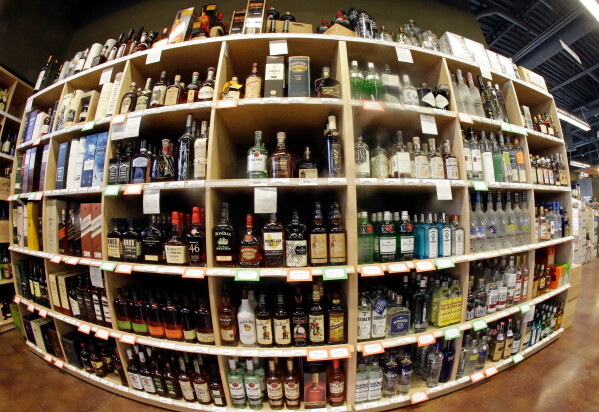
A study commissioned by President Joe Biden’s administration examined the health risks associated with alcohol. Released independently, the study was initially set aside by President Donald Trump’s administration due to industry pushback and scrutiny from a congressional committee.
Published in the Journal of Studies on Alcohol and Drugs, the findings align with long-standing research, emphasizing that even one drink daily increases health risks. No alcohol level offers protection against mortality. Moderate drinking raises the potential for premature death and over 200 diseases, including heart conditions and cancer.
This study was one of two government reviews used to inform new dietary guidelines. The guidelines now suggest consuming less alcohol for better health. Yet, the study’s authors critiqued the guidelines’ lack of practical advice on drinking risks.
Notably, one official accused Trump’s administration of overshadowing the research, an allegation denied by the previous administration. Robert Vincent, formerly with the Substance Abuse and Mental Health Services Administration, led the research effort. In an editorial, Vincent argued that alcohol policy challenges do not stem from scientific uncertainty but from policy makers’ willingness to prioritize evidence over commercial interests.
This tension highlights broader conflicts between scientific communities and the Trump administration, which questioned scientific standards, dismissed scientists, and cut crucial research funding.
The study, previously released as a draft, faced opposition from the alcohol industry and congressional Republicans. They launched campaigns against it, labeling it as biased in a House report and accusing authors of predetermined conclusions.
Spokesperson Emily Hilliard from the U.S. Department of Health and Human Services asserted that the study was reviewed alongside existing scientific evidence. The departments of Health and Agriculture relied on comprehensive data in crafting the 2025–2030 Dietary Guidelines.
Despite opposition, the dietary guidelines emphasized moderate alcohol consumption. Researchers, however, advocate for stronger guidelines advising one drink or less daily. Dr. Timothy Naimi, a study author, endorsed clearer quantity guidelines, highlighting that less alcohol is better.
This study differs from others by focusing specifically on alcohol-attributable mortality. Priscilla Martinez-Matyszczyk, another study author, clarified that it avoided confounding factors by not considering mortality from all causes. She responded to Dr. Mehmet Oz’s commentary, stating no studies effectively separate social from health effects related to drinking.
The study supports findings from recent research, like a 2019 Lancet study indicating moderate drinking increases stroke and high blood pressure risks. Previous studies suggesting heart health benefits from moderate drinking are being challenged by more robust research methods.
With half of Americans over age 12 having consumed alcohol recently, it remains the most prevalent addictive substance. For context, one drink equals a 12-ounce beer, a 5-ounce wine glass, or a single liquor shot.
The Associated Press Health and Science Department receives support from the Howard Hughes Medical Institute and the Robert Wood Johnson Foundation. All content responsibility lies with the AP.
Leave a Reply