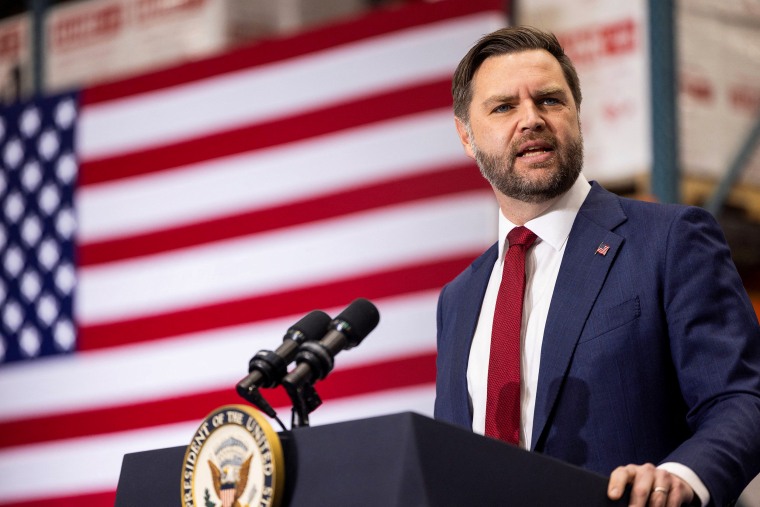
On Tuesday, the Supreme Court invalidated longstanding campaign finance rules. These rules, challenged by Vice President JD Vance, restricted how much a national political party committee could spend in coordination with individual candidates.
In a 6-3 decision written by Justice Brett Kavanaugh, the court ruled that these restrictions violate free speech rights under the First Amendment. The court based its decision on the premise that political spending equates to speech.
The appeal came from the National Republican Senatorial Committee, the National Republican Congressional Committee, and two candidates from the 2022 elections: Vance, a former Senate candidate in Ohio, and then-Rep. Steve Chabot, a Republican congressman from Ohio who lost his re-election.
During the Trump administration, the Federal Election Commission supported the challengers. Historically, the Supreme Court’s conservative majority has been wary of campaign finance restrictions, which Republicans often oppose.
Several rulings have rolled back these restrictions over time. Notably, the 2010 Citizens United v. FEC decision allowed unlimited independent spending by outside groups, known as super PACs.
Previously, political parties could make unlimited independent expenditures for candidates, but they had limits on spending that coordinated with campaign activities. This included expenses such as venue hiring, fundraising consultants, and travel costs. Republicans argued these limits were outdated.
These caps varied based on the voting age population in specific elections. Limits could reach nearly $4 million for Senate races and $127,000 for at-large House seats.
The impact of these caps diminished following the Citizens United ruling, which increased spending in politics. The original goal was to curb money’s influence in politics to prevent corruption or its appearance, but the effectiveness of this goal has declined.
Leave a Reply