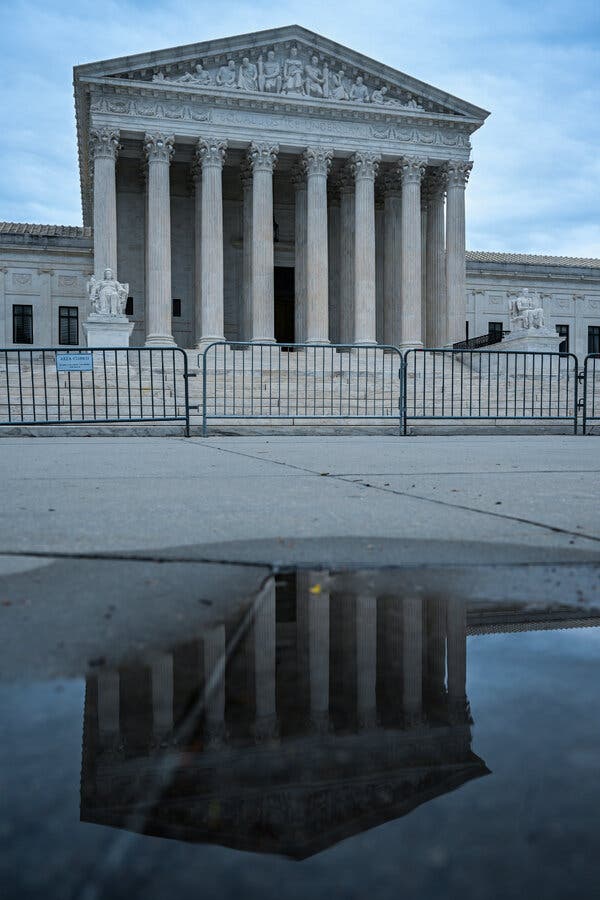
In a significant decision on Tuesday night, the Supreme Court’s conservative majority offered insight into future congressional district battles under a less robust Voting Rights Act.
In February 2025, a federal court panel in Alabama, composed of three judges and including two appointed by former President Trump, conducted an 11-day trial. This trial examined the proposed congressional district map for Alabama. The proceedings featured over 20 witnesses, 40 lawyers, and almost 800 exhibits.
At the trial’s conclusion, the judges determined that Alabama’s Republican-led state legislature deliberately discriminated against Black voters. They argued that the plan to have only one majority-Black district out of seven was an intentional move to weaken Black Alabamians’ voting power in a state where over 25% of residents are Black.
Despite this finding, the Supreme Court’s conservative majority allowed Alabama to implement the controversial map. The court justified its decision by referring to a “colorblind Constitution,” which permitted the state to replace the existing map with one that potentially favors Republicans in their effort to maintain a slim House majority during midterms.
This decision, allowing a map previously deemed “tainted by intentional race-based discrimination” by a lower court, raised concerns about the Supreme Court’s stance on racial discrimination in congressional maps and the judiciary’s role in redistricting.
“The court just seems really hellbent on getting lower federal courts out of any policing of redistricting,” commented Nicholas Stephanopoulos, a Harvard law professor specializing in election law.
Leave a Reply