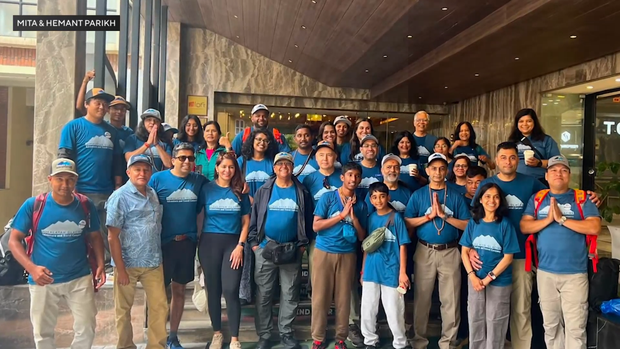
By September 22, 2026, a month after a devastating flash flood hit a Himalayan river valley, a Suwanee couple has safely returned home. The group they traveled with did not survive. Mita and Hemant Parikh had joined 47 others on a long-planned pilgrimage to Mount Kailash in Tibet. Nearly a month after the disaster, the tour company reports that none of the missing families from their group have been found, nor have the seven missing guides. All remain unaccounted for.
For the Parikhs, the past month has involved reflecting on how a simple decision — a side trip they almost skipped — altered their fate. Mita remarked on their daily discussions, “Why did we decide this way?” The pilgrimage had been 15 years in the making for the couple. “Everyone has a bucket list, but this list, you don’t choose it,” Mita expressed. “God chooses for you.” Mount Kailash, a Himalayan peak, is among Hinduism’s sacred pilgrimage sites. For the Parikhs, visiting it was a chance for peace, meditation, and religious surrender. They joined a diverse group of 47, forming bonds over shared meals and plans.
The group included travelers from the United States and Australia, among others, with some members connecting via WhatsApp before meeting face-to-face. Families bonded, and travel plans extended beyond the pilgrimage. Yet, the flood took those lives, including families, children, and guides.
An unexpected opportunity arose, leading Mita and Hemant to visit Lhasa and Everest Base Camp before rejoining the group in Saga. This spontaneous decision was unusual for them. “Usually we argue, or tickets are expensive,” Mita recalled about past differences. “But I don’t know why we both agreed.” For Hemant, being near Everest was a draw. “Mount Everest is the highest peak in the world,” he noted. “I cannot climb, but I can go and see from a distance.” Guided with a driver, the couple traveled to Everest, seeing the peak despite snow forecasts.
Meanwhile, the group stayed behind in the valley. A flash flood struck. At first, the news did not alarm Hemant. “Our guide said there was a flood,” he recalled. “I thought… it’s not a big deal. There’s always floods.” At Everest Base Camp, unaware of the severity, they missed urgent calls. Friends and family expressed relief upon hearing from them. Their group, however, wasn’t delayed. Communication barriers and limited news access added confusion. Mita and Hemant were the sole group members on the side trip to mount Everest – a trip that unintentionally saved their lives.
As they waited to reconnect, hope waned. Attempts to contact the group failed, prompting the tour operator to survey the area via helicopter. The hotel where the group stayed was obliterated. Hemant said, “Not a single piece of concrete or pillar. Nothing is there.” Mita envisions the morning before everything changed. “They were drinking tea, eating breakfast about 8:30,” she remembered. A month later, uncertainty lingers.
Returning to Atlanta brings mixed emotions for the Parikhs. “As soon as I close my eyes, I see Kailash, and I see the people,” Mita admitted, hoping someone survived, possibly finding higher ground or shelter but unable to communicate.
Hemant asks himself why they survived, doubting if anything could have helped those left behind. Mita reflects on her return, emphasizing time with others and caring deeply. Yet, the ordinary choice of a side trip haunts her. “That’s what keeps me awake,” she said. “Why did God choose us to live? There must be some purpose, right?” Even now, they seek answers.
Leave a Reply