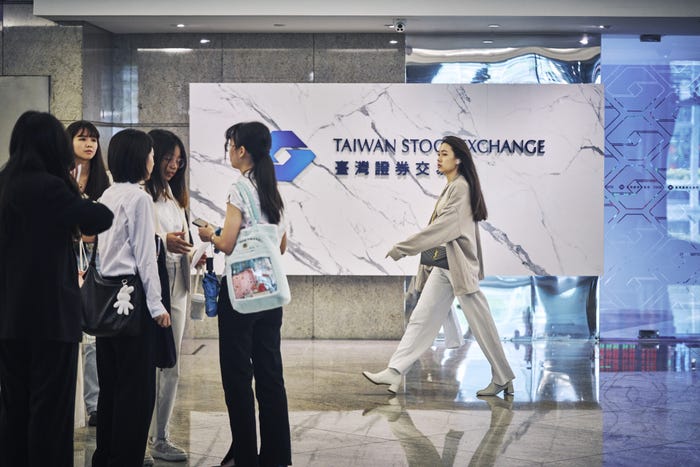
Taiwanese financial regulators have announced new limits on short selling in the local markets. These restrictions are set to be effective from Monday, and come in the wake of significant fluctuations in the Taiwan stock market.
In a statement released on Saturday, the Financial Supervisory Commission (FSC) explained the rationale behind this move. The main trading index in Taiwan, which is predominantly comprised of semiconductor stocks, experienced a decline of 17.5% over the last five trading days. This downturn has intensified concerns amidst an ongoing technology stock sell-off.
In the United States, major indices like the S&P 500 and the Dow Jones have both entered correction territory, each dropping at least 10% from their recent peaks. Some analysts suggest that this market volatility signals a potential turning point for the AI trade amidst various challenges that are altering future expectations.
Investor Michael Burry, recognized for his role in “The Big Short,” addressed these developments. He stated on social media platform X that he has been cautioning against investments in chip manufacturers and neocloud services. “Coreweave, Nebius, Nvidia, semis, I tried to warn you all,” he commented, highlighting his previous warnings without explicitly recommending short selling.
The new regulations by Taiwanese authorities include a ban on short selling stocks below their closing prices. However, securities and futures firms engaged in hedging are exempt from this rule. This policy might impede investors relying on hedging strategies, possibly prompting them to sell their long positions to generate cash.
The U.S. Securities and Exchange Commission (SEC) implemented a similar measure in 2008 during the financial crisis, temporarily banning short selling of certain financial stocks. This intervention, however, did not successfully stabilize the market downturn. As stated by the then SEC Chairman Christopher Cox, such drastic measures would be unnecessary in a standard functioning market.
Leave a Reply