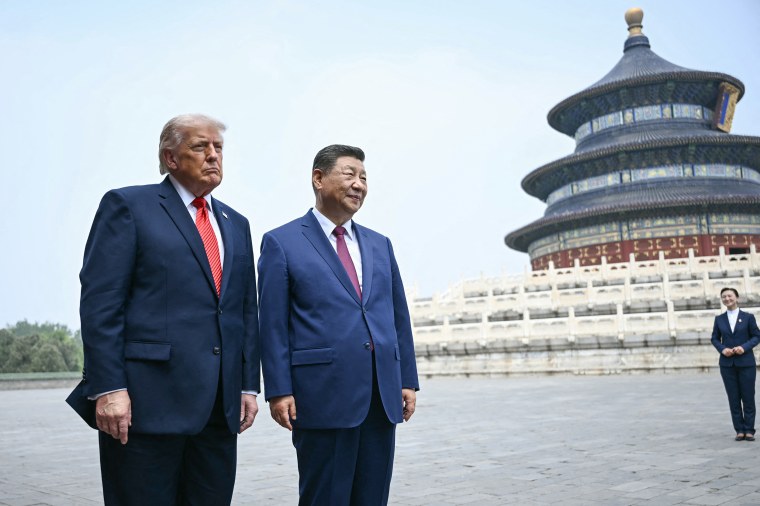
Taiwan announced that President Lai Ching-te is open to conversing with President Donald Trump. This potential dialogue would mark a historic first between the leader of the world’s largest economy and the island nation, which China claims as its own. It remains uncertain when such talks might happen.
The decision could impact relations between Washington and Beijing and may influence the outcome of a significant arms deal being considered for Taiwan. Direct presidential conversations have not occurred since Washington recognized Beijing over Taipei in 1979. China sees Taiwan as part of its territory and has not ruled out using force to assert control.
During remarks, Trump expressed his willingness to talk with Lai, affirming his intentions. This follows his earlier mention post-Beijing summit with Chinese President Xi Jinping. Taiwan’s foreign ministry confirmed Lai’s readiness to discuss issues, highlighting China’s attempts to disrupt peace while maintaining the current state across the Taiwan Strait.
If I had the chance to speak to President Trump, I would emphasize China’s disruption of peace and our commitment to the status quo across the Taiwan Strait,
Taiwan National Security Council’s Secretary-General, Joseph Wu, advised keeping discussions discreet for now. If elevated dialogues continue, they could benefit regional stability and peace, important to Taiwan and democratic nations in the Indo-Pacific.
Responding to Trump’s use of “Taiwan problem,” Wu stressed that Taiwan is not causing issues:
China is creating problems along the first island chain, not Taiwan,
referring to a strategic area from Japan through Taiwan and into the Philippines.
After his 2016 election, Trump spoke directly with former Taiwan President Tsai Ing-wen, breaking U.S. diplomatic norms. China has consistently rejected Lai’s offers for discussions, labeling him a separatist. China asserts its firm stance against official U.S.-Taiwan exchanges.
During Trump’s visit to Beijing, Taiwan was a critical discussion point. He is considering a new arms sales package for Taiwan, potentially valued at $14 billion. Despite lacking formal ties, the U.S. is obligated by the 1979 Taiwan Relations Act to aid Taiwan’s defense.
Taiwan’s Defense Minister, Wellington Koo, reaffirmed the U.S. has maintained its Taiwan policy. Arms sales for Taiwan’s defense align with established U.S. policy, supporting peace in the strait. Koo expressed cautious optimism about future arms acquisitions.
Despite ongoing U.S. military support aimed at deterring Chinese military actions, Taiwan’s government opposes Beijing’s territorial claims.
Leave a Reply