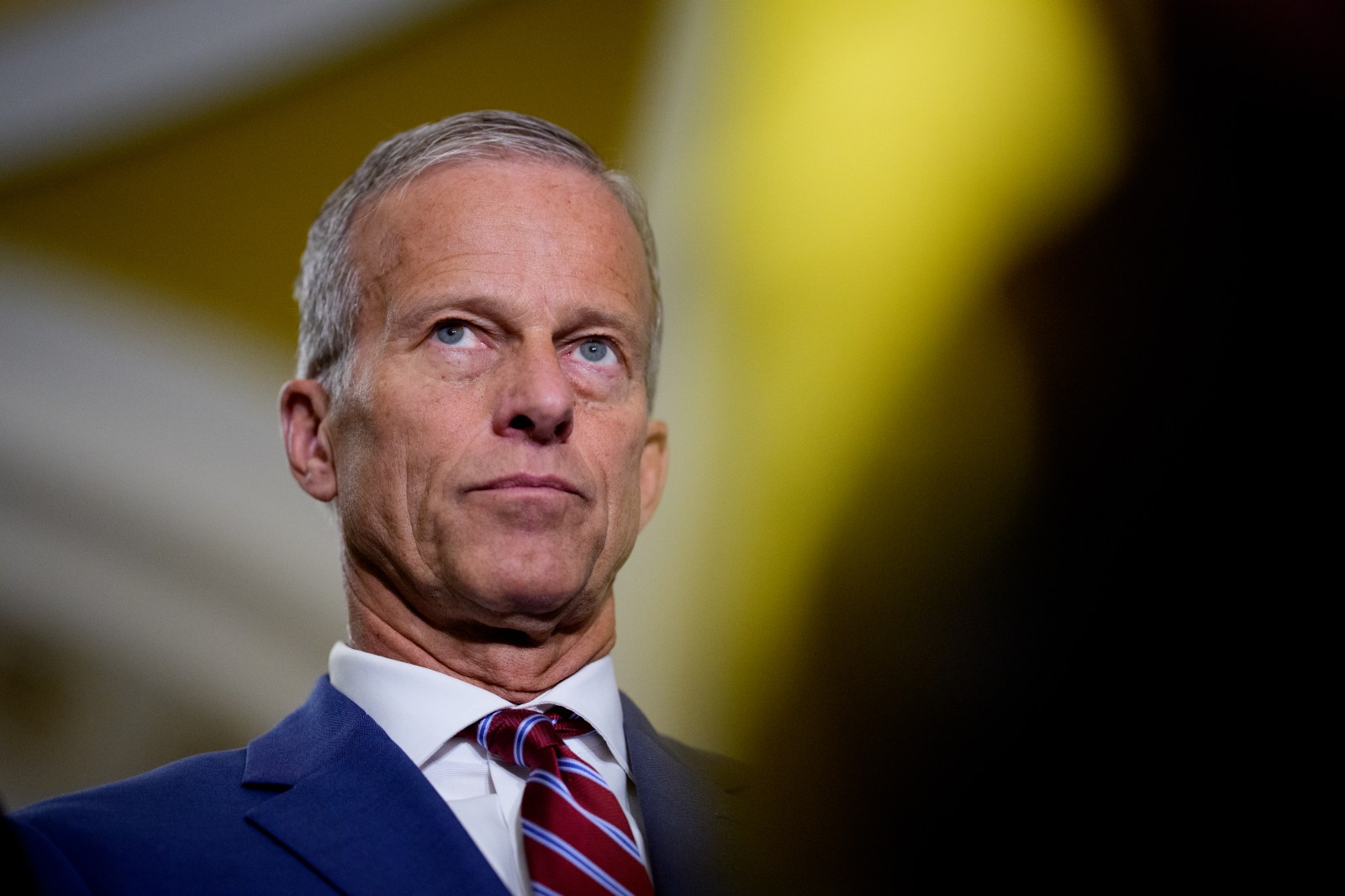
The Senate Majority Leader, John Thune, responded sharply after White House press secretary Karoline Leavitt claimed President Donald Trump was losing patience with Senate Republicans over the stalled SAVE Act. Thune from South Dakota suggested the White House should seek out the necessary votes. He remarked, ‘Maybe she or somebody else ought to get on the phone and get the votes. Right? It’s 50 around here.’
Thune’s comments highlighted growing tensions between Senate Republican leaders and the White House as Trump intensified efforts to push through one of his key election initiatives before the August recess. The White House referred inquiries to Leavitt’s briefing and Trump’s comments during a speech in Georgia, where he criticized the Senate’s inaction. Trump expressed his frustration, suggesting that sending matters to the Senate resulted in legislative death.
White House Expresses Frustration
During a White House briefing, Leavitt conveyed that Trump was increasingly frustrated by the lack of progress on the SAVE Act. She mentioned, ‘The president spoke about this directly yesterday,’ emphasizing that Trump’s patience was running thin. Leavitt asserted that Trump wants the SAVE Act, which requires proof of citizenship for voting, enacted before August and argued that it has voter support.
She added that during Trump’s recent travels, he received loud applause for mentioning the SAVE Act, underscoring public support for proof of citizenship in elections. ‘The House did its job, the Senate needs to do its job too,’ Leavitt insisted.
Thune’s Direct Response
Thune seemed frustrated by the claims against Republicans, suggesting Democrats were responsible for blocking the SAVE Act. ‘Instead of pointing the finger at Republicans, they might consider going after the people who are stopping it on the floor, which is the Democrats,’ he stated. Thune urged reaching out to Republican senators who might be swayed, yet hinted that the GOP might not have enough votes to pass the legislation without changes to Senate rules.
Despite the pressure from Trump and his allies, the Senate has faced challenges in advancing the legislation. The Republican leader has stressed that funding the government remains a priority alongside the effort to push the SAVE Act.
Senate Republicans’ Hurdles
While the SAVE Act has significant Republican support, Senate rules pose a major obstacle. Legislation requires a 60-vote threshold to overcome a filibuster, and Democrats strongly oppose the SAVE Act. The ongoing filibuster means Republicans need Democratic support or rule changes to advance the bill.
Several Republicans, notably Senators Lisa Murkowski, Susan Collins, Mitch McConnell, and Thom Tillis, joined Democrats earlier this year to block efforts to attach the legislation to an immigration funding package. Murkowski has highlighted obstacles the bill poses, especially for remote communities in Alaska where travel can be costly.
Murkowski expressed concern over the bill’s impact, citing an 18-year-old in Savoonga facing expensive travel just to register. She argues these requirements would impose barriers, preventing many from voting, and create chaos before elections.
The SAVE Act’s Proposed Changes
The SAVE Act seeks to reform federal voter registration requirements. It mandates documentation like a passport, birth certificate, or naturalization papers to register to vote in federal elections. The proposal also includes voter ID requirements and limitations on mail voting.
These changes aim to bolster election integrity and prevent noncitizen voting, forming a core element of Republican election security messaging. Some House Democrats joined Republicans in supporting voter ID measures related to the proposal. However, critics argue it could create voting barriers for many U.S. citizens.
Research from the Brennan Center for Justice indicated that 21.3 million voting-age citizens lack ready access to documentary proof of citizenship. This has led to opposition from Democrats, voting-rights advocates, and policy groups, stressing that documented noncitizen voting instances are rare.
The Path Forward
The SAVE Act is a major legislative priority for Trump but lacks a clear path forward in the Senate. As the White House continues to press for action before the August recess, questions remain about the bill’s viability this year. Trump’s pressure, along with that from his allies, remains firm as Senate leadership grapples with securing the necessary votes.
In light of these challenges, some Senate Republicans like John Cornyn have doubted that Thune can easily sway votes. Cornyn described the requirement for Republican conformity as a ‘fantasy.’ With the bill’s future uncertain, the public clash between Thune and the Trump administration exemplifies the difficulty in balancing Senate realities with White House expectations.
Leave a Reply