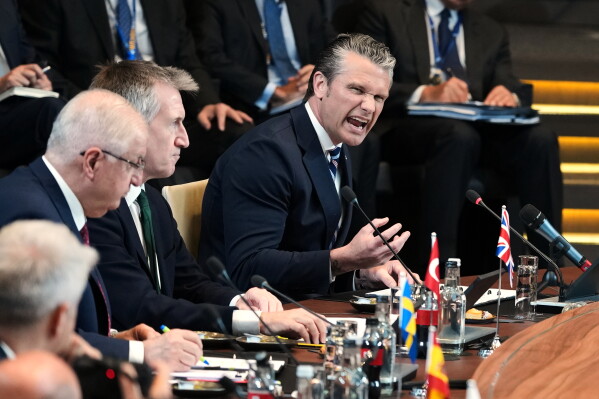
In Brussels, U.S. Defense Secretary Pete Hegseth addressed NATO allies, expressing concerns over their performance and announcing a Pentagon review. European leaders were already analyzing their progress on security measures. These included increased defense spending and investments in military equipment production.
The European leaders discussed efficient use of EU funding to enhance military capabilities. They emphasized cutting bureaucracy to expedite purchases and improving deployment speeds. Plans involved upgrading ports and airports to increase military mobility. The goal is to boost Europe’s defense readiness by 2030, a strategy fostered since Russia’s invasion of Ukraine in 2022.
Intelligence reports suggest a potential future threat from Russian President Vladimir Putin. Allegations of Russian sabotage and misinformation are also on the rise. Most EU countries are NATO members, and unpredictability during the Trump administration spurred them to prepare independently. Hegseth’s review further emphasizes this trajectory.
Pentagon’s Criticism of NATO Allies
Hegseth’s recent absence from NATO meetings added surprise to his recent speech, where he heavily criticized the alliance. He labeled NATO as a ‘paper-tiger’ and accused allies of failing Trump’s test when seeking base usage for Iran strikes. Additionally, he critiqued their focus on ‘gender equity and climate change’ along with migration policies.
Hegseth laid out a six-month timeline for allies to improve. This review connects U.S. military presence in Europe to perceived contributions from other nations. According to Rachel Ellehuus from the Royal United Services Institute, this approach jeopardizes NATO solidarity and U.S. security interests.
Understanding the Review’s Scope
The specifics of the review remain vague. Hegseth aims for NATO’s fast transition towards European defense leadership. The review might last up to six months and involve multiple stakeholders, including U.S. military commanders and Congress.
Hegseth suggested adjustments in U.S. contributions to NATO’s budget depending on ally performance. He also discussed strategic base placements and ensuring proper access for U.S. needs in Europe. NATO’s role in past conflicts, such as the Iran war, highlights its territorial defense commitments.
NATO Secretary-General Mark Rutte admitted uncertainty about the review’s details. He plans to discuss further in Washington soon. Rutte acknowledged European allies’ financial commitments, with substantial defense spending increases for 2025 compared to 2024.
Boosted Defense Budgets
European and Canadian allies are responding, investing heavily in defense. An extra $90 billion in spending underscores their commitment. This funding aims to purchase military equipment and aid Ukraine with weapons. Their focus has been aligning military budgets with the U.S. GDP percentage.
Trump praised NATO allies at a prior summit for these efforts. However, the upcoming summit in Turkey could see renewed tensions due to the Pentagon review. European officials now dominate more NATO command positions, and allies lead in supporting Ukraine amid U.S. withdrawal.
Efforts are visible through billions spent on U.S. air defense systems for Ukraine. Nonetheless, the potential always exists to enhance airspace access for U.S. operations. Ellehuus emphasized the importance of basing decisions on solid threat assessments and military planning, criticizing the review’s impact on U.S. commitment perceptions.
Leave a Reply