Concerns Over Border Construction at Big Bend
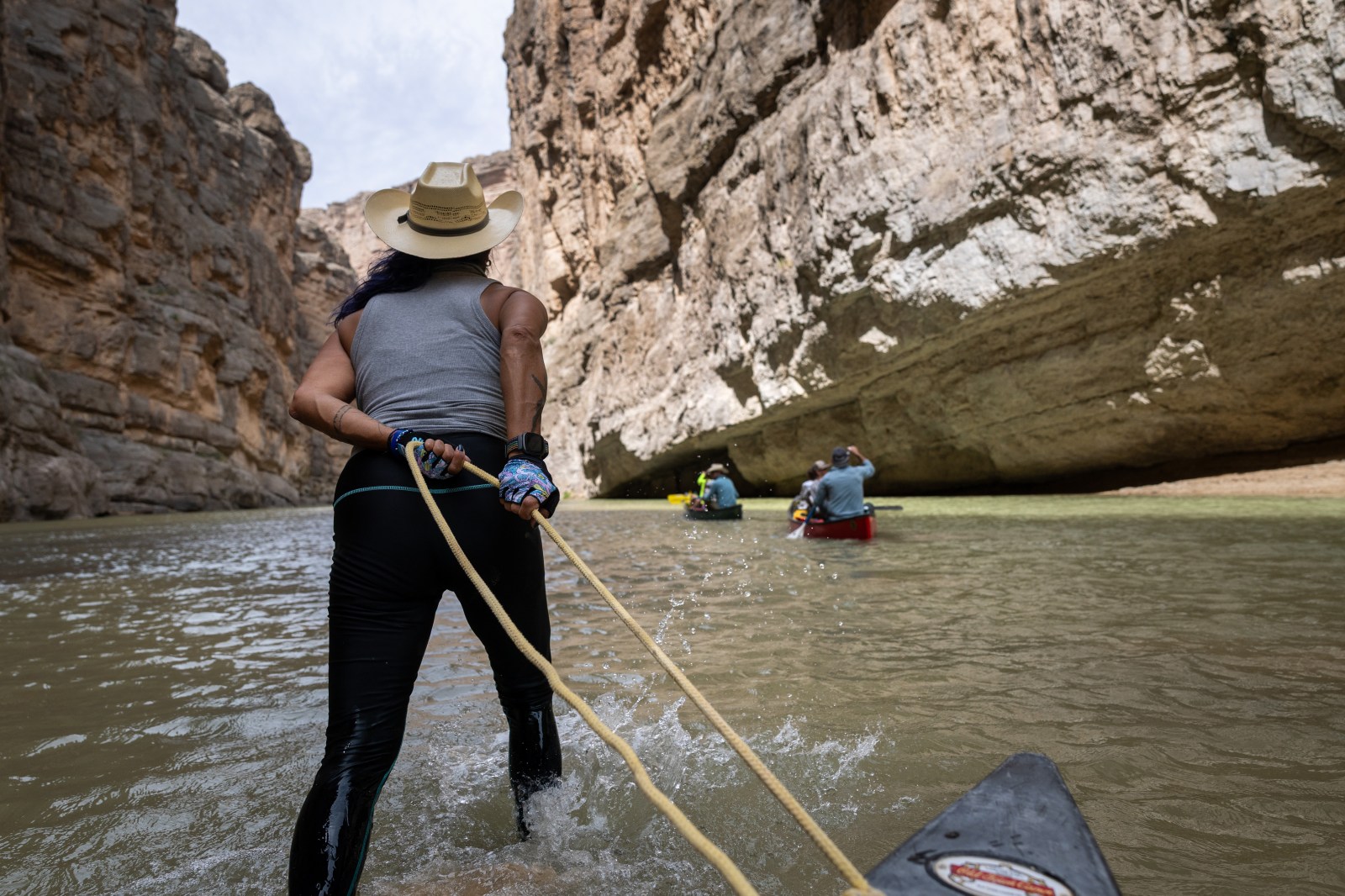
Over 140 Texas outfitters, recreation groups, and local businesses have expressed concern regarding federal plans to construct vehicle barriers and roads through Big Bend National Park. This coalition fears it could negatively impact the region’s tourism economy. These concerns were detailed in a letter sent to Texas Republican Senators John Cornyn and Ted Cruz, and Governor Greg Abbott, urging them to halt what is referred to as unnecessary barrier construction along the Rio Grande.
Billy Bartko, owner of Far Flung Outdoor Center, highlighted the importance of the Rio Grande access for West Texas’s economic survival. He stated that in Washington D.C., this project might seem routine, but for local residents, it is crucial for their livelihoods. This letter follows moves by Customs and Border Protection (CBP) to accelerate the establishment of vehicle barriers in the region after the Department of Homeland Security (DHS) waived multiple protections.
Economic Impact on Local Tourism
The Rio Grande access is pivotal to West Texas’s outdoor recreation economy. It supports various businesses such as outfitters, guides, and accommodations. The proposed barriers would hinder access to vital launch and take-out points used by commercial outfitters and visitors. This could significantly hamper recreational and commercial activities, which are central to tourism in Big Bend National Park and the Rio Grande Wild and Scenic River.
Data from the National Park Service noted that Big Bend National Park saw 561,459 visitors in 2024, generating an estimated $56.8 million for neighboring communities and about $63.7 million in economic output. Local business representatives stressed how tourism profoundly influences the regional economy, with visitors drawn to its unique canyons, and wilderness experiences.
Unified Opposition to Barrier Construction
The project has faced criticism beyond environmental circles, uniting a diverse set of local stakeholders. The letter referenced opposition from all five sheriffs in the Big Bend region and requests from 14 Texas border county judges for better transparency and tailored security measures. Former superintendents of Big Bend National Park have also advised Homeland Security against legal waivers that allow construction.
A petition opposing the project has amassed over 150,000 signatures, highlighting widespread dissent toward federal plans perceived as mismatched with local needs. Local officials argue for more strategic border security approaches aligned with natural barriers and existing surveillance systems.
Low Border Crossing Incidences
Opponents claim migrant encounters in Big Bend are minimal compared to other southern border areas. The sector covers approximately 517 miles of U.S.-Mexico border, representing more than a quarter of the Southwest border. In fiscal year 2025, Big Bend accounted for only 3,096 apprehensions, making up about 1.3% of all southern border apprehensions that year.
The business coalition further argues minimal activity within Big Bend National Park itself. Apprehensions in the park comprised merely 0.045% of total southwest border apprehensions in 2025. Although supporters of the construction cite broader security concerns, including drug seizures in the sector, critics insist a tailored approach with existing technology would suffice.
Requests from Local Businesses and Groups
The letter appeals to Senators Cornyn and Cruz, and Governor Abbott, requesting three critical actions: prevent vehicle barriers from hindering public Rio Grande access, amend border construction contracts to prioritize technology use, and persuade DHS to revoke waivers issued for the project.
Advocating for existing surveillance networks at Big Bend, the groups emphasize expanding technological security solutions without obstructing river access. They urge representatives to safeguard Big Bend National Park and the Rio Grande as cherished natural heritage, while preserving local businesses and landscapes.
Leave a Reply