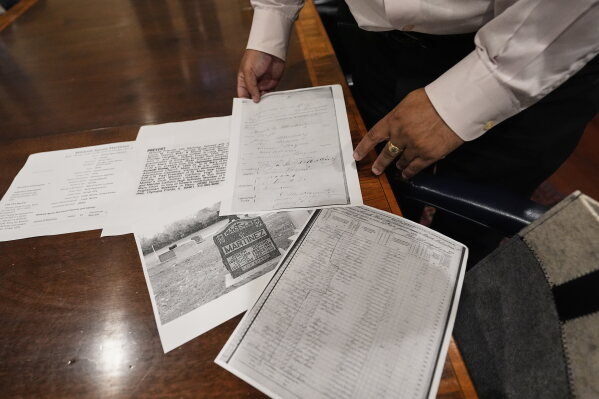
The recent election of Pope Leo XIV has drawn attention to his deep roots in New Orleans, as discovered by Jari Honora, a genealogist from the city. Honora’s research shows that all four of Pope Leo XIV’s maternal great-grandparents were ‘free people of color’ in Louisiana, according to 19th-century census records.
As part of Louisiana’s cultural melting pot, these ancestors are considered Creole, coming from a rich mix of French, Spanish, African, and Native American heritage. Honora, a historian at the Historic New Orleans Collection, expresses personal significance, sharing that many in the Black and Creole Catholic communities see this election as a chance to highlight the often overlooked history and contributions of Black Catholics worldwide.
A Rich Cultural Identity
Pope Leo XIV, originally from Chicago, spent over 20 years in Peru, including eight years as a bishop. Although he has not publicly addressed his ancestry, there may be a connection to Haiti through his grandfather, Joseph Norval Martinez. Although records regarding Martinez’s birthplace are conflicting, Martinez’s parents lived in Louisiana since at least the 1850s.
Andrew Jolivette, a professor at the University of California, Santa Barbara, explored the pope’s ancestry and found significant cultural diversity. The findings highlight the complex identities within Louisiana’s Creole community. Jolivette notes Cuban ancestry on the pope’s maternal side, emphasizing the Latino influence in discussions about Creoles. This diversity is viewed with pride, and Jolivette considers Pope Leo XIV a Latino pope for this reason.
The pope’s maternal grandparents were identified as ‘mulatto’ and ‘Black’ in historical documents. They married in New Orleans in 1887 and lived in the Creole Seventh Ward. However, racial segregation laws of the Jim Crow era soon constrained many aspects of their lives, including their church activities, according to Honora.
An American Story of Migration
Around 1910, like many African American families seeking escape from the oppressive South, the pope’s grandparents moved to Chicago, where they ‘passed for white.’ On her 1912 birth certificate, the pope’s mother, Mildred Agnes Martinez, is recorded as ‘white.’ Honora notes people often hid their heritage due to the precarious nature of life for people of color in the South, including New Orleans.
The demolishment of the pope’s grandparents’ home in New Orleans in the 1960s, replaced by a highway, marks a dramatic change in the city. Former Mayor Marc Morial calls their story an example of overcoming American racism and bigotry. While proud of the pope’s connection to New Orleans, Morial points out the need for survival often required shifting one’s racial identity.
African American Influence on Catholicism
The Rev. Ajani Gibson, serving at St. Peter Claver Church in New Orleans, sees the pope’s Creole roots as affirmation of African American influence on Catholicism in the city. Gibson believes the cultural elements cherished in New Orleans, like Mardi Gras and jazz, are inherently Black and Catholic.
He expresses hope that the pope’s heritage encourages inclusivity in the Catholic Church, reflecting its universal nature. Shannen Dee Williams, a history professor at the University of Dayton, adds that Pope Leo’s story highlights the often-unacknowledged histories of Catholic colonialism, slavery, and segregation.
Hope for the Future
Kim R. Harris from Loyola Marymount University sees the pope’s ancestry as a connection to African American Catholics aspiring to sainthood. She points to figures like Pierre Toussaint, a Haitian-born philanthropist, and hopes the pope’s election may advance their canonization.
While the pope’s personal racial identification remains unknown, his diverse roots offer hope to African American Catholics, fostering a broader understanding of identity within the church.
Reynold Verret, president of Xavier University of Louisiana, remarks on the joyful connection of the pope’s heritage with the broader narrative of Catholicism. He highlights the resilience of Black Catholics who have remained faithful, despite historical challenges.
Brendan Bharath reported from Los Angeles, and contributions were made by the Associated Press/Report for America Statehouse News Initiative.
Leave a Reply