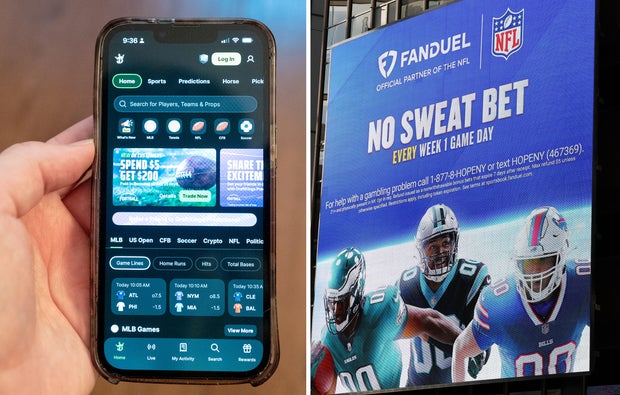
Last month, Meta agreed to pay states $17.1 billion in penalties due to claims about its platforms being addictive. This case caught the attention of attorney Jennifer Hoekstra, who now targets sports betting as the next area of concern. Hoekstra, known for her legal success against Meta, recently filed 15 lawsuits against FanDuel and DraftKings, the leading sports gambling apps in the US. She argues that these apps are intentionally designed to be addictive.
According to Hoekstra, many individuals are financially devastated by their gambling habits. She represents clients who have lost homes and families. “It’s the same type of workflow, notifications, and addiction,” she stated to CBS News. The popularity of online sports gambling is soaring. The American Gaming Association reported $167 billion wagered last year. This surge raises concerns about financial impacts, as a UCLA study linked legalized online gambling to a 25% rise in bankruptcies and credit card delinquencies in certain states.
A National Council on Problem Gambling survey showed that 8% of American adults encountered problematic gambling behavior “many times” in the past year. Despite these concerns, gaming companies deny they promote addiction. FanDuel, the most extensive platform, asserts its commitment to responsible gaming, emphasizing its $158 million investment in safeguarding efforts. The company claims to monitor gambling behaviors closely, excluding 5,700 people last year for responsible gaming reasons.
“It’s less about cutting them off than slowing them down,” a former FanDuel employee told CBS News.
Sports gambling apps like FanDuel and DraftKings have gained massive popularity. A former FanDuel insider revealed the company’s focus on keeping bettors engaged, sometimes ignoring signs of excessive betting. VIP treatment is one method used to sustain engagement. This entails offering rewards like luxury suites and autographed items, reminiscent of Las Vegas casinos.
Take Esteban Ruiz-Haynes, who received VIP treatment from FanDuel after frequent betting. He became a regular at games, sitting close to athletes. While he bets significant sums, Ruiz-Haynes acknowledges the potential financial downsides, remarking that losing means “eating ramen noodles for the rest of the week.” Similarly, Louis Ruggiero, a recovering addict, shared his experience of being targeted with VIP offers despite substantial losses.
The insider from FanDuel cited the company’s advanced data collection, which facilitates the monitoring of customers’ betting behaviors. If bettors drift away, companies might use push notifications to re-engage them, similar to Hoekstra’s lawsuit claims. These strategies mirror those in a landmark social media case decided in California, which argued that platforms cause addiction through design. Hoekstra aims to extend this argument to online betting. DraftKings, another prominent platform, recognizes the importance of responsible engagement and highlights its initiatives to ensure safe gambling practices.
Ruggiero’s story underscores the addictive potential of technology. Even during significant life moments, he found himself unable to stop gambling. He describes the technology as engineered to facilitate continuous engagement.
Joe Maloney, from the Sports Betting Alliance, argues that people like Ruggiero represent outliers and that most gamble responsibly. He notes that gambling remains an entertainment activity. Online platforms offer tools for bettors to manage their behavior, such as setting limits on deposits and wagers.
If you or someone you know is struggling with gambling addiction, the National Problem Gambling Helpline provides resources via 1-800-MY-RESET, and Gamblers Anonymous can be reached at 1-855-222-5542.
“The legalization of online sports betting has brought transparency to a once-shadowy industry,” FanDuel stated, emphasizing the importance of responsible gaming practices.
Leave a Reply