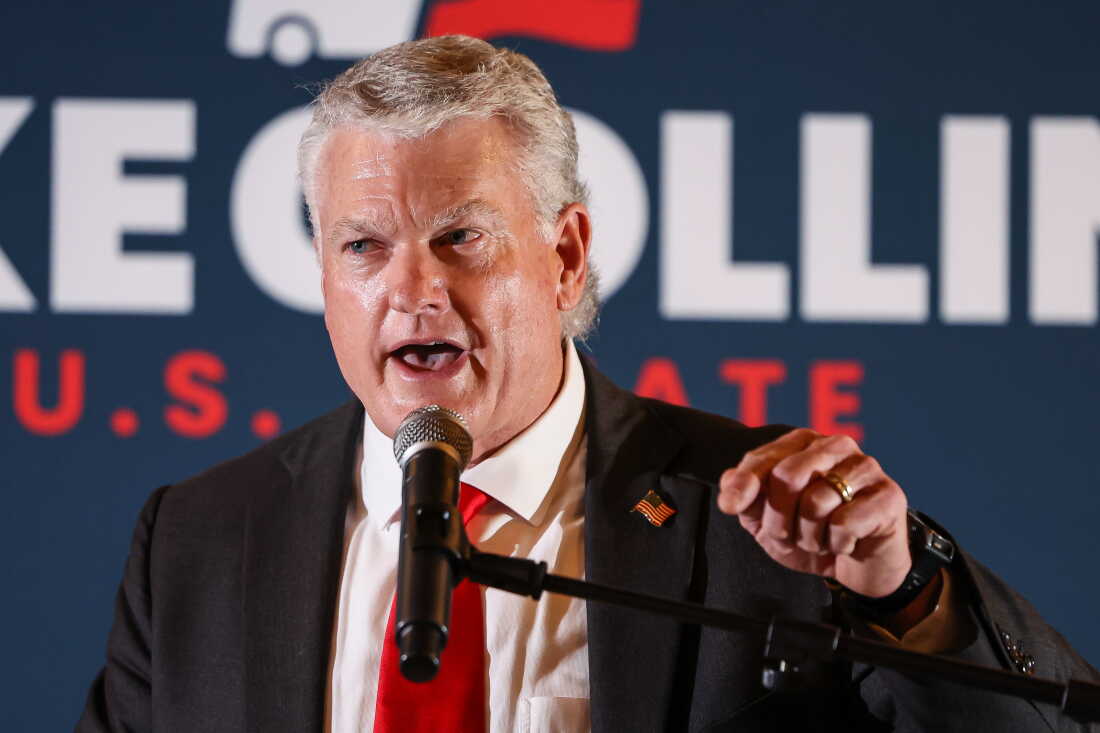
The conversation around the 2020 election continues to affect political dynamics well into subsequent election cycles. President Trump’s persistent focus on the previous presidential election, despite ongoing midterm voting, remains a contentious topic within the Republican Party. While some candidates align with Trump on election integrity claims, several GOP voters express a desire to move forward.
Mike Collins’ Campaign and Controversial Stance
In Georgia, Mike Collins, a Republican nominee for the Senate, has maintained claims that the 2020 election was unfairly won. His campaign launched soon after Trump urged Georgia’s secretary of state to ‘find’ votes to overturn the election results. In a prior campaign ad, Collins erroneously claimed Trump’s victory in Georgia and criticized politicians for not supporting Trump. This ad featured him firing a gun at a labeled ‘voting machine’ bin. Collins reaffirms these claims in his current Senate campaign, even backing some who faced charges for the January 6 Capitol events.
Lynn, a Georgia Republican voter, expresses concern about Collins’ viewpoints, contemplating support for Democrat Jon Ossoff due to Collins’ fixation on the 2020 election. Despite attempts for a response, Collins’ campaign team did not engage with NPR’s inquiry.
Republican Voter Sentiment
Austin Sapp, a frequent Republican voter, validates the occurrence of election fraud and supports strict voter ID legislation. Yet, he desires a shift from revisiting 2020 towards current political platforms. He questions, “What are you going to do for me?”
“Regular humans have given this up”
A poll by the New York Times-Siena College highlights that only 1% of voters prioritize election integrity. Gabe Sterling, a seasoned Georgia election official, indicates the fading interest among general voters. Though these fraud assertions remain useful for fundraising, the predominant interest lies with dedicated activists who maintain prominence on election boards and within Republican primaries.
Sterling, having campaigned for the secretary of state, maintains support for Georgia’s electoral processes and witnessed some voter persuasion. However, these efforts required relentless explanation of electoral data and processes.
In Michigan: A Scenario Reflects
Elsewhere, prior detractors of Trump’s claims have embraced them. In Michigan, GOP Senate nominee Mike Rogers, critical of Trump’s tactics during the Georgia voting process, shifted his position during his 2024 Senate run. Despite the loss, Rogers attributed electoral outcomes to supposed ballot irregularities, later expressing gratitude towards Trump for his comments on election concerns.
Jason Roe, a strategist for Michigan Republicans, notes the political necessity for candidates to voice support for Trump’s claims to garner his backing. He argues that such support often lacks genuine conviction, serving more as a tactic at Republican meetings.
Trump’s Influence and Midterm Stakes
Persistently focusing on the 2020 election may harm the Republican majority’s stability. In Georgia and Texas, Trump opposed candidates accepted as electable by leading GOP figures, favoring those aligned with his election rhetoric. For instance, his endorsement in Texas removed a potentially strong general election candidate.
Trump’s endeavors to implement new voting restrictions further indicate his intentions to dominate election discussions. Only 49% expect the upcoming midterms to be free and fair, lower than past expectations. Sterling suggests Trump’s continued emphasis on elections serves as a strategic distraction from other political issues, preparing a narrative to explain potential Republican losses.
Leave a Reply