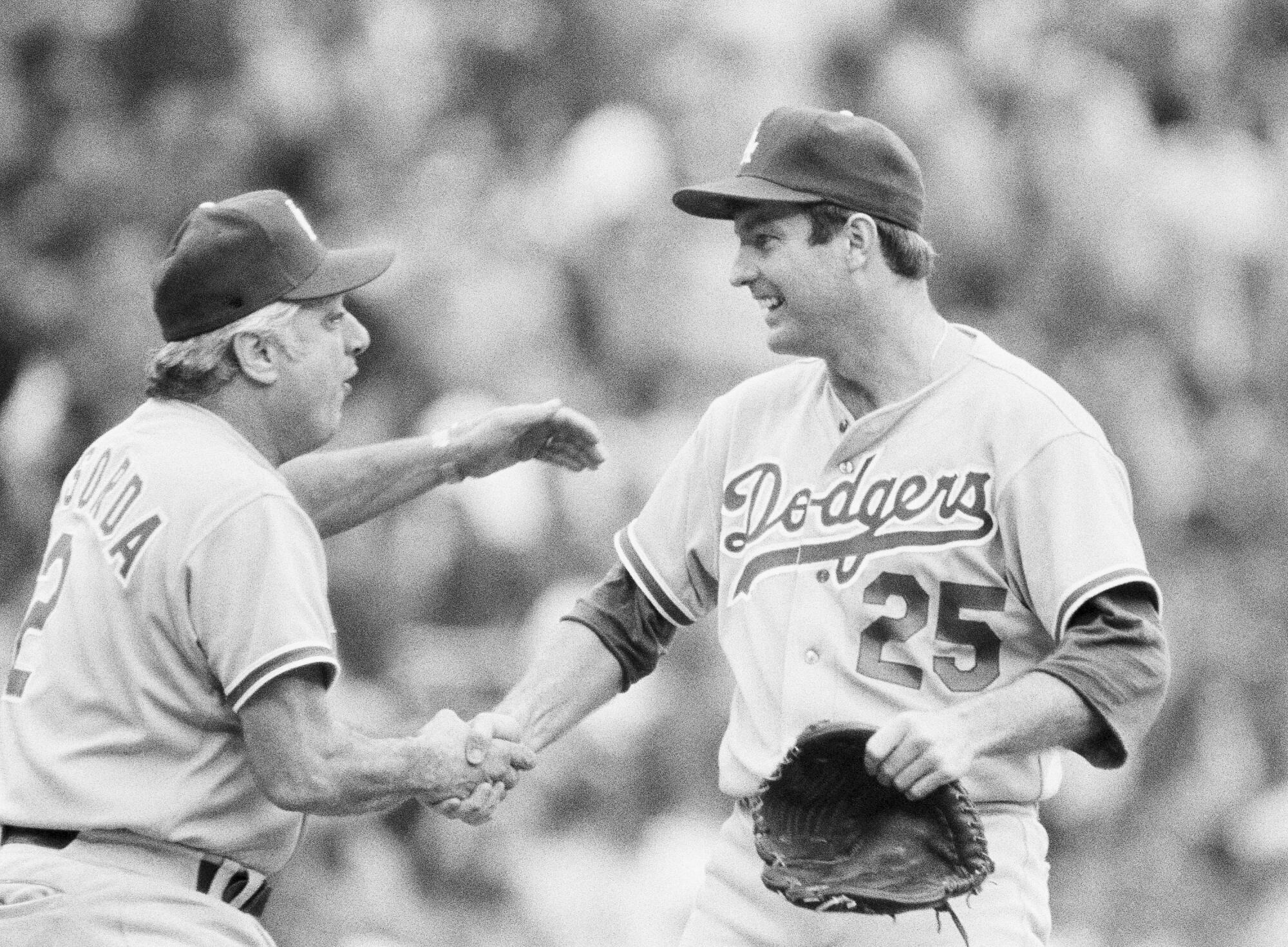
In medical literature alongside procedures like Belsey fundoplication and Heineke-Mikulicz pyloroplasty, Tommy John surgery is notable. Known formally as ulnar collateral ligament reconstruction, it gained fame thanks to Tommy John, a Dodgers pitcher whose career was nearly ended by a ligament injury in 1974. This innovative surgery saved and extended his career and has done the same for many others, like Tom Candiotti and Shohei Ohtani, over the last 50 years.
Tommy John’s life was deeply intertwined with the surgery that bears his name. He passed away at 83, as announced by the Dodgers. Dodgers president Stan Kasten reflected on his contributions, noting John’s exceptional pitching career and his pivotal role in a surgery that changed the lives of countless athletes.
Before undergoing surgery, John had achieved 124 wins over 12 seasons. Post-surgery, he amassed another 164 wins, highlighting his remarkable comeback and longevity in baseball. He attributed his return to the expert care of Dr. Frank Jobe, who performed the remarkable operation that allowed him to continue playing.
“Dr. Jobe made it so I could throw a baseball again,” John said in 2023. “After surgery, I never missed a start.”
John’s best years were with the Dodgers, achieving an 87-42 record and a 2.97 ERA, contributing to two World Series appearances. His journey with the Dodgers included a trade from the White Sox and significant guidance from pitching coach Red Adams, who emphasized precision over speed.
In 1974, John’s career seemed over when he ruptured the ligament in his left elbow. However, Dr. Jobe proposed a grafting surgery, similar to one he had done for stabilizing a polio patient’s ankle. The surgery was a gamble with a slim chance of success, but John opted for it. The initial surgery led to nerve damage, requiring a second procedure. Despite these challenges, he pursued a rigorous rehabilitation program.
By 1976, John returned to the mound, finishing with a 10-10 record and a 3.09 ERA. His perseverance paid off in 1977 when he won 20 games and nearly secured the Cy Young award. His pitching was crucial in leading the Dodgers to the pennant.
John joined the Yankees as a free agent after the 1978 season, finding immediate success with 21 wins in 1979 and 22 in 1980. Despite controversies, like when he was pulled early from Game 6 of the 1981 World Series, he continued to perform well.
Ending his playing days, John committed three errors in one inning during a 1988 game, a rare mishap. After baseball, he was involved in broadcasting, minor league management, and advocacy for suicide prevention after losing his son.
John’s name will forever be associated with the surgery that continues to aid many athletes. Dr. Neal ElAttrache, a renowned orthopedic surgeon, has performed it numerous times, acknowledging that while he added his technique tweaks, the operation fundamentally remains unchanged since 1974, when Jobe first performed it.
John’s legacy lives on not only in his family but also through a procedure that significantly impacted the sport of baseball. A private gathering to celebrate his life will be held in Florida.
Leave a Reply