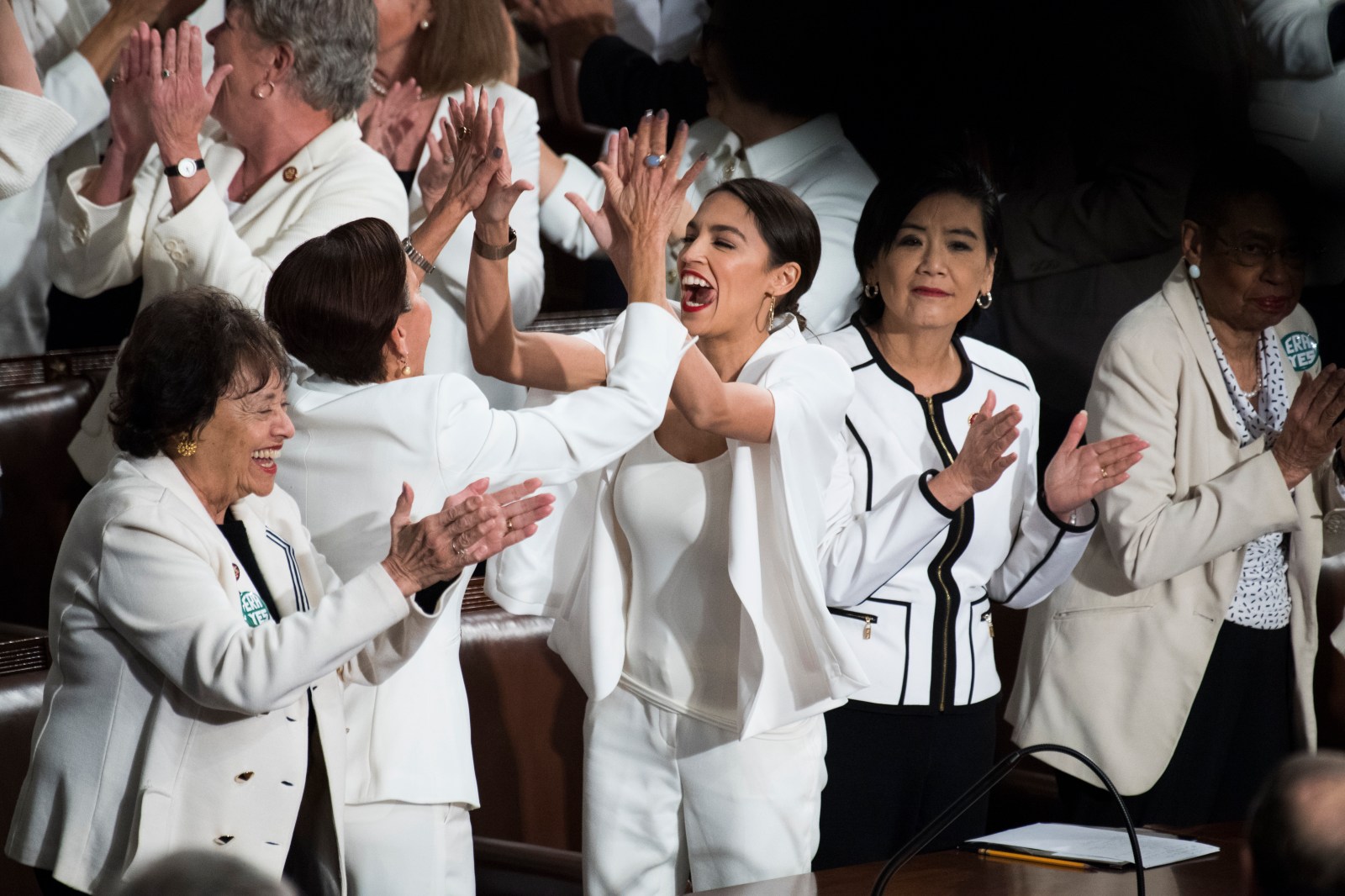
In recent years, Democrats have adopted a distinctive political wardrobe. This ‘uniform’ serves as a visual statement about various causes. These include reproductive rights, Palestinian solidarity, opposition to figures like Trump, and suffragist homage.
State of the Union Statements
At the 2024 State of the Union, several Democratic representatives wore kaffiyehs, signaling support for Palestinians. Meanwhile, many Democratic women wore white, symbolizing support for reproductive rights. This echoed a similar strategy from 2019 and was repeated in 2026 to protest the SAVE America Act.
Activism Through Fashion
In 2022, Democrats, including Alexandria Ocasio-Cortez and Ilhan Omar, protested at the Supreme Court against the overturning of Roe v. Wade wearing green bandannas. In 2025, Democratic women switched to pink at another address to Congress, while messages like ‘NO KINGS LIVE HERE’ appeared on protest shirts worn by others.
The clothing serves as a message of objection and signals where the wearer stands on specific issues.
A memorable moment in 2020 involved Democratic leaders wearing kente cloth stoles. This was intended as solidarity after George Floyd’s murder, though the image sparked mixed reactions.
Wardrobe as a Political Signal
You often see these wardrobe choices in liberal neighborhoods, with protest T-shirts and symbolic accessories. Such apparel acts as a wearable protest.
Contrast this with the MAGA hat, which promotes a positive message: Make America Great Again. It suggests an identity and vision. Meanwhile, the Democratic wardrobe often signifies opposition.
The Challenge of a Political Wardrobe
Marking opposition through clothing suggests a party in perpetual resistance mode. For a party aiming to govern, their attire should indicate power and a clear agenda, not just dissent.
When clothing signals grievances more effectively than policies offer solutions, the wardrobe risks overshadowing the political message.
Leave a Reply