Over the past decade, Yemen’s Houthi rebels have evolved from a little-known group in northwest Yemen to become a significant ally of Iran in the region. They now play a central role as opponents of the United States and its allies across the Middle East. While other Iranian proxy forces have weakened, the Houthis have emerged as a primary force in the region. They represent how smaller, guerrilla-style groups, deeply entrenched on the ground, can create significant disruption through air attacks.
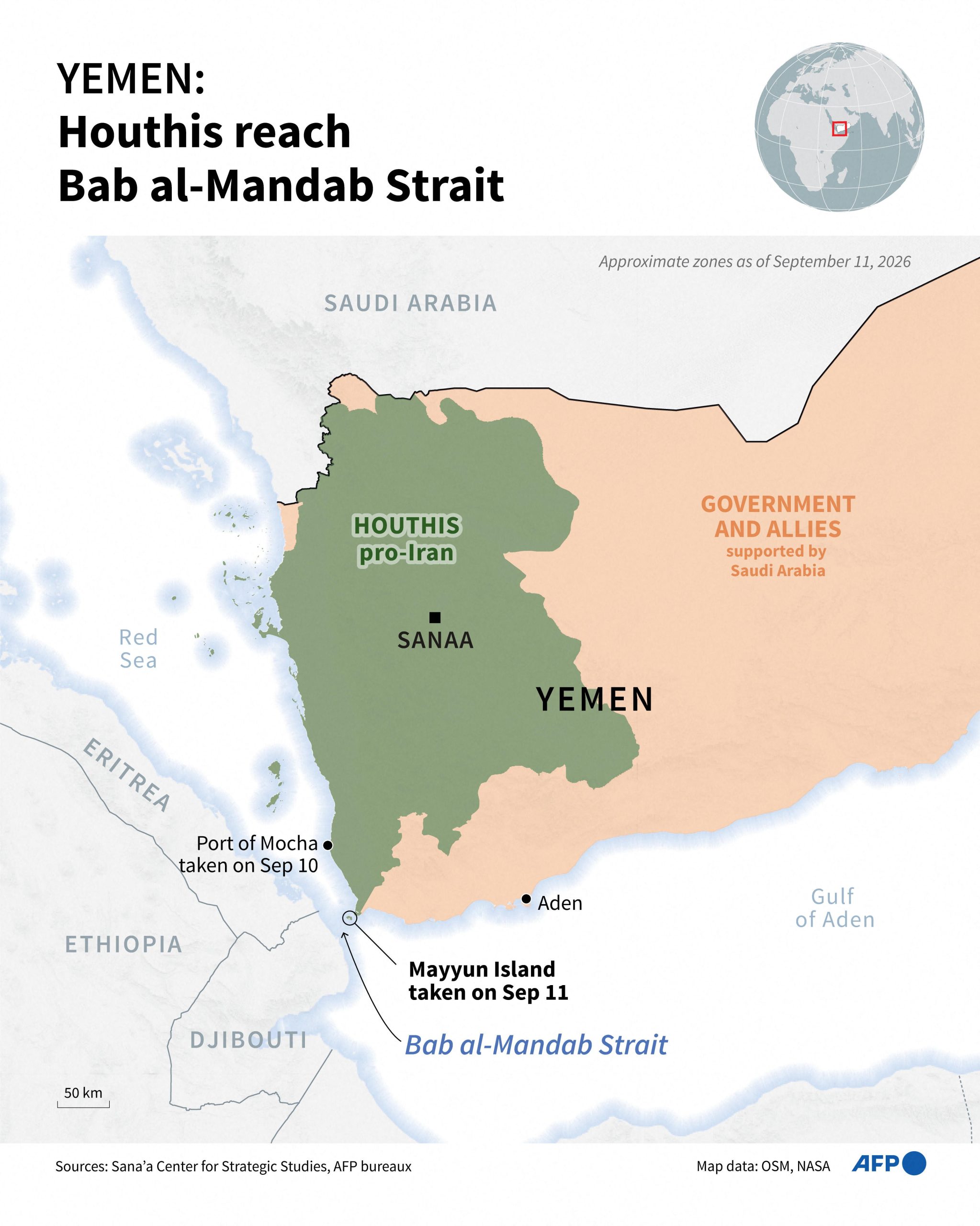
Yemen’s Houthi group has supported Iranian interests, attacking Israel after the U.S. and Israel conducted strikes against Iran earlier this year. Saudi Arabia, a rich nation and important ally of the U.S., has suffered significant losses at the hands of the Houthis. Their attacks at Saudi airports have killed at least 20 people in the last week. The group has also targeted Saudi oil infrastructure, contributing to rising global energy prices and threatening the Bab el-Mandeb Strait, a crucial chokepoint for global oil and gas transport.
A map displays areas under Yemeni government and Houthi control as of September 11, 2026. Government forces claim to have regained control of the port city of Mocha weeks later.
Saudi Arabia has requested the U.S. to join its military efforts against the Houthis. President Trump, initially hesitant, is now reconsidering the request.
Houthi Strength and Support from Iran
The Houthis receive financial and military backing from Iran. Regional analysts and officials in the U.S. and Israel have reported this support for years. Initially a minor group in Iran’s Axis of Resistance, which opposes the U.S. and Israel, the Houthis have grown in strength despite Israel’s operations against similar groups like Hamas and Hezbollah. While these other groups have weakened, the Houthis have gained strength, growing more equipped and battle-hardened.
Mohammed Al-Basha from the Basha Report notes the Houthis’ status as a potent Iranian proxy. Following the 2023 attacks on Israel, the group began receiving more advanced equipment from Iran. Tehran has not only supplied them with arms but also trained them in strategies to bypass air defenses. These tactics include using drones, cruise, and ballistic missiles in layered attacks. The Houthis have since applied these methods against Saudi Arabia.
Strategic Advantages and Goals of the Houthis
Despite Yemen’s economic hardship, the Houthis leverage their ideological support base. This support makes it easier for them to withstand economic challenges, knowing they are inflicting damage on Saudi Arabia and the global economy. Yoel Guzansky from the Institute for National Security Studies explains that simple surface-to-surface missiles can effectively strike key targets like Riyadh’s airport, manufactured in small facilities hidden in mountains.
The Houthis’ military spokesperson, Brig. Gen. Yahya Saree, claims their attacks are in response to Saudi aggression. However, some analysts, including Al-Basha, argue that their true aim is power and recognition. They seek control over all of Yemen and want Saudi acknowledgment and financial support for expansion.
Background of the Houthi Movement
The Houthi movement originates from the Zaydi Shiite Muslim sect in northern Yemen. While Zaydis are a minority in the predominantly Sunni country, they represent a substantial portion of the population. Initially, the group aimed to protect Zaydi culture but has since adopted a radical slogan aligned against the U.S. and Israel.
The Houthi armed forces consist of hundreds of thousands, with claims of training over a million fighters. Their rise began in 2012 during Yemen’s Arab Spring turbulence. By 2014, they took over the capital, Sanaa, igniting a civil war. The Saudi-backed government relocated to Aden in response, maintaining control over the less-populated eastern regions.
The Houthis gained control over state military assets, including missile brigades. From 2015 to 2022, they survived confrontations with a Saudi-led military coalition. With training from Hezbollah and Iran, they developed the ability to produce weapons, including drones and missiles. Reports suggest they may also be using AI to enhance weapon capabilities.
Iran’s assistance is crucial to the Houthis. Though they manufacture some weapons locally, they depend on Iran for advanced technologies. Tehran’s ongoing support allows the Houthis to remain pivotal within Iran’s regional strategy. Iran uses the group not only to threaten regional powers but to project influence beyond Yemen.
Amid Yemen’s War
Yemen’s devastating war has isolated the Houthis geographically, limiting them to a solitary ground presence aside from Saudi Arabia. Domestically, the conflict is marked by a fragmented opposition, further complicating the civil war scenario. The United Nations estimates the war, ongoing since 2015, has claimed 377,000 lives, with many deaths from indirect causes like hunger and disease. Displacement remains a critical issue, with many fleeing within Yemen or across the sea to countries like Djibouti.
Recent figures from the World Health Organization indicate significant casualties from renewed fighting. The Houthi-run Health Ministry has reported numerous deaths and injuries due to the latest surge in violence, underscoring the ongoing humanitarian crisis.
Leave a Reply