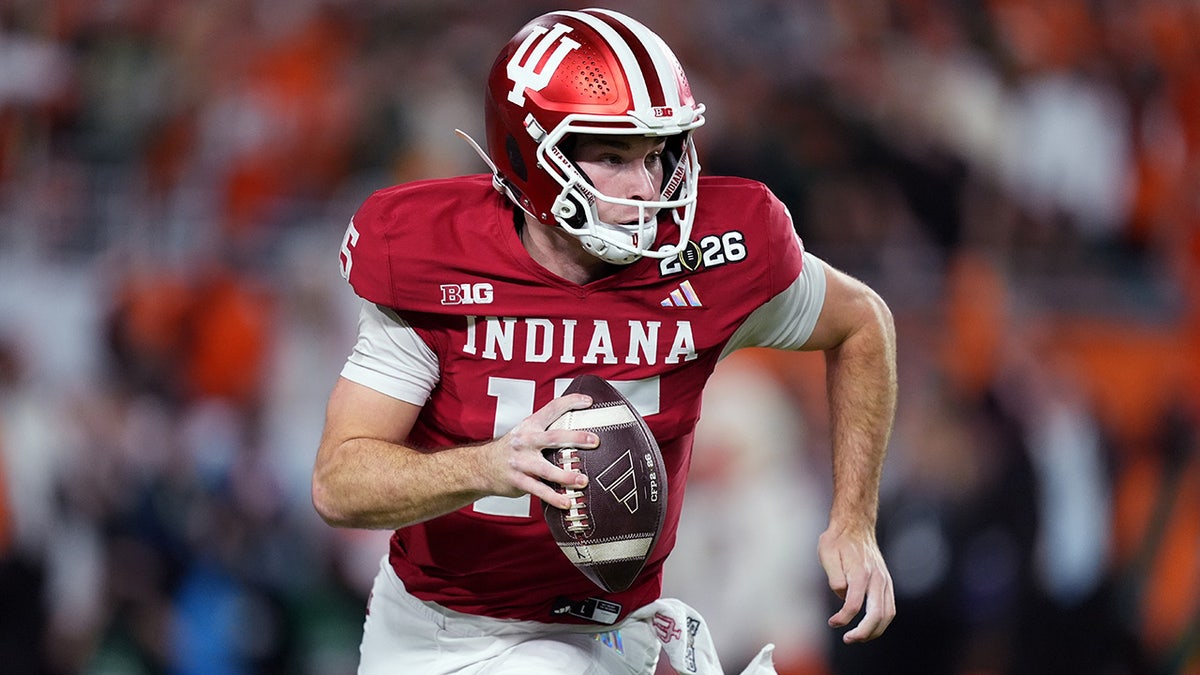
College football has transformed dramatically in recent years, moving away from the dominance of the SEC and Alabama towards an era of widespread parity. Once a sport where a few teams ruled, now features numerous contenders vying for the championship title. This shift became evident when Indiana, traditionally one of college football’s weaker programs, achieved a remarkable 16-0 season and secured the national championship last year.
As of 2026, this parity is more pronounced than ever. No single team stands out as a dominant force midway through the season. Many fans and experts credit this shift to the introduction of Name, Image, and Likeness (NIL) deals. The logic is straightforward: when programs can legally pay athletes, the distribution of talent evens out.
Brooks Austin, known as ‘The Film Guy’, presents an alternative perspective. In an interview with OutKick, he argues that the transfer portal, rather than NIL, is the primary driver behind this change. “Everybody blames it on NIL,” Austin states. “I think it has far more to do with freedom of movement. The portal has changed this more than anything else.” He suggests that teams like Alabama and Georgia can no longer hoard talent, only to let it sit unused for extended periods.
To illustrate his point, Austin highlights financial factors within college football. While money plays a role, he believes the erosion of team depth is equally significant. “Georgia can pay their backup just as much as Wake Forest can pay him to be a starter,” Austin points out. “So when a backup defensive tackle has been sitting on the bench for 2 years, he wants to play.” NIL has certainly contributed to this parity by offering players financial incentives, yet the ease of transferring to different programs has arguably had a larger impact.
Austin also recalls instances from recent SEC championship games to reinforce his claim. In previous years, teams could rely on their stacked talent pool to replace injured starters seamlessly. But with the transfer portal, players are no longer willing to wait years for a chance to play, leading to a more level playing field.
The convergence of NIL deals and the transfer portal has undoubtedly stirred a new era in college football. While both elements contribute to parity, Austin emphasizes the transfer portal’s outsized influence.
Leave a Reply