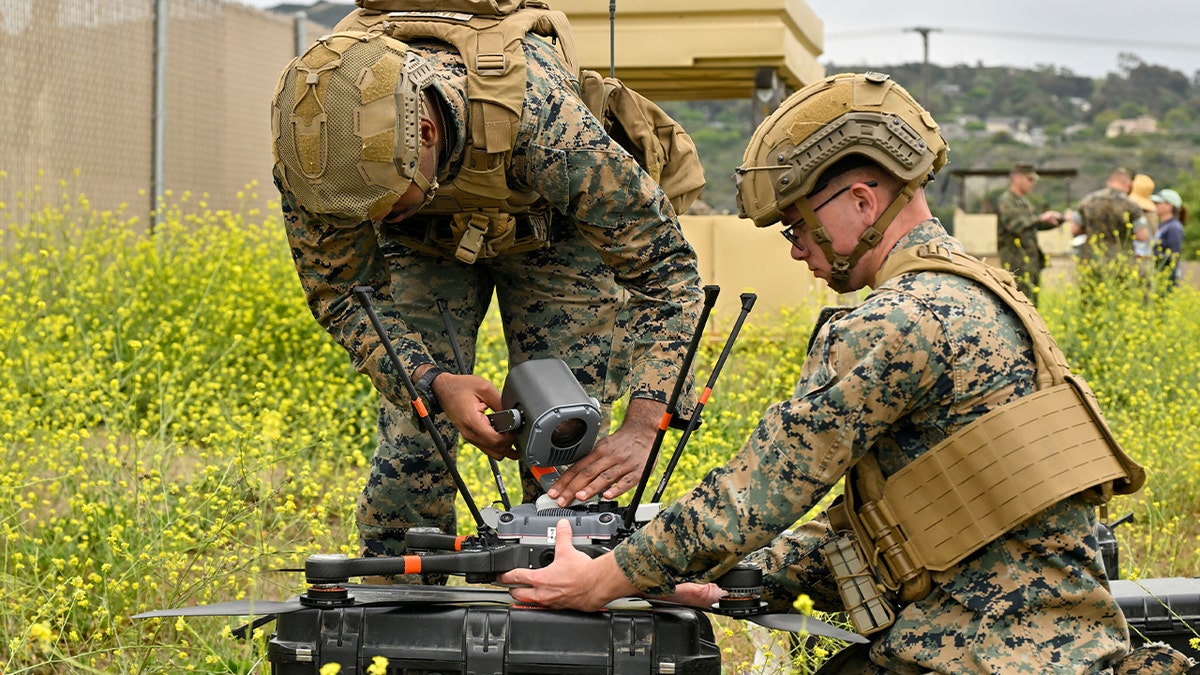
Modern warfare sees drones as essential as countries once saw artillery shells. Conflicts today consume thousands daily. Last year, Ukraine produced 5 million drones. Russia launched 805 overnight against Ukrainian cities. Victory now belongs to those with robust manufacturing, not just advanced weapons. Key to this production is the permanent magnet, vital to every drone motor. China dominates this sector.
In response, President Donald Trump’s 2025 executive order prioritized American-made platforms. This directive accelerated traditional acquisition, reducing timelines to months. Vendors now enter direct field evaluations leading to production. The Pentagon’s Drone Dominance Program plans to purchase over 200,000 drones by 2027, rising to 340,000 by 2028.
Manufacturing capacity expansion begins at the supply chain level. The U.S. imports nearly 50,000 tons of permanent magnets yearly, mostly from China. Unlike smart components, magnets generate crucial lift and torque. When unavailable, scaling efforts halt.
T.S. Allen, a former Pentagon drone program leader, highlighted the challenge: critical mineral processing largely occurs in China and Malaysia. This dependency necessitates developing domestic capabilities.
“Almost all key minerals are processed in China and Malaysia,” Allen noted.
China’s rare-earth market dominance stems from state support and aggressive pricing, which undercut Western competition. This strategy allows price adjustments and export controls. Rare earth prices have tripled within a year. Conversely, iron and nitrogen, used in iron nitride magnets, are globally traded without such risks, providing cost stability.
In April 2025, China imposed export licenses on certain rare earths and magnets, impacting defense and industrial supply chains. Within weeks, less than a quarter of license applications were approved. Shipments dropped by 75% year-over-year, affecting motor suppliers like Europe’s Motor-G.
Ukraine faced similar challenges when attempting local motor production, despite having mineral reserves. However, it lacks infrastructure for large-scale magnet manufacturing.
Scaling Western rare-earth capacity isn’t the sole solution. Alternatives like iron nitride offer promise. These magnets are already used commercially, with inputs like iron and nitrogen free from export licenses or embargoes. They perform well at high temperatures and low weight, crucial for drone motors.
American research laid the groundwork for this technology, with U.S. manufacturers ramping up production. Deploying iron nitride in drone motors leverages existing technology to meet growing defense demands.
Attrition warfare hinges on production. Maintaining supply chains against disruptions and export controls is vital. Each drone motor component requires a secure supply. Yet, magnets lack this assurance.
Jonathan Rowntree, CEO of Niron Magnetics, emphasizes the importance of a supply secure from adversary control. His company produces rare-earth-free permanent magnets, addressing this challenge.
Leave a Reply