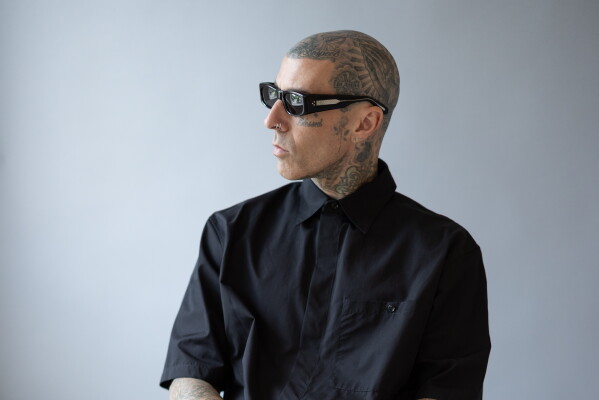
The documentary ‘Travis Barker: Louder Than Fear’ begins with a gripping scene. Dashcam footage from a police vehicle captures a fire, marking the aftermath of a 2008 plane crash in South Carolina. Travis Barker survived, but four others didn’t. This documentary celebrates Barker’s life before and after this pivotal accident. It spans from 2017 to 2026, encapsulating the life-changing event amid a career filled with significant moments.
Initially, the documentary mirrored Barker’s memoir, ‘Can I Say: Living Large, Cheating Death, and Drums, Drums, Drums,’ released in 2015. A producer suggested it end on a note of Barker confronting his fears, walking toward a plane despite his PTSD. Barker opted for a different ending. The film concludes with him boarding a plane. The final scenes are a slideshow of family photos, featuring his wife, Kourtney Kardashian, and their children.
‘I almost died,’ he reflects. Sharing his life story might prove helpful to others.
Barker’s career is extensive, yet a two-and-a-half-hour film can only capture a portion. It establishes Barker as a rebellious child with extraordinary drumming talent, starting at age four with his first drum kit. Over the years, he played with various groups, from Feeble as a trash collector to Blink-182, the band that propelled him to stardom. The documentary covers his love for skateboarding, car culture, clothing brands, and musical projects such as Box Car Racer, +44, TRV$DJAM, and collaborations with artists in hip-hop.
Drumming remained central throughout Barker’s life, with inspiration drawn from Animal of ‘The Muppets.’ He later admired jazz legends like Buddy Rich, Dennis Chambers, and Elvin Jones, as well as Tommy Lee from Mötley Crüe. For Barker, drumming is therapy, akin to oxygen in his life. He compares it to a sport, likening himself to a boxer in a meditative state.
The plane crash was a significant challenge. It left Barker in a burn center for six months, undergoing numerous surgeries with morphine for pain relief. Seventy percent of his body suffered burns. The incident questioned his ability to drum again, with doubts even about walking.
Barker’s life, though marked by musical successes, offered lessons in resilience. Before the crash, experiences such as his mother’s passing taught him how trauma can either destroy or define a person. Losses and hardships fueled his determination to succeed in music. He adhered to the idea of ‘Plan B,’ which meant making ‘Plan A’ work.
Barker applied this tenacity to his sobriety and the resolve to fly again, supported by his family. ‘I fly all the time now,’ he states, finding comfort in turbulence while his wife remains calm. Flight became an innocent joy for his son, adding beauty to Barker’s journey.
Reflecting on legacy, Barker has simple aspirations. He wishes to be remembered for his music, drumming, and role as a great father, husband, son, and brother. Regarding the documentary, he hopes his story helps someone, despite the challenges endured. He values the journey and hard work, appreciating that he wasn’t born with privileges, but had to navigate and find his path.
Leave a Reply