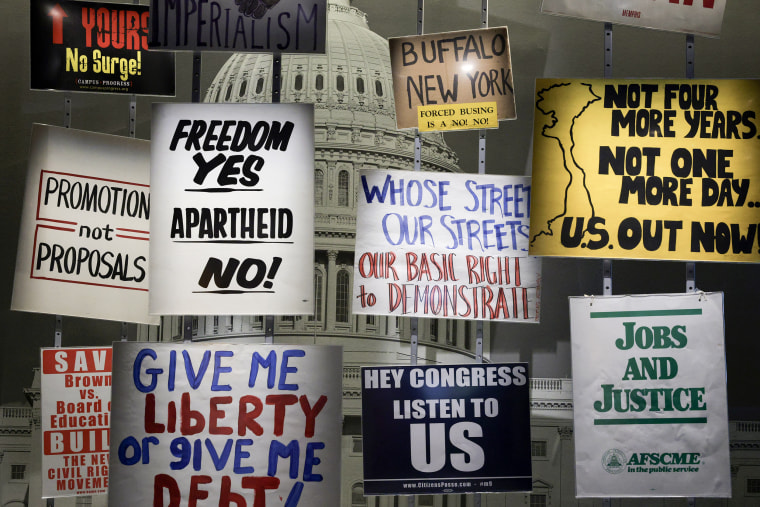
The White House has issued a report criticizing the leadership of the Smithsonian Institution, particularly at the National Museum of American History, labeling them as radical activists. The report suggests that President Donald Trump may be planning to appoint his own team at the Smithsonian.
Released by the White House Domestic Policy Council on Independence Day, this report forms part of Trump’s larger effort to reform cultural and historical institutions in Washington. In March, Trump announced his intent to initiate modifications at the Smithsonian Institution through an executive order. This order aims to limit funding for programs advancing what he considers divisive narratives and improper ideology, continuing his challenge against culture he perceives as overly liberal.
According to the report, under current leadership, the Smithsonian Institution cannot be relied upon to tell America’s story in an inspiring and unifying manner worthy of the republic. The document, led by a former Trump speechwriter, alleges that the Smithsonian’s mission has been redirected from historical education towards extreme political activism.
The Smithsonian did not respond to requests for comment. Historian Lonnie Bunch, the first African American Secretary of the Smithsonian, expressed in a separate interview on NBC that his motivation is centered around the notion of striving for a more perfect union. He emphasized the importance of making historical aspirations accessible and meaningful, highlighting that America’s strength lies not in avoiding its history but in understanding how it shapes the nation.
Historian Anthea M. Hartig serves as the first female director of the National Museum of American History. Trump’s efforts to install changes at the Smithsonian reflect his broader agenda to reshape cultural institutions he finds inconsistent with conservative values.
Trump’s involvement extends beyond the Smithsonian to other cultural sites, such as his installation at the John F. Kennedy Center for the Performing Arts and attempts to alter programming. A federal judge later ordered the removal of Trump’s name from the building. The administration also compelled Columbia University to implement policy changes under the threat of losing significant federal funding.
Beyond Washington, Trump’s administration has influenced historical sites, including a recent court ruling in Philadelphia that permits the reinstallation of panels criticized for glossing over slavery at President George Washington’s home. This approach has raised concerns among advocates and officials about presenting history in a triumphant manner that minimizes past struggles.
Pennsylvania Governor Josh Shapiro accused Trump of attempting to rewrite history. In a CNN interview, Shapiro argued that no president should dictate a singular historical narrative, advocating for a comprehensive understanding of history to guide future progress.
The White House Domestic Policy Council’s report insists on restoring truth and sanity to the presentation of American history, highlighting concerns about materials that question faith in American institutions and shared ideals.
The report concludes that the museum has been captured by a radical ideology under current leadership, opposing the honest storytelling of America’s history.
Leave a Reply