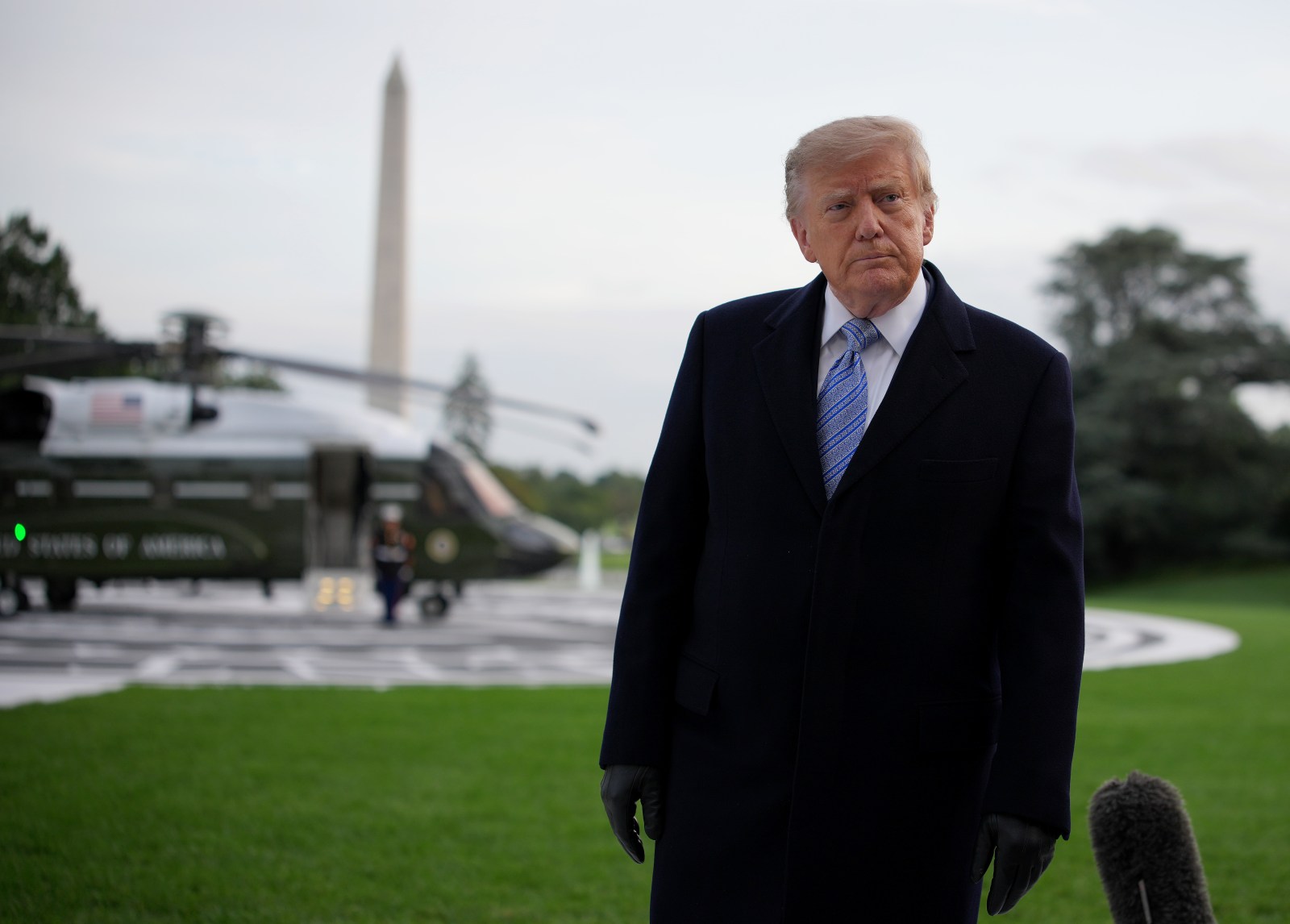
The administration of President Donald Trump recently declared a major move to cut nearly $1 billion from what he describes as “the most harmful government spending.” This action involves a “pocket rescission,” a mechanism that has stirred significant debate.
Details of the Rescission
Specifically, the administration announced that $567 million would be removed from Health and Human Services (HHS) funds designated for noncitizens. Additionally, $15 million from Department of Homeland Security programs—initiated during former President Joe Biden’s tenure—aimed at providing welfare to “illegal aliens” would be rescinded. Educational programs for noncitizens face a $25 million cut, among other adjustments across various agencies.
Congressional Reaction
Republican Senator Susan Collins of Maine voiced strong disapproval of this initiative. Criticizing the Office of Management and Budget (OMB), she expressed concern over being blindsided by the $810 million package of pocket rescissions from the administration. She accused the OMB of undermining Congress’s constitutional control over budgetary decisions and described the actions as “illegal.” According to Collins, the independent Government Accountability Office (GAO) has ruled pocket rescissions unlawful under the Impoundment Control Act, making any rescission of appropriated funds without congressional approval a legal violation.
Explanation of Pocket Rescission
The GAO defines a pocket rescission as a tactic where a president requests Congress to cancel funding close to the fiscal year’s end. This timing prevents the funds from being repurposed for new obligations. The fiscal year ends soon on September 30. Such a move bypasses Congress’s authority because it does not allow the 45-day response period. The GAO emphasizes that pocket rescissions are illegal and reiterates that Congress maintains financial authority through budget approval and appropriation of funds. The role of the president and executive agencies is to administer those funds.
Trump’s Use of Pocket Rescission
The administration praised Trump’s utilization of this rescission, which highlights the often-overlooked Presidential powers within the Impoundment Control Act. Trump’s administration made similar moves previously, which marked the first use of a pocket rescission by a president in almost 50 years.
Lawmakers’ Criticism
Senator Patty Murray from Washington described the action as “theft from the American people.” Murray stated that Congress intended these funds to assist people, suggesting the rescission serves personal presidential interests instead of public welfare. She criticized the undermining of bipartisan efforts.
Likewise, Oregon Democrat Senator Jeff Merkley argued that the rescission contradicts constitutional principles separating powers. He emphasized that Congress, not the president, decides program designs and funding levels.
Senator Chris Murphy of Connecticut echoed these criticisms on social media, accusing Senate Republicans of repeatedly failing to counter Trump’s improper use of taxpayer funds.
On social media, the OMB defended its decision by branding the concerning funds as “wasteful” and advocating for fiscal savings.
Specific Items Rescinded
The administration indicated specific financial cuts, including $15 million from the Department of Justice’s Community Relations Service and $9 million from foreign debt relief related to climate policy. Further cuts consist of $28 million from Health and Human Services research programs and $5 million from its Office of Minority Health. Additionally, $56 million allocated to counseling support for organizations accused of leveraging DEI principles unfairly by the U.S. Department of Housing and Urban Development will be reduced. Funds from the Minority Business Development Agency and international education are also affected.
Leave a Reply