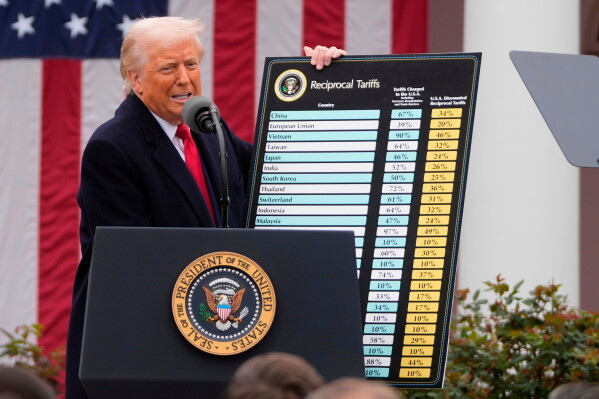
The U.S. Treasury experienced a surge in revenue from high tariffs introduced by President Donald Trump on imports from almost every nation. However, the situation changed dramatically when the Supreme Court invalidated the most substantial of these tariffs in February. This ruling led to a significant decrease in the inflow of tariff-related funds.
With a crucial deadline looming, the administration seeks new strategies to replace the lost revenue. Following the Supreme Court decision, Trump turned to Section 122 of the Trade Act of 1974 to implement a 10% global tariff. This section permits tariffs for a limited duration of 150 days, with the current tariffs expiring on July 24. Congress would need to extend them, a move unlikely with the approaching November midterm elections and voter dissatisfaction over rising living costs.
“They’re going to raise the tariff wall again,” predicted Ryan Majerus, a trade lawyer formerly associated with both Trump and Biden administrations.
The administration has alternatives available. Section 301 of the 1974 trade law allows the president to impose tariffs and other sanctions against countries engaging in unfair trade practices. Previously, Trump utilized Section 301 to impose significant tariffs on China. Recently, he announced 25% tariffs on some Brazilian imports, citing unfair trade practices by the South American nation.
Experts believe the Trump administration will succeed in replacing Section 122 tariffs with larger Section 301 tariffs by the impending deadline. Trump had previously stretched his tariff-imposing powers, using the 1977 International Emergency Economic Powers Act (IEEPA) to levy extensive tariffs worldwide, a move later ruled impermissible by the Supreme Court.
This legal setback necessitated refunds to importers, turning tariffs from a substantial revenue source into a fiscal liability. Import tax revenue, which peaked at over $31.4 billion last October, had significantly dwindled post-ruling. By June, there was a substantial loss of $25.6 billion due to refund obligations outweighing tariff receipts.
President Trump and Treasury Secretary Scott Bessent aim to reverse this trend using alternate legal avenues. Enter Section 301, which presents the president with the authority to impose and adjust tariffs in response to unfair trade practices. Unlike the IEEPA tariffs, Section 301 tariffs have established procedural requirements, and potentially greater stability, as they can be renewed beyond their four-year limit.
The transition to Section 301 tariffs might reduce uncertainty for businesses, as currently articulated by Sarah Bianchi, a former U.S. trade official. While procedural steps such as public comment collection and hearings must be followed, there’s confidence in moving forward without significant gaps between the expiring and new tariffs.
Two major Section 301 investigations are underway. One addresses inadequate measures by 60 countries against imports from forced labor, and another reviews alleged overproduction by 16 countries. The forced labor issue is already progressing, with proposed tariffs yet to be finalized after undergoing public consultation.
Legal challenges could emerge, especially around potential attempts to use Section 301 more extensively than before. Bianchi notes the legal resilience of Section 301, but acknowledges that using it for broad, universal tariffs could invite judicial scrutiny.
Leave a Reply