WASHINGTON — Small towns throughout the United States had grand plans to commemorate the nation’s 250th anniversary this weekend. Local historical societies organized events such as town square readings of the Declaration of Independence, bands playing patriotic songs, parades, and themed baking competitions.
However, these plans faced setbacks when the Trump administration cut $100 million in federal funding for humanities nonprofits and state councils at its term’s start. This decision impacted local preparations for America’s semiquincentennial, affecting history initiatives, museums, and educational programs across the country.
The Trump administration redirected tens of millions in federal funding to Event Strategies, the firm behind Trump’s rally at the Ellipse on January 6, 2021. This firm was tasked with organizing anniversary events in Washington D.C. centered on President Trump.
According to historians, this approach resulted in a centralized, politicized spectacle marking the national milestone more as a celebration of the presidential office than a revolution against monarchical rule.
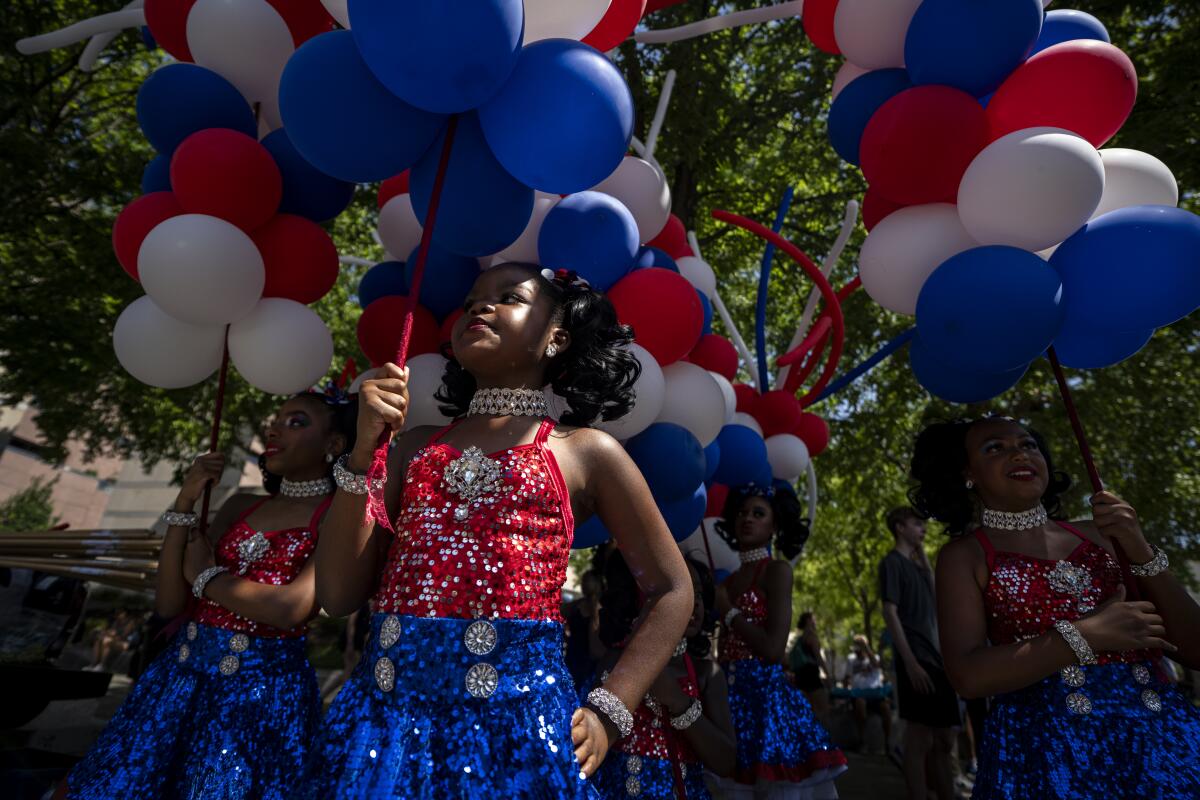
The specter of Trump’s influence is evident, with efforts to imprint his image on passports, currency, national park passes, and government buildings. The anniversary events place Trump at the center, with groups like Dance4Life studio in Claymont, Del., preparing to participate in the Red, White, & Blue To-Do Pomp & Parade in Philadelphia on July 2, 2026.
Despite this, the grassroots narrative driven by historians, educators, and museum professionals continues. They strive to tell America’s story without substantial funding but remain vocal in their patriotism.
David Ekbladh, a history professor at Tufts University, notes the administration’s power in shaping historical memory. He reflects on George Orwell’s quote: “Who controls the past controls the future. Who controls the present controls the past.” Ekbladh points out that funding constraints have influenced how institutions approach the anniversary.
Trump’s engagement with this anniversary appears less about articulating a vision of national history and more about maintaining attention on himself.
The White House has become actively involved, establishing its Freedom 250 project to augment the bipartisan America250 initiative, funded primarily around Washington and supported by conservative groups such as PragerU and Hillsdale College, presenting the nation’s founding through a conservative lens.
Historians broadly agree that the 250th anniversary has not garnered the attention the bicentennial did in 1976, which enjoyed extensive media coverage and national interest.
Andrew Rudalevige, a government professor at Bowdoin College, attributes the muted enthusiasm to a fragmented media environment, lacking a unified narrative and shared story. Rudalevige suggests that patriotism is not absent but directed away from centering any presidential administration as its focus.
The Freedom 250 efforts have not centered on the Declaration text, highlighting diversions from the original bipartisan America250 initiative’s potential.
While Trump’s national travel has been limited, an event in North Dakota showcased a new Air Force One version, donated by Qatar, customized to Trump’s preferences. He plans to retain the jet post-office for personal use.
On Saturday, the jet will fly over the National Mall, accompanied by a display of Defense Department equipment, concluding with an extensive fireworks show amid an anticipated heat wave.
Peter Kastor, chair of the history department at Washington University in St. Louis, describes the struggle between historians and government leaders over narrative control. Museum professionals and educators face this challenge daily, often contending with public reaction to alternative storytelling.
Leave a Reply