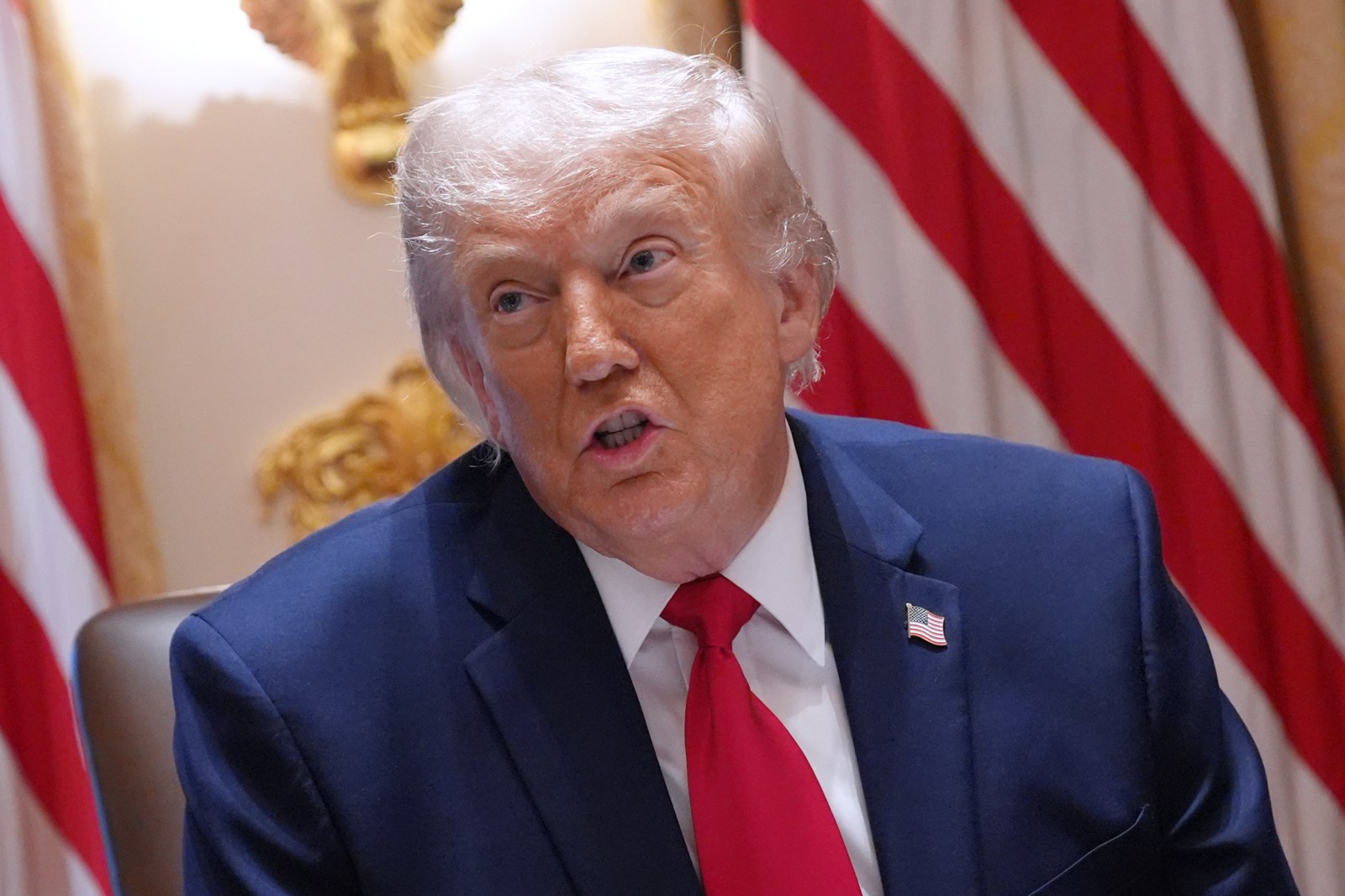
President Donald Trump has criticized the Supreme Court for its handling of his efforts to limit birthright citizenship. He labeled the system as “rigged,” suggesting the Court might invalidate his executive order, which is approaching a final decision.
On Saturday evening, Trump posted on Truth Social, stating that the judicial system was “RIGGED,” similar to his view of the political system. He expressed that people knew this, citing it as a reason for his election as President in record numbers. He emphasized his determination to “FIGHT, FIGHT, FIGHT!”
The Supreme Court is currently examining multiple consolidated cases challenging Trump’s 2025 executive order. The order aims to redefine birthright citizenship protections under the 14th Amendment. The upcoming ruling could significantly impact the President’s agenda by contesting the idea that being born on U.S. soil automatically confers American citizenship.
Newsweek sought comments from the Supreme Court via phone and email outside of business hours.
Trump Criticizes Judge’s Decision
The same post included criticism of U.S. District Judge Christopher Cooper, who ruled against the Trump administration in a separate Kennedy Center case. Judge Cooper, appointed by former President Obama, blocked efforts to rename the institution the “Trump Kennedy Center” and halted renovations, citing unlawful actions by the board.
Trump also attacked Cooper’s wife, Amy Jeffress, calling her an “anti Trump Hater.” Jeffress is a partner at Hecker Fink, has represented former FBI lawyer Lisa Page, and served as a legal advisor to the House committee probing the January 6 Capitol attack, according to Politico.
In 2025, Trump restructured the Kennedy Center board, replacing members with allies such as second lady Usha Vance and Deputy Chief of Staff Dan Scavino, as reported by Forbes. Newsweek reached out to Jeffress for comments outside of working hours.
Update on Birthright Citizenship Case
Trump’s 2025 executive order, titled “Protecting the Meaning and Value of American Citizenship,” seeks to revise the 14th Amendment by denying automatic citizenship to children born to specific immigrants and visitors. This right has existed for 150 years. The order mandates that citizenship is granted only if at least one parent is a U.S. citizen or lawful permanent resident.
The administration contends that the phrase “subject to the jurisdiction thereof” excludes children of undocumented immigrants and some temporary visa holders. These claims face strong opposition in court.
The policy has prompted lawsuits from states and civil rights organizations. Ten cases were consolidated into three primary challenges from Massachusetts, Maryland, and Washington. The Supreme Court agreed to take on the case and has already conducted oral arguments, with a decision anticipated later this term.
Supreme Court Justices’ Positions
During the oral arguments, justices from both political affiliations displayed doubts about the administration’s intention to restrict birthright citizenship. Chief Justice John Roberts questioned the logic of extending narrow historical exceptions to broad immigrant categories, describing some instances as “very quirky” as per Axios.
He also dismissed Solicitor General D. John Sauer’s argument of a “new world” due to global travel, emphasizing that the Constitution remains unchanged, according to Time.
Justices Neil Gorsuch, Brett Kavanaugh, and Amy Coney Barrett also examined the historical and legal rationale behind the policy, highlighting inconsistencies in the government’s arguments.
Leave a Reply