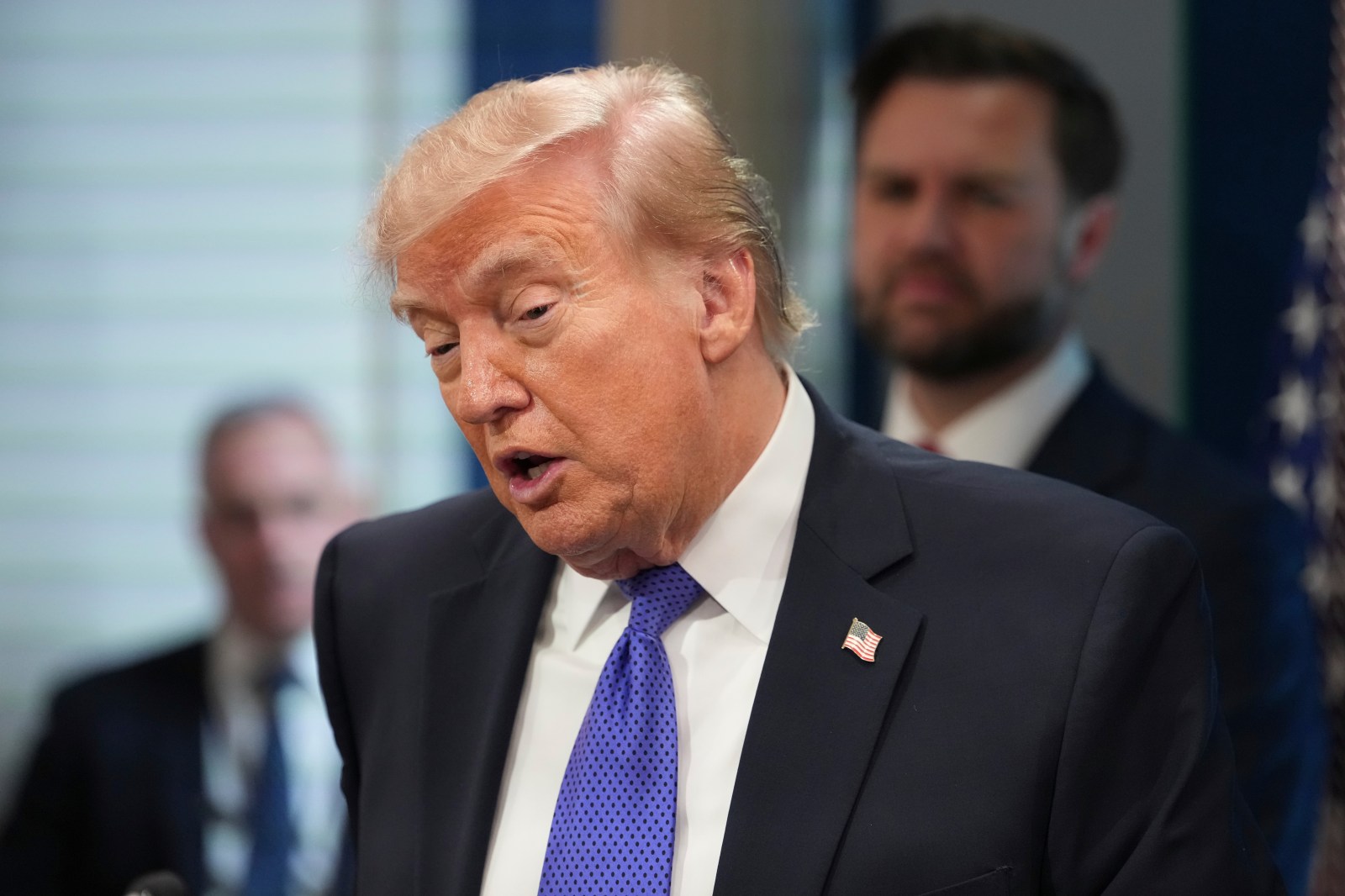
President Donald Trump stated his administration might achieve more once Democrats take control of Congress in January. He made these remarks during a press conference shortly after returning from a four-day trip to Asia, where he engaged with Chinese President Xi Jinping and Russian President Vladimir Putin at the Asia-Pacific Economic Cooperation summit.
Trump highlighted the successes of his trip but also addressed various domestic political issues, including the upcoming Democratic-led Congress. Despite his previous disappointment over Republican midterm losses, Trump now appears ready to collaborate with Democrats. He acknowledged communication with Democratic leaders, including Representatives Hakeem Jeffries and Senators Chuck Schumer and Chris Van Hollen.
Trump expressed optimism about potential bipartisan agreements, suggesting his veto power could encourage negotiations. He remarked, “They’re going to send things my way, and I’m going to veto them. They could go two years and one month, because that’s what we have… but I think, after a month or so, they’re going to send things, and I’m going to say I’m going to veto unless you want to do this and this and this.”
He acknowledged Jeffries and Schumer’s intelligence and showed readiness to work with the new Democratic majority to accomplish legislative goals. “We might get more done because there were some Republicans who were impossible to deal with,” Trump noted. He referenced disagreements with Republican Thomas Massie, who lost his primary to Trump-backed Ed Gallrein.
Intraparty tensions, such as those with GOP Senator John Cornyn, who blocked a Trump judicial nominee, have underscored disharmony even when Republicans controlled Congress. Despite this, Trump seems hopeful that new Democratic leadership could prompt beneficial negotiations.
Trump mentioned healthcare as a potential area of progress, envisioning a compromise that could lead to significant improvements. The incoming Democratic majority also prioritizes healthcare, focusing on affordable access and cost reduction, as emphasized by Jeffries during the midterm campaign.
Bipartisanship might shine in the Motion Picture, Television, and Entertainment Revitalization Act, aiming to boost U.S. film and TV production. Introduced by bipartisan sponsors, including Democratic Senator Adam Schiff and Republican Senator Tim Scott, the legislation has seen significant support across party lines.
Immigration remains another possible area of compromise. Despite a stringent stance during his presidency, Trump recently showed willingness to engage with Democrats on broader immigration reforms, potentially addressing the status of long-time undocumented U.S. residents.
Democrats will still need to finalize their leadership structures before assuming control. As Schumer and Van Hollen vie to lead the Senate, the extent of Trump’s optimistic bipartisan outlook remains uncertain. The coming term will reveal whether his administration can secure agreements on healthcare, immigration, and other critical issues.
“If they want to get things done, I want to get things done, too,” Trump remarked.
Leave a Reply