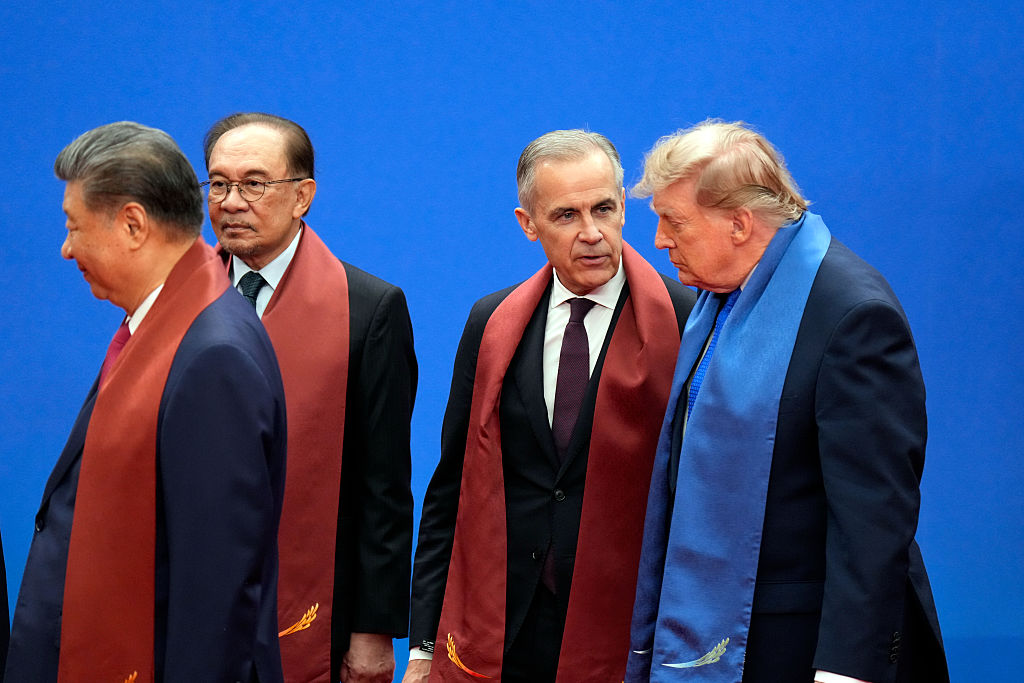
The Canadian government, under Prime Minister Mark Carney, is focusing on enhancing trade relations with China. This initiative looks to diversify international trade and reduce reliance on the United States amidst an ongoing trade conflict with the U.S.
Renewed Focus on China
Canada is seeking to build stronger trade connections globally. Carney emphasized this during a New York Times interview from Shenzhen, China, where he attended the Asia-Pacific Economic Cooperation (APEC) summit. He stated that Canada is in demand internationally and expressed a willingness to explore global trading options if U.S. negotiations fail.
After unsuccessful trade talks with the U.S., Canada proceeded with a trade agreement with China. This deal offers Canada tariff relief on food and agricultural exports and extends tariff exemptions on Chinese steel and aluminum products.
Canada’s Trade Strategy
Carney is promoting a resilient domestic economy through diversified trade. By engaging with China, he aims to provide stability and prosperity for Canada. The Chinese government has been receptive, and the two nations have agreed on an economic partnership that includes tariff reductions on electric vehicles and Canadian agricultural products.
Experts like Jennifer Hillman from Georgetown University suggest that Canada’s evolving trade strategy could challenge U.S. trade leverage, showing Canada’s willingness to explore alternative markets.
Strategic Implications
Professor Lori Turnbull notes that China could become a significant trading partner for Canada due to its large market. This shift could influence U.S. negotiations and is seen as strategic given China’s economic rivalry with the U.S.
Despite opportunities, some Canadian officials express caution. Concerns include the risk of foreign interference, national security issues, and the potential impact on Canadian industries from increased Chinese imports.
Balancing Relationships
Carney acknowledges that while forging stronger ties with China, Canada must maintain strategic relations in key sectors like defense and technology with other partners, particularly the European Union.
The European Union, during a summit in Montreal, expressed interest in making Canada an “associate member,” paving the way for collaboration in areas such as artificial intelligence, energy, and trade.
Asia-Pacific Engagement
As part of Carney’s Asia tour, he secured trade agreements in Manila with ASEAN and the Philippines to enhance Canada’s integration into Asian supply chains.
These agreements are part of a broader strategy to diversify Canada’s export markets. However, Canada’s trade volume with the U.S. remains significantly larger, necessitating a cautious approach to diversification.
Automotive Industry Considerations
Given the stalled U.S.-Canada trade talks, Carney has mentioned the possibility of involving Chinese automakers to sustain Canada’s auto sector. Carney asserts Canada’s need to protect its auto industry and is willing to explore alternatives if necessary.
However, the prospect of shifting automotive supply chains to China presents challenges, including logistical and economic barriers. The North American auto industry is highly integrated, which complicates quick changes in trade partnerships.
Despite potential hurdles, the suggestion of turning to China for the automotive sector might influence U.S. negotiations. Keeping Chinese competition out of the North American auto market could be a mutual interest that fosters cooperation between Canada and the U.S.
Leave a Reply