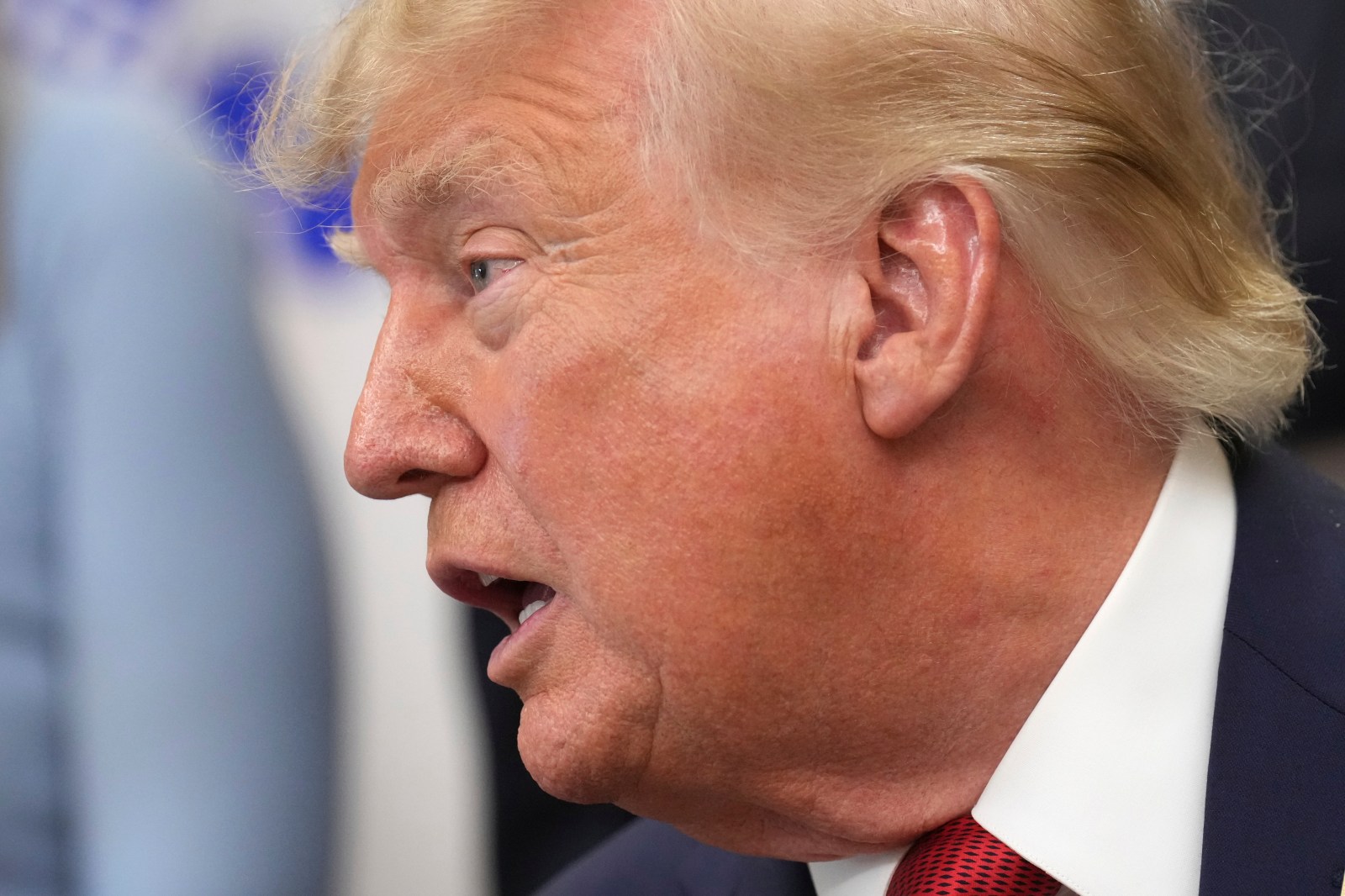
President Donald Trump announced plans to establish an “AI Force” and appoint an artificial intelligence “czar.” This marks a notable shift from his previous stance that the rapidly evolving tech sector does not require new regulations.
In a message on Truth Social, Trump stated the new initiative would oversee AI without imposing regulations that might impede innovation. He emphasized that his administration would support the industry’s growth and that existing laws are sufficient to handle misconduct by AI firms. Trump highlighted, “For this purpose, I am forming the AI Force, akin to Space Force, a tremendous success from my First Term.” He added that an AI “czar” will soon be announced, targeting very high IQ individuals.
Trump claims AI could match the impact of the Industrial Revolution or the Internet, potentially contributing up to 25% of the U.S. GDP. He asserted the U.S. leads China and aims to maintain its edge.
The proposal lacked details about structure or staffing, emerging as AI’s significance grows in economic, national security, and tech policy. Tech leaders like Dario Amodei from Anthropic, Sam Altman from OpenAI, and Elon Musk have advocated for stronger safeguards, emphasizing the need for balanced development.
Trump frames AI as a competition with China, underlining the necessity for U.S. leadership. His announcement follows recent dismissals of AI oversight fears, labeling concerns as a “hoax” or “sick conspiracy.”
“The opportunity is to establish a unified ecosystem,” said John Walsh, CTO of government and critical infrastructure at IGEL. He notes the automotive safety industry model, advocating for international standards to evaluate products independently.
Walsh stresses that regulation should focus on standards and economic incentives, citing competitive advantages when AI safety is demonstrable. He argues for global tech collaboration on measurable requirements for trustworthy AI, similar to cybersecurity certification models.
Walsh emphasizes trust requirements for agentic AI, such as verifiable identity and human intervention capabilities.
Industry and Bipartisan Calls for AI Regulation
Trump’s announcement coincides with rising demands for oversight from tech leaders and lawmakers. Amodei, Altman, and Musk urge cautious progression in frontier AI development. AI researcher Jacob Coxon recently warned against the potential dangers posed by powerful AI systems.
Coxon resigned from Anthropic, citing irresponsible behavior by AI firms racing toward superintelligence. His concerns reflect the urgency echoed by many stakeholders advocating for governmental intervention against misinformation, fraud, and national security threats.
Lawmakers have introduced federal AI regulation proposals amid concerns about missing national standards. Vermont Senator Bernie Sanders and Florida Republican Representative Anna Paulina Luna both advocate for legislative focus on AI’s societal impacts.
Representatives Ted Lieu and Nathaniel Moran have proposed bipartisan AI legislation. This requires developers to ensure interventions in advanced AI systems if these pose catastrophic risks.
The Trump administration’s steps on the “AI Force” could influence domestic and global AI policy as the U.S. prepares for further talks with China on technological competition.
Leave a Reply