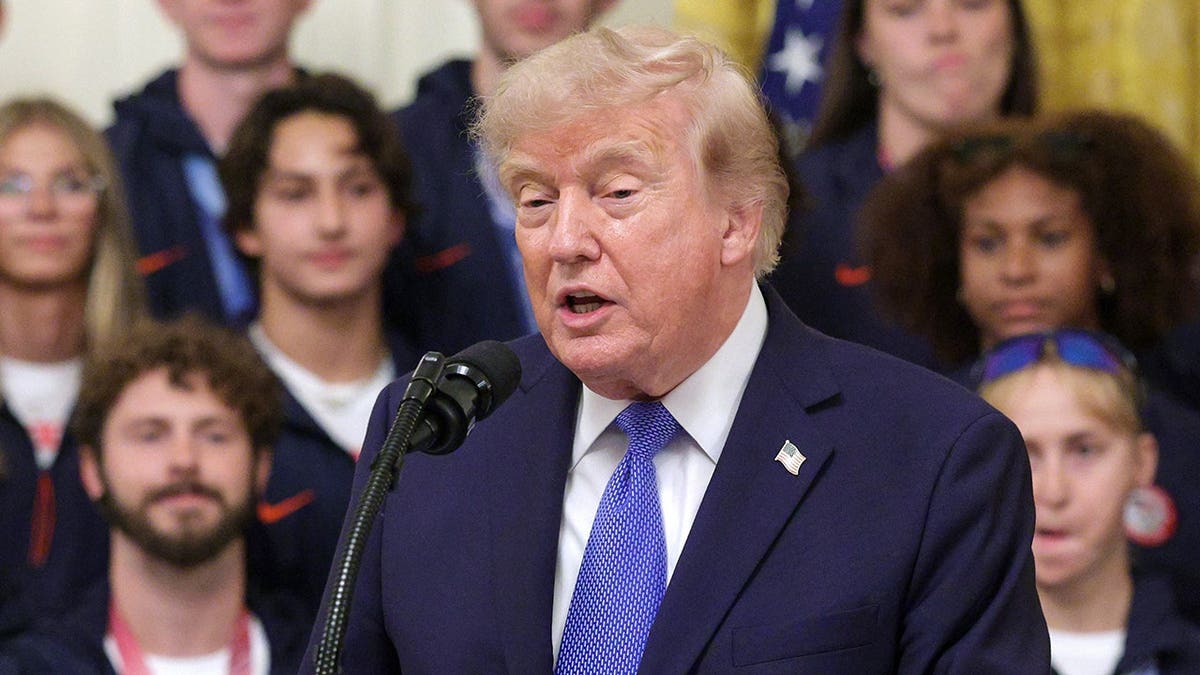
President Donald Trump has called on lawmakers to pass the Protect College Sports Act, emphasizing the urgency as congressional recess approaches. At a White House event, he celebrated Team USA’s achievements at the Milano Cortina Winter Olympic and Paralympic Games with more than 120 athletes, coaches, and staff present.
Trump highlighted the role of the collegiate athletic system, stating that it is a driving force behind American Olympic successes. He noted that 88% of Team USA members in the recent Games were products of this system. Urging the House and Senate to act, Trump committed to signing the bill immediately if presented to him.
During the celebration on August 6, 2026, in the East Room of the White House, Trump hosted Team USA for their accomplishments in the 2026 Winter Olympic and Paralympic Games. That year, American athletes secured a total of 57 medals, including 25 gold.
Trump called for bipartisan cooperation to pass the bill, which he deemed essential for the protection and continuation of traditional sporting values in the United States. He emphasized the importance of acting to prevent uncertainty in college sports.
The Protect College Sports Act aims to provide the NCAA with enhanced antitrust protections and establishes a standard framework for Name, Image, and Likeness (NIL) compensation and transfer regulations. However, its progress faces challenges.
On Thursday, three Republican senators—Josh Hawley of Missouri, Jim Banks of Indiana, and Tommy Tuberville of Alabama—introduced an amendment to stop the bill from overriding state laws prohibiting biological men from competing in women’s sports. They seek to assure that existing state laws remain unaffected, should the bill pass.
“I am very concerned it PREEMPTS Missouri’s law banning men in women’s sports,” said Senator Hawley.
Although this amendment’s outcome is still uncertain, Trump expressed hope that the bill would soon be ready for his approval. The Trump administration released a statement supporting the bill, underscoring the need for federal action to address legal and financial issues threatening the future of college sports.
“Federal legislative action is imperative,” the administration noted, “to ensure protections and to safeguard student-athlete opportunities.”
The pressing timetable adds urgency to discussions. Congress recess looms, and the Senate has a packed schedule before its five-week break. Whether the Protect College Sports Act is addressed in time remains unclear, but Trump remains optimistic about its passage.
Leave a Reply