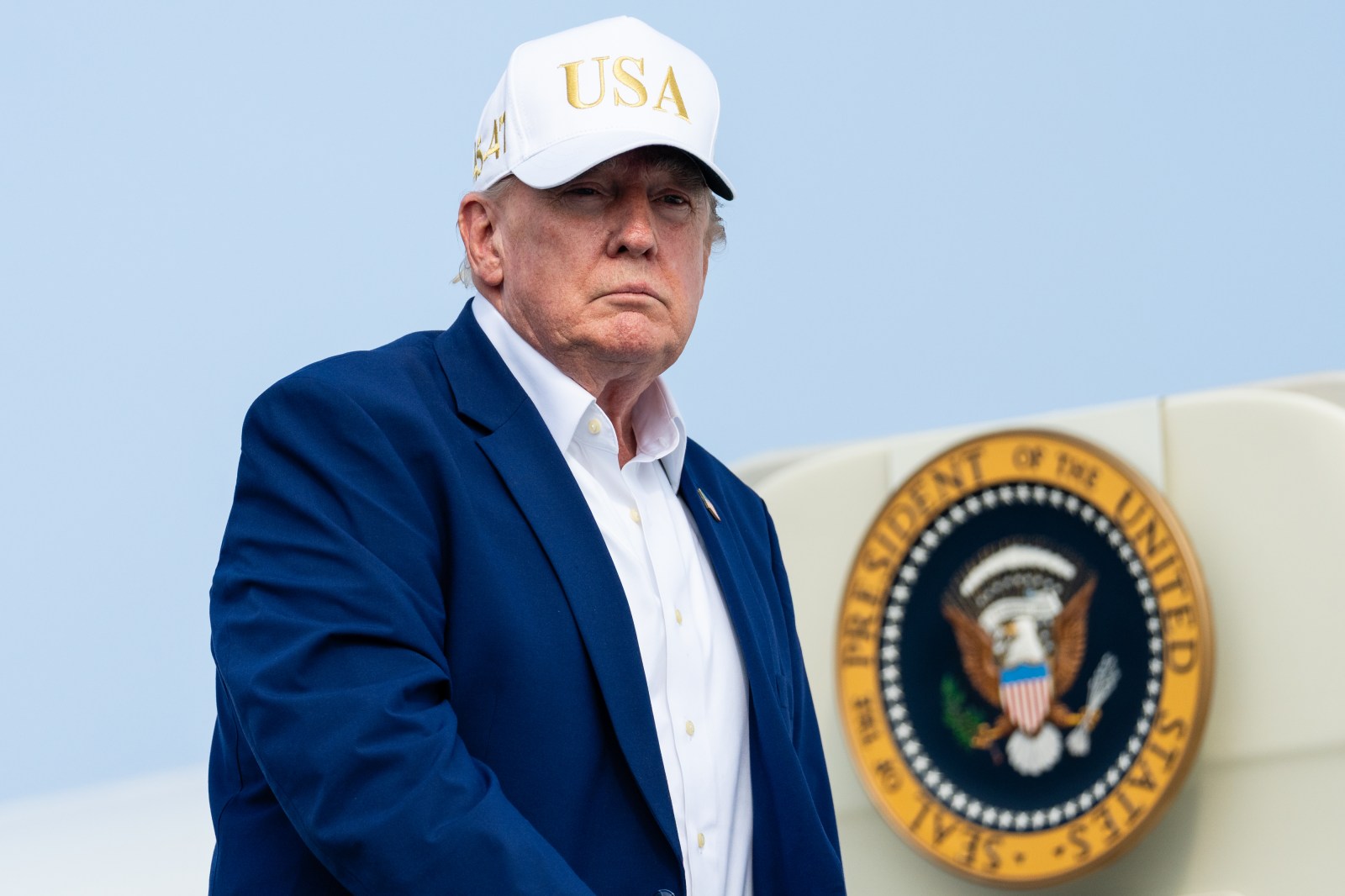
President Donald Trump provided an uncertain response when questioned about potential plans to declare a national emergency before the midterm elections, aiming to promote his voting initiatives. During a conversation with Wayne Allyn Root on Real America’s Voice, Trump was asked about voter ID and mail-in ballot restrictions embedded in the SAVE America Act, which remains pending in the Senate.
Trump stated, “Stranger things have happened,” in response to queries about his authority to declare a national emergency. He left the matter there. Alongside his administration, Trump has argued that the bill’s measures, including voter ID, are essential for election integrity, asserting Republicans require these to secure victories.
Opponents claim the legislation might disenfranchise thousands lacking necessary identification, like passports. Additionally, worries exist that an election-based national emergency could result in challenged or nullified outcomes.
Donald Trump wants to take over American elections. Senate Democrats are prepared to combat his unprecedented, illegal efforts at every turn. Your vote belongs to you. We will ensure it stays that way.
This statement from Democratic Senate Minority Leader Chuck Schumer appeared on X following Trump’s remarks. Newsweek contacted the White House for an official comment via email.
Could Trump Declare a National Emergency?
Under the U.S. Constitution, states primarily manage election administration, while Congress wields significant authority over federal election rules. Experts in election law believe a national emergency wouldn’t permit the president to unilaterally alter state election laws, delay elections, ban mail voting, or introduce new voter qualifications.
Reports indicate a draft executive order exists, citing foreign election interference to justify emergency actions. However, even among proponents, the consensus remains that the Constitution grants states and legislatures control over elections. Critics predict any nationwide voting rule imposition via emergency powers would quickly face court challenges.
Jeffrey Toobin, a chief legal analyst for CNN, discussed Trump’s potential midterm interventions on Newsweek’s The 1600 podcast. He noted how efforts to limit mail-in voting could equally impact Republicans and Democrats. “It’s unclear which party benefits from mail-in voting,” Toobin remarked, adding that historically, Republicans favored mail-in voting.
Where Does the SAVE America Act Stand?
As of now, the SAVE America Act—known fully as the Safeguard American Voter Eligibility Act—has not been ratified by the Senate. Although it gained approval in the House multiple times, Senate Republicans lack sufficient backing to enact the full measure.
The legislation would mandate proof of U.S. citizenship for federal election voter registration and introduce a federal photo ID requirement. Despite advancing it to Senate discussion earlier this year, final approval eludes Senate Republicans.
On August 7, Republican Senate Majority Leader John Thune, Trump, and conservative senators agreed to defer most of the SAVE America Act actions until after the recess due to inadequate support. Senate Republicans might opt for a photo ID focus vote rather than the complete proposal, according to The Hill.
Leave a Reply