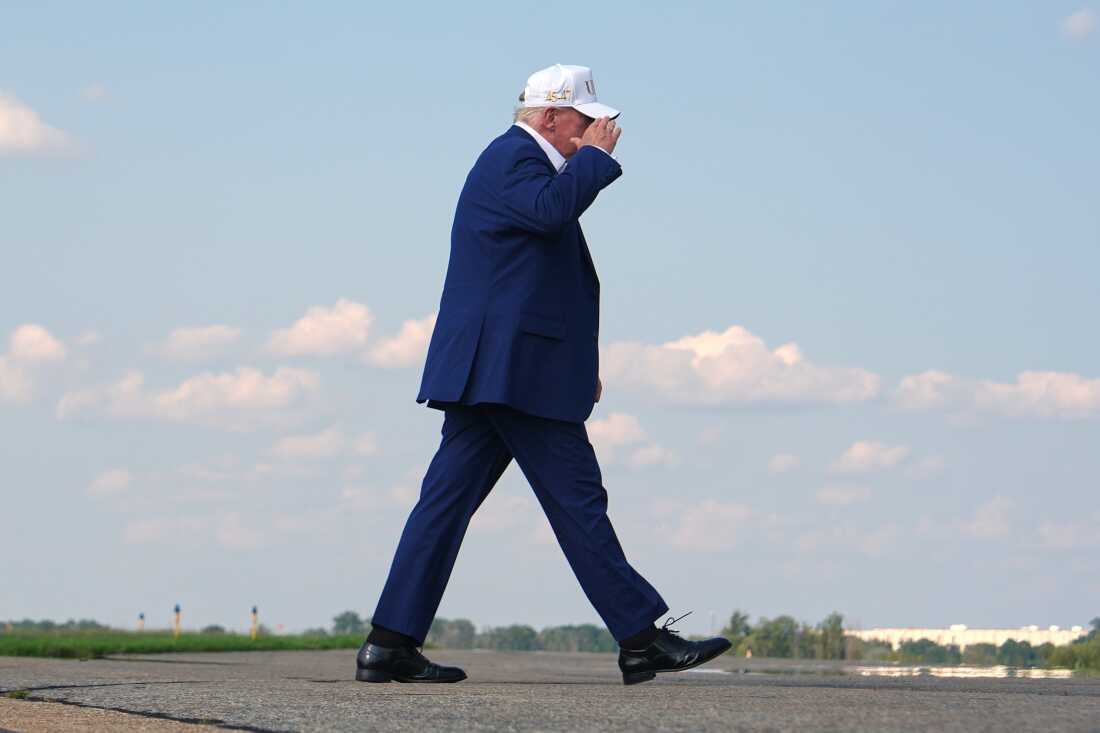
President Donald Trump recently emphasized that his longstanding conflict with Iran is driven by economic strategies. Despite decades of sanctions failing to halt Iran’s nuclear ambitions, Trump expects heightened financial pressure will achieve results. The administration intends to intensify this pressure, banking on the idea that prior bombing campaigns have weakened Iran’s economy sufficiently.
The U.S. government hopes to leverage economic stress to compel Iran to cease its nuclear efforts and reopen the Strait of Hormuz to tanker traffic. This waterway was a crucial oil transport route, crucially affecting global supplies. With limited success in recent reopening attempts, Trump’s strategy pivots to economic pressure as a primary tool.
“Yeah, they can make trouble, but they’re broke,” Trump told reporters, emphasizing Iran’s financial struggles. He claimed Iran’s inflation hit 300%, a projection higher than those from administration officials. A prolonged war with Iran threatens global economies, including that of the U.S., where rising gas prices weigh heavily.
Crude oil prices increased in reaction to Trump’s assertions, signaling potential constraints in oil flow through the Strait of Hormuz. This strategic location once accounted for moving around 20% of the world’s oil. Iran maintains resilience against further sanctions, criticizing U.S. reliance on economic measures as a failing approach.
The White House labeled these efforts ‘Operation Economic Fury.’ Treasury Secretary Scott Bessent describes it as a financial blitz, with nations trading with Iran facing potential sanctions. Yet, critics point to a lack of clarity in Trump’s goals for the conflict. Economic sanctions, while impactful, require time to bear fruit.
Juan Zarate, formerly a deputy national security adviser, acknowledges the strength these sanctions and naval blockades provide. However, he underscores the need for patience, with the ultimate question being how much pressure the U.S. will apply to curtail Iran’s oil trade.
Trump’s current focus marks a departure from his previous stance critiquing past presidents’ reliance on sanctions. The Iranian economy faces severe challenges, shrinking by 5.4%, according to IMF estimates. Iran’s oil production also significantly dropped. Meanwhile, the U.S. economy continues to grow, albeit with challenges such as rising inflation.
A high-ranking U.S. official noted that military actions disrupted Iran’s energy sector. The administration views naval blockades and sanctions as fruitful strategies, providing options for future escalation. Trump contends U.S. citizens can better handle economic difficulties than their Iranian counterparts, reinforcing his belief in economic might as a tool.
Defense Secretary Pete Hegseth highlighted the strength of the U.S. economy in combating adversaries. He supports a motivated Treasury using economic tactics to exert additional pressure.
Leave a Reply